
Dr. Rachel Brem, GW Director Breast Imaging & Intervention & Sarah Hurley, Penn Quarter Partners
October is Breast Cancer Awareness Month
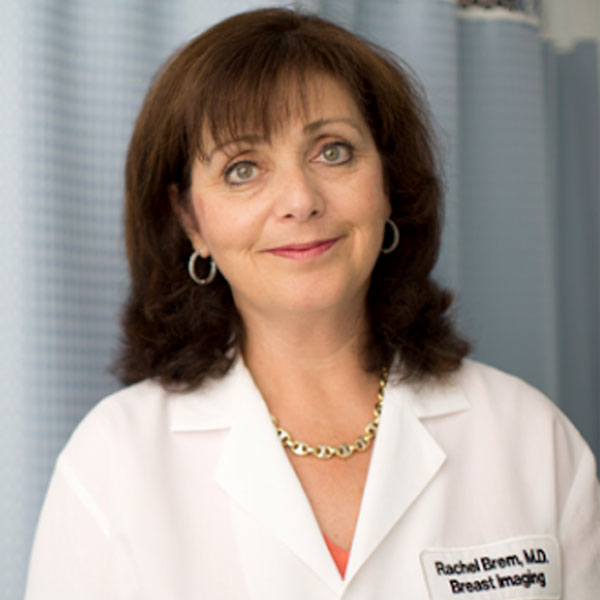
This conversation delves into the critical topic of breast health, particularly focusing on the intergenerational aspects of breast cancer. Dr. Rachel Brem shares her personal journey with breast cancer, highlighting the importance of early detection and the rising rates of breast cancer among young people.
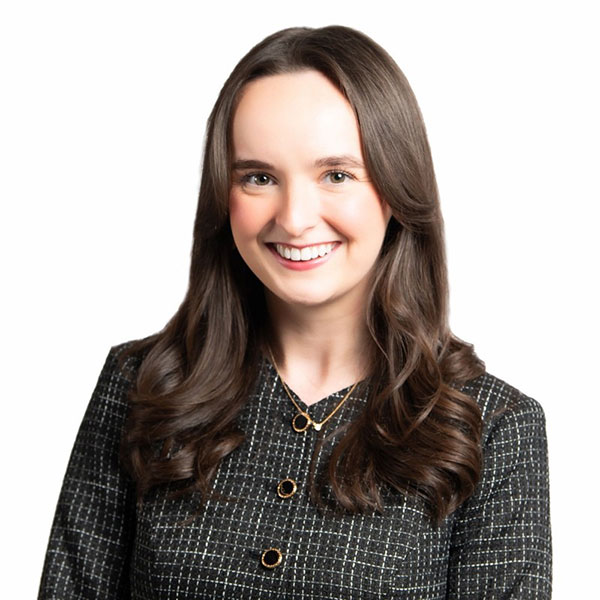
Sarah Hurley of Penn Quarter Partners discusses advocacy efforts and the need for education around breast health, emphasizing the importance of breaking down stigmas and barriers to access.
The conversation also covers the significance of understanding breast density, innovative screening technologies, and legislative efforts aimed at improving access to early detection. Ultimately, the discussion underscores the power of knowledge and advocacy in empowering patients and improving outcomes in breast cancer care. Check it out: bremfoundation.org/breasthealth and Penn Quarter Partners
TAKEAWAYS:
- Breast cancer impacts everyone, not just those diagnosed.
- Early detection significantly improves survival rates.
- Education and advocacy are crucial in breast health.
- Stigmas around cancer are diminishing, but knowledge gaps remain.
- Breast density affects screening effectiveness; women should be informed.
- Access to screening is a major barrier for many women.
- Legislative efforts are essential for improving healthcare access.
- Innovative technologies are emerging for early cancer detection.
- Men play a vital role in supporting women with breast cancer.
- Empowering patients through knowledge can lead to better health outcomes.
FAVORITE SONGS:
Dr Brem: Rise Up, Andra Day
Sarah Hurley: Clear Blue Morning, Dolly Parton
Chapters
00:00 Introduction to Breast Health and Intergenerational Aspects
01:54 Personal Stories and Impact of Breast Cancer
07:48 Rising Rates of Breast Cancer in Young People
09:01 Advocacy and Education in Breast Health
11:57 Breaking Down Stigmas and Barriers
16:05 Understanding Breast Density and Screening Options
22:14 Access to Screening and Innovative Technologies
24:56 Legislative Efforts for Early Detection
29:51 Empowering Patients Through Knowledge
35:14 The Role of Men in Breast Cancer Advocacy
40:01 Hope and Future Directions in Breast Cancer Car
Rachel Brem
Speaker 2 (00:02.872)
Hi everybody, Robin Strongin here with Health Dame, and I'm very, very excited about the topic and the two wonderful people with whom I'm gonna be spending a little bit of time speaking with on a serious topic today on breast health. And in particular, looking at intergenerational aspects of breast health. And we're gonna dive a little more deeply into that with our two guests today.
First is Dr. Rachel Brehm, who's chief medical officer at the Brehm Foundation to Defeat Breast Cancer. And she is also director of the Breast Imaging and Intervention Center and program leader for the Breast Center at the George Washington Cancer Center. And we're going to hear a lot about how Dr. Brehm, you got involved with this issue and it became very personal for you and your family.
And in keeping with Health Dame's commitment to really speak to people across generations, I am so thrilled to say hello to Sarah Hurley, who is also joining us. Sarah and I have worked together in the past and have known each other for a couple of years. And Sarah serves as a member of the Brehm Foundation's Young Professional Advisory Council. And the council...
Well, actually we met at a lunch that the Brehm Foundation was putting on and I was so impressed with the team and with the work that you guys are all doing to educate people and to advocate for more understanding around breast health. So.
I'm going to stop talking and ask you, Dr. Brehm, to share with us how you first got interested in this whole issue. What brought you to where you are today and the work that you're doing?
Speaker 1 (01:58.478)
So Robin, first of all, thank you. I'm thrilled to be here today. And shout out to the work that you're doing and the giving us the opportunity to talk about this very important topic about breast cancer, particularly in multiple generations. So my story, everybody has a story with breast cancer. The thing that's clear is that everybody's been impacted by breast cancer.
you know, whether it's your neighbor, your friend, your mother, or heaven forbid, your daughter, but that happens as well. And so my story began when I was 12, when my beautiful, vivacious, redheaded, green-eyed mother sort of disappeared. She was 33 years old and we didn't know where she went. She came back two weeks later and she wasn't quite the same. And it was months later that we learned that
she had had breast cancer and in those days breast cancer was truly mutilating surgery. Now, you know, sometimes I share with my patients that if they don't have to, but if they want to go to a topless beach after surgery for breast cancer, they can, but certainly not the case in those days. And she was told she had six months to live. She lived 44 years, raised me at the age of 12. had a 13 year old brother, a five year old brother. And I was
Come on.
Speaker 1 (03:19.768)
the unknown benefactor of early detection, even at that age. And so as a young girl, I decided that I was going to make an impact. And even though my mother lived, breast cancer profoundly impacted our lives. She not only had breast cancer at the age of 46, she developed ovarian cancer. So breast cancer, ovarian cancer, cancer impacted everything our family did. And so
I decided that I really wanted to make a difference. Now, you know, I am an immigrant. I was born in Israel. I was raised to marry a doctor, not to be a doctor. And when my parents heard that I was going to go to medical school, they weren't so thrilled about that idea. OK. But because they thought that I wouldn't be able to have a family or the things that made them so joyous, right? A house filled with friends and family and
But ultimately they became very proud and at a time, know, history sort of repeated itself. At the time I was the director of breast imaging at Johns Hopkins. I was 37 years old. I had just found out that I had the BRCA gene and had decided to have prophylactic mastectomies. And between scheduling it and having it while trying out some ultrasound equipment, I found my own breast cancer. So, you know, and
The next thing I felt was incredible luck, fortune. How lucky was I that I had the information I needed. And I really couldn't understand how my patients had to make these profound decisions. So many quick life altering decisions without the lifelong information that I had been lucky enough to have. And so was, that was the first time that I really began thinking about.
how do I share my experience of being the daughter of someone with breast cancer, a woman with breast cancer, the mother of three daughters, and a world expert in breast cancer? How do I share that and impart that information? And it was the first glimmer of the beginning of the Brehm Foundation. So that's what happened.
Speaker 2 (05:40.962)
So when you decided to go to medical school, was it at the top of your mind that you would pursue radiology or you just knew you wanted to be in the field of medicine, but it was along the way that your interest in radiology? Because you've pioneered so much in imaging.
Yeah, thank you. So I was 12. The only doctor I knew was my pediatrician. And I didn't even know what radiology was. But the reason I was attracted to it is because I was a medical student at Columbia in New York in the 80s. And that was the first time that there was strong scientific evidence that with mammography and early detection, we can substantially reduce the death rate from breast cancer.
It was the HIP study, it took place, the Health Insurance Plan of New York study, and it showed a better than 20 % reduction in the death rate from breast cancer in women who had mammography. Now, if I showed you what a mammogram looked like in the 80s as compared to now, you wouldn't even believe that we could do anything with that imaging. But we've really come a long way. Now the death rate from breast cancer has decreased by over 50 % in the past three decades.
And that's a combination of improved screening, improved imaging, technology, improved therapies. We have directed therapies, targeted therapies, immunotherapy, and more and more coming. So we've seen an enormous impact on breast cancer over these times. Unfortunately, we're also seeing an enormous increase in cancer in young people.
I was literally that was going to be my next question. And in fact, today in the Washington Post, they did one of these stories that has video and real people talking and it was young people dealing with cancer and what it's like today to deal but younger and younger and younger. it is I know I knew that was true in colon cancer that's also being seen in breast cancer. it cancer across the board?
Speaker 1 (07:52.13)
The three big cancers that we've seen an enormous increase in people under 40. So young people is breast, colon, and lung, lung and non-smokers. So,
What's going on? Do we know?
You know, the assumption is that a lot of them are due to lifestyle, environmental factors, dietary factors. We're having increasing evidence to support that, but we really don't know, but we do have to do something about it.
Well, Sarah, this is where I cue to you. And I neglected to say that you're currently serving as a senior account manager at Penn Quarter Partners here in DC. So when you're not doing work in your capacity with the Bren Foundation, you're also doing a lot of other work on behalf of patients and advocacy work, which is where we originally met one another, thank goodness.
And so what drew you to the foundation board in your interest? Because I always get excited when I see young people doing work in healthcare across the age spectrum. And so take it away, Sarah.
Speaker 3 (09:05.154)
No, thank you, Robin. And also to just want to thank you again for having me for this opportunity and for gathering Dr. Brim and me this afternoon. You and I have gotten to work together on a number of really exciting initiatives, but so thrilled for you and the direction that Health Dame has gone.
I'm excited too.
No, it's awesome. So really looking forward to our conversation. But yes, so my work with Penn Quarter Partners and PQP, you know, a lot of that has been engaging, you know, face to face with patient advocates across the healthcare spectrum, whether those are cancer patients, rare disease, autoimmune, and, and so forth. But a lot of my work that I really focused on, in, you know, the last couple years in particular has been
advancing legislation that would allow for access to early cancer detection technology. So it was through that, through some other initiatives that I was introduced to Bren Foundation. And, you know, I was just so excited to see the fresh take that they were bringing to education for young women and people about breast cancer. Of course, like all of us, I've been impacted by cancer, family's been impacted by cancer, and we've lost loved ones.
And I think what I've learned from, you know, personal stories and stories that I've heard from others through my work and, just in my personal life is that knowledge is power when it comes to your health. And particularly as we're seeing these rates of cancer increase in young people, breast cancer and beyond, I think it's so critical that we have these conversations. You know, it's, it's a scary situation to go into a doctor's office and have to advocate for yourself, but it's so critical.
Speaker 3 (10:49.336)
You know, it's confusing, but if you have that background knowledge and that support system, you know, that makes all the difference in the world. And so I was just looking too at a study for breast cancer in young people, and I'm sure Dr. Brown knows this far better than I do, but.
Diagnosis among people age 30 to 39 increased 19.4 % over the last decade. And among those age 20 to 29, the increase was 5.3%. I, for one, think those are incredibly startling numbers. And as we figure out what the real cause of that increase is, it's important for us to keep educating ourselves and keep talking about this.
Is stigma around cancer in general or, you know, breast cancer in particular something that you and your friends are concerned? Is that still, because when I was growing up and Dr. Bram, when you were saying how the surgery was so difficult and people didn't really even use the word cancer when I was growing up, they wouldn't even say the word. Are you finding that that's something of an issue?
Sarah, and then I'll ask the same question, Dr. Bram, about your patients. Is that a concern?
Yeah, mean, among my friends, candidly no, think. I think through my profession and just close friends of mine, I think we all realize and recognize that it's important. I think through my work, I've become a alarm for all these types of things. I'm comfortable talking about it. And I tell all my friends, particularly now with working through BREM, I send them the
Speaker 2 (12:09.161)
just put it out there and they just
Speaker 3 (12:33.954)
the checkmate quiz, is knowing your risk for breast cancer, do your checks in the shower, you need to know it all. And I think talking about it is the first step.
So that's a question, Dr. Brembo. First, what do they come in with their concerns?
Well, I think, you know, talking about the stigma, we're lucky that we've partnered with media over the decades and that stigma of cancer really isn't there. But what is there is the lack of information. You know, everybody knows the pink ribbon. But when you ask people, you know, what's optimal screening algorithms, how should you get screened? How important is your risk factor? What do you do to get screened? Can you have breast cancer if you have a normal mammogram?
Most people will say no, the answer is a resounding yes, because we know particularly in women with dense breasts that a mammogram isn't enough. you know, thank goodness for Sarah and people like her and the Brehm Foundation, we're trying to break down those barriers, which are often legislative in terms of economic support. You know, the idea that a woman has to decide between feeding her family and getting a life saving
screening if she has dense breasts and mammography isn't enough is simply unacceptable, right? So I think, you know, the other thing is that women are taught to be good girls. And we'd like to tell them to be bad asses because, you know, nobody knows you as well as you know you. And again, it goes back to Sarah talking about knowledge is power. And, you know, there are times when people go
Speaker 1 (14:18.158)
a woman feels something and she's 28 years old. She goes to the doctor and they say, you're too young to have breast cancer. Don't worry. It's just a cyst. Well, you know, there should be enough information for a woman to say, yes, if you think it's a cyst, I need an ultrasound to prove that because 28 year olds rarely, but as you heard, 5 % increase can get breast cancer. So I think
You know, this morning I had a conversation with the 39 year old who was just diagnosed with breast cancer and has been in the cancer advocacy world and, you know, didn't understand why she couldn't have a lumpectomy because her breast was entirely filled with cancer. it's, it's knowledge is really important. And, you know, one of the things that I'm very proud about is that the Bren Foundation has decided initially
instead of having these austere, informative public service announcements, we really decided that we would have extremely informative, but uplifting, positive, empowering messages. And as a result of that, we partner with WebMD and our PSAs have been seen, our videos, our award-winning videos have been seen literally by millions of Americans.
be less.
But, and then, you know, two years ago, Dr. Christie Teal, who's the head of breast surgery and I wrote a book that was published by Simon and Schuster called No Longer Radical, Understanding Mastectomies and Choosing the Breast Cancer Care That's Right for You. And that all is based on knowledge is power. And you need to know knowledge to make the best decision for you. And every person might have a different decision, but it's gotta be made.
Speaker 1 (16:07.448)
based on power information and personal preferences.
Not all women have a regular position that they go to every year for a regular physical, that sort of a thing. So if somebody suspects something isn't quite right or they feel something there, what's the next step? What should she do regardless of her age? But let's stick with young women for now.
they should go to their doctor. And even if they don't have one, go to an urgent care center. If they feel something, nobody can tell if it's a cyst by the way it feels. Not the finest physicians. And if they say, no, don't worry about it, it's nothing, they may ask you to wait for one menstrual cycle to see if it's hormonally mediated and it goes away. And that's reasonable.
But then you have to have an imaging study to find out if it's this or solid, if it's concerning or not. if, know, physicians are very well-meaning. We go through an enormous number of years of school, but we're still human and we make mistakes. And everybody needs to understand that if physicians make a mistake, myself included, the consequences can be dire for them.
And therefore they have to raise their voices and say, nope, you know, even though this is a well-trained, well-meaning physician, I want another opinion. You deserve that. You owe it to yourself.
Speaker 2 (17:40.736)
So I know you've been involved with all kinds of imaging technology. Most people know what a mammogram is and they know ultrasound, but there are other imaging techniques for breast. Is it for diagnostic? How are they used? What are some of the things we should know about the different types of imaging for breast?
That is a great question, Robin, and I'm so glad that you asked that because this is really a fundamental thing that all women should know. So a mammogram has been a very important tool in the 50 % reduction in the death rate for breast cancer that we spoke about. But it's important to know that a mammogram is not equal in everyone. In women who have dense breasts, and that's 50 % of women of screening age, a mammogram misses up to 50 % of breast cancers.
And you might say, how can that be? But the way it can be is because on a mammogram, breast tissue is white and breast cancer is white. So there's a masking effect, of the difference between finding a specific cloud in a blue sky or in a cloud-filled sky. When you lose the contrast, it's impossible to find. So if you have dense breasts, and now by law, every woman who has a mammogram has to be told what her breast density is, then you must get additional tests.
because additional tests like ultrasound, MRI, or contrast enhanced mammography, and to a lesser extent, molecular breast imaging, we can find these hidden cancers, but only if we look for them. And they're really important cancers because they're largely small, node negative, invasive, potentially killer cancers. And many places, it's very hard for physicians to have the resources to do all of that.
A 3D mammogram, is what everybody should have anyway, is not additional screening for women with dense breasts. Additional screening is ultrasound MRI contrast enhanced mammography molecular breast imaging.
Speaker 2 (19:39.468)
Because of insurance issues or it's a combination of reasons. Sometimes it's the medical professional or
Well, you know, some practices don't offer it. It's kind of a workflow nightmare. There are 37 million women who have mammograms every year. Half of them need additional screening. So we don't have enough physicians, enough resources, enough MRIs, enough ultrasound. But I'm very hopeful that in the future, AI will help us get over.
Yes, you're, yes, I say a little bit more about that because my basic understanding is particularly in helping to read mammograms.
Sarah, do you think your friends know about breast density?
No, I don't think so. I think it's a confusing term. And I think you, as a woman, you kind of look at yourself and you don't think that maybe you do have dense breasts or you don't have dense breasts. you know, I don't, it's not something that my doctor has talked to me about yet because I haven't started getting mammograms. But I think it's something that, you know, when that time comes, we all need to be asking and people need to know that, women need to know that it's a possibility.
Speaker 1 (20:51.278)
Right, so the only way you can tell what your breast density is now reliably is through a mammogram. We're working on ways without radiation so younger women can find out what their density is. But AI is incredible. In my practice at the George Washington University, which is, know, all of us who do breast imaging do nothing but breast imaging. Our breast surgeons do nothing but breast surgery. And that's another important thing. You really need to have experts interpreting your mammograms and you owe it to yourself to find out who is.
But we use AI on every mammogram and studies have definitively shown that we can find cancers up to five years earlier because it sees things that are objective that we can't see. And we're also moving to a time where you can get short, not everybody, but up to. it's getting to a point that it's also allowing us to find out what the short-term risk is.
you know, what is my risk this coming year? And if it's high, do I need these additional screenings? So the reason we don't do it for everybody is we kind of can't with the resources that we have, but we're looking for ways to find short-term risk. AI, I'm working on technology, looking at breath analysis, other ways, definitely through mammograms with AI, figuring out who has an increased risk this year. And then we can more judiciously and more effectively
and more economically offer the expensive, not available resources to those women that really need it.
people do who live in rural areas? Are there mobile ways to get these screenings or they have to physically go to some like for MRIs, those are not mobile, right? Those are big, like you can't move those things around. What do people do? Or what should they do? Or what can they do?
Speaker 1 (22:43.102)
You know, we used to have a mobile mammography program at GW. During COVID, it closed and never reopened. It's very expensive. And in a time of resource allocation, I would rather see, you know, fixed higher volume, less expensive, strategically placed mammograms and ultrasounds. And, you know, and I look to Sarah to help, you know, availability.
it.
Speaker 1 (23:12.746)
is multifactorial, right? One is do you have one and the other is can I afford it? without legislation, and I'll look to Sarah to please, you know, share with us more about that. You know, if you have to feed your family or get a screening breast ultrasound, you're going to feed your family. know, Sarah, if you, you know, we're trying to break those barriers because of people like Sarah and the Brown Foundation. So.
Yeah, a couple thoughts just on that. Robin, when you talked about rural areas and underserved communities, think there's a lot of really exciting technology that is being developed that detects dozens of cancer in its earliest stages, breast cancer being one of them. I'm thinking of the multi-cancer early detection tests. Yeah. And it's a simple blood draw that could catch cancer in incredibly early stages. There's been stories about someone catching
someone catching their pancreatic cancer in, I think it was stage two, which I mean is unheard of with that type of cancer. So I mean, it's really incredible. But just as Dr. Brum said, what good is this innovation if people can't access it? And so happy to go into that a little bit more.
don't you? Because that's one of the roles in helping to reach the mission, right? So don't say a little bit about that. People will hear and learn and where they should go for more information as well.
Yeah, absolutely. Well, Bren Foundation has been really active in supporting legislation that would help with access to some of these technologies and these tests. There's one piece of legislation in Congress that I've also had the privilege of being connected with. It's one of Bren Foundation's policy priorities. It's the Nancy Gardner School Medicare Multicancer Early Detection Screening Coverage Act. So it's a little bit of a long name. We can call it the MSED Act for short.
Speaker 3 (25:05.23)
But right now it is the most popular healthcare bill in Congress, the House bill and the Senate bill. It has an overwhelming bipartisan support and over 550 groups have signed on to a letter urging Congress to pass it very swiftly. But what this legislation would do is it would create a pathway for Medicare coverage of MSED tests once they have been approved by the FDA.
which would be an absolute game changer. I think about the rural communities where you're miles and miles and potentially hours away from a doctor's office where you could get your mammogram. But if you could go to your primary care provider and get an MSED test and find out if next steps and follow-up appointments are needed, that would be huge. And then another piece of legislation that BRAM is very active on is the Find It Early Act.
It's a meaningful policy that would make a difference for women specifically relating to breast cancer. It's another bipartisan bill that ensures insurance covers advanced breast cancer screenings like MRIs and ultrasounds at no cost for people with high risk. It's designed to remove those financial barriers and help to detect breast cancer.
It's for all ages. doesn't start at 65 in a Medicare situation. It's all ages.
I'd have to double check that.
Speaker 1 (26:26.816)
It's for women 40 and above. and above. And really what it does is right now screening mammograms are free under ACA, no copay, no deductible. But this will also make all the additional tests that women with dense breasts need, ultrasound MRI, contrast enhanced mammography, no copay, no deductible. make it accessible to all. I just want to add, right now we have this blood test, but
I have the privilege of working with a group in Canada looking at breath analysis as a platform for multi-cancer testing. So certainly a blood draw is minimally invasive, but I think we will get to a point. This one uses volatile organic compounds. can see parts per trillion. So hopefully we'll be able to find these earlier cancers and then use these resources to find them and fight them.
And it's important to remember for screening several things. One is that breast cancer is not an equal opportunity disease. Underserved communities die at a much higher rate. And that's because of access and also black women, Jewish women, certain communities, certain genetic populations get much more aggressive triple negative breast cancers. So we have to find them earlier so that we can optimally treat them.
But access is a very important thing. And that's why the Brim Foundation has the B Fund that we support care in the underserved community, partner with federally funded health centers, which is where the most underserved women are. But also, even though mammograms are free, right? If you don't get there, they're not gonna help you. And so the Brim Foundation has partnered with Lyft, the ride chair company in a program called Wheels for Women.
where we again give them rides at no cost to them, you know, so that they can get to life-saving mammograms. And even if they use public transportation, that's a half a day or a day away from work. We're trying to break down barriers to access the technology that we have while we work on newer technologies to get better and better all the time.
Speaker 3 (28:39.646)
Imagine if we could detect with the breath test. That's incredible.
That would be such a life altering innovation. that in clinical trials or it's further along or this is
No, it's in trials. It's in clinical trials right now. We've opened a cruel at GW, at Duke, and at Mayo. Wow. So stay tuned. And there are other technologies. People have looked at tears. People have looked at urine. There are a lot of compounds we haven't found the right way yet. think I'm so excited about DNA fragments, about the tests that Sarah's talking about, the blood test. But
you know, I think that's going to be the entree and then, you know, it's unimaginable how far we can go.
So since going back to the whole point that education is power, how can I help to get the word out? How can other advocates help? I know you do a lot with education and advocacy. How can we amplify what you guys are already doing through the foundation? Because not everybody knows that these services are available and the rides, and this is wonderful. What can we do specifically to be helpful?
Speaker 3 (30:00.014)
I mean, can jump in if it's helpful. Before I joined the Brehm Foundation's Young Professional Advisory Council, was just a fan of their work. I was tuning into the programs and browsing the website, and I sent everything to my girlfriends. And I just said, hey, check this out. This is a really great resource. And to what Dr. Brehm was saying earlier, I think how they tell the story of the research and the
the diagnosis and potentially a breast cancer journey, you know, it's told in an upfront, it's a straightforward, no frills manner, but you know, it's digestible. You you read something and you say, you know, I know what my next steps here are. And you know, back to just knowing yourself and advocating for yourself, that's the biggest thing I think when you're getting, when you're faced with these types of questions about your own body and having to go to the doctor, being able to advocate for yourself and knowing what things mean.
is huge. And so I think the Brown Foundation's resources are incredible for all of
And then a couple of things I would want to add, and thank you for that, Sarah. First of all, this is multi-generational, and the information that people need at different stages of life is really very different. At the Brehm Foundation every year, we have something specifically for women under 40 called Check Out My Rack. And it's a great name, and it's run by people like Sarah.
young women who have had breast cancer, who've been in the advocacy world. And so I would say for the young people here, watch it. It's gotten great. It's got, it has great information and it's gotten great reviews. And the other thing is, you know, just remember that we have to take responsibility for ourselves. When you go to the doctor, you know, people say, I went to my primary care doctor and they never told me about breast density, right?
Speaker 1 (31:58.744)
But when you go for your annual visit, they have to tell you about cholesterol and hypertension and exercise and diet and breast cancer and breast density. Don't expect all the information to be given. It is a partnership. And you need to find out about what it is that you need to do to optimize your care. You know, when I was a kid,
We didn't have to remember what vaccines we got. We went to the doctor. We got it. You don't get vaccines at the doctor anymore, right? You get it at the community pharmacy or some place. And, you know, even for me, when I was getting my hepatitis B boosters, right? Cause cause of the procedures that I do, like, did I get one? Did I get two? It really requires a lot more of personal responsibility. So, you know, find out about it, read about it really
bremfoundation.org is a kind of a fun, informative way to find out. also at the Brehm Foundation, we have angels and those are people that we ask if you learn something new and Sarah is an angel on steroids, tell 10 people you know something you learned so that could save their lives as well, right? If you learned about breast density,
send an email to 10 people and ask them to send it to 10 people. If there's an opportunity to reach out to your legislator, reach out and tell them to support these bills that Sarah talked about that are so critical. And I think we have made enormous headway and we have a lot of information and I'm so excited about the future. Obviously my goal is
to read about breast cancer. used to say like polio, sadly there's a blip in that too, right? But I'd love to see it in the history books, but we're not there. And until then, we really have to empower information, whether it's no longer radical or Brum Foundation or Health Dame, or so many things, the young professional group that is attracting
Speaker 1 (34:15.605)
you know, people that I am not part of and I can't, you you can't understand, like you understand yourself, other age groups, but I've got daughters, I've got granddaughters, you know, and I think it's really important. Yes, it's a lot of information about so many things, but this is really life saving and don't be a good girl.
Yeah, no, that's never been my motto. I also wonder about the role of men in terms of having them be an active partner, even if it's to remind someone about a screening or with a checklist. clearly, it's the woman, it's her body, it's the responsibility for her. But if you're getting naked with someone, they could be involved too, right?
Absolutely. Somehow engaging beyond the female per se. Is that part of the young professionals to reach out and try to get more men involved or is it primarily women at this point?
this point it's primarily women but breast cancer impacts men as well. Men themselves but also Robin as you said as a partner and know just somebody in somebody's circle so I think it would be you know huge to get some some men on board with the with the BiPAC but also an important reminder for men to also know their bodies and you know
100 % and have them go up to the hill and advocate on their loved ones. I mean, why
Speaker 3 (35:52.014)
I mean, when it comes to advocacy, sorry, Dr. Brown. When it comes to advocacy on the Hill, you know, it's these personal stories that carry the most weight with members of Always. A woman who she herself is a patient or, you know, her partner, a man who's a patient. I think if you're comfortable sharing your story, that is hugely impactful when you're trying to move legislation.
No, please, go ahead.
Speaker 2 (36:14.924)
the two, you know, because it impacts when your mom had surgery, it impacted the entire family. I mean, it isn't only about the individual, it's part of your world.
and everyone you know, think Robin, it's more than that, right? First of all, shout out to the members of Congress who are men who are supporting our bills. know, Brian Fitzpatrick has been very supportive of the Find It Early Act. And of course, you know, so many women members of Congress who have been so supportive, know, Debbie Wasserman Schiltz, Rosa DeLauro and on and on and on the Senate as well. But
I have to tell you an interesting story. When I was in the throes of writing No Longer Radical with Christie, my husband and I were on vacation. And at this point, it had been some years since I had had breast cancer. And so here I was at a beautiful beach resort writing, are you going to have a chapter for the life partner of someone with breast cancer? And I said, oh my goodness. I wasn't, but now we are. And it's not just
And then my husband will often, you know, describe, I have to say, I feel so fortunate that I had him by my side going through this. But he really thought we had two nine year olds have twins and a 12 year old when I was diagnosed and he really thought he was gonna have to raise them himself. The consequences to the men are profound. Whether it's the 1 % of breast cancer every year that occurs in men, right? Or whether it's the men.
who are impacted by the breast cancer of women they love, whether their mother, their wives or their daughter. you know, even though they're not having the surgery, they want to know how they can help. You know, they want to know if, you know, you want to be upbeat with them or if if you want to cry on their shoulders. And the answer is I want both at different times. Right. So I think
Speaker 1 (38:20.468)
Men are incredibly impacted by breast cancer in profound ways, but in different ways. Sure. sure. And remind, and also once someone's diagnosed with breast cancer, someone should go with them to the doctor. They won't hear what's going through, you know, what, it's so much to process. So-
overwhelming and you're so emotional and it's you're just trying to process the word cancer.
But it's even, you know, when you have strep throat, you get an antibiotic, right? When you break a bone, you get a cast, right? When you are diagnosed with breast cancer, you get asked, do you want a lumpectomy? Do you want a mastectomy? mean, the answer is I don't want either, right? I really don't want any part of this. But you're being asked to make that decision in very short order with very little information. And the same thing holds true with chemotherapy.
you sometimes it's clear, but sometimes, you know, people will tell you it's a 3%, 4%, 7 % risk reduction of recurrence. What does that mean? What is it like? I think, you know, I think having someone with you, supporting you, finding information with you is really important as well. Critical.
absolutely critical. But there is hope, right? So there are things we can do to make access easier for people. There's all kinds of clinical trials as far as therapies are concerned. We are working on education. Sarah's going to carry the flag for advocacy for this team. so that, you know, it there, I mean, certainly when I
Speaker 2 (40:09.366)
was growing up, breast cancer was so dreaded and people did look at it as a death sentence. But now it's still alarming to get a diagnosis, but getting diagnosed earlier, I mean, we all know people who have been not living but thriving since their diagnosis and treatment protocol, but we still have a lot of work to do, obviously. We're nowhere near where we want to be.
You know, Robin, sort of in a bit of a tongue in cheek and controversial way, we do kind of have the cure for breast cancer, kind of. And that's early detection, right? 100 percent. But north of 95 percent of women with early stage breast cancer survive and thrive. Right. But it's important to realize that not only is survival impacted, but the journey a woman has to go through to get to survival.
Speaker 1 (41:08.148)
is much less intense, intensity of care if you're diagnosed early, right? And that's why it's so critical to really advocate for yourself that if you have dense breasts, get a mammogram every year, MRI, ultrasound, contrast-enhanced mammography does not negate the need for a mammogram. It's a twofold thing. when, and everybody who's diagnosed with breast cancer,
has the thought that they're going to succumb to it. And the great news is, you know, most don't, but some do. So it's a reasonable fear. And once you have breast cancer, you know, you need to know your risk as well. Because screening is very different in women at high risk, right? If you have a very strong family history, or if you have a 20 % lifetime risk or greater.
then a mammogram is definitely not enough and you need an MRI every year as well. So again, it's all about knowledge and advocating for yourself and empowering yourself.
what's so important about what you guys are developing at the foundation, these materials have utility in breast cancer, beyond because A, just understanding how to be an empowered consumer and not be afraid to speak up in a doctor's office. But to be able to do that,
to really understand some of the statistics that when somebody says you have a 20 % chance or this improvement, like really being able to understand some of the terminology and so on and so forth is really important. And some of the consumer organizations that I had the chance to work with, we were trying to put a toolkit together for how to be an educated patient.
Speaker 2 (43:02.22)
So that when you went into the office, know, when you were given a prescription for X, you could say, you know, I'd prefer not to have something with a narcotic because we have addiction in the field. Like it's okay to speak up. It's really, and in fact, it's, you have to do that, but it's not easy for everybody to do that. So these kinds of resources are so important, both within the work you're doing and it has utility far, far beyond. So.
You know, this is just wonderful. Let's hear the websites again. So everybody has them. It's bremfoundation.org. Correct. Any others that we should be mentioning for the young professionals? Is there a particular page, Sarah, that
There's a page on the Bram Foundation website.
Okay, but you can easily find it on there.
And Sarah mentioned CheckMate. don't know. There's a resource on the website, on the Brim Foundation website.
Speaker 2 (44:03.17)
Good. Okay, so that's another really critical piece. Okay.
all the policy priorities are listed up at the top.
OK, so people can get really.
And of course, I can't not help say this, we love support of everybody. We need everybody's help. We could not get anywhere near where we've made incredible inroads in advocacy, but financial support is necessary as well. So thank you for those people who support us.
Absolutely. I know that there is a donate, donate, donate, donate piece on the website. So that's, that's very doable as well. And before I let you both go back to your, your work, I'm going to ask you each, as you know, I'm curating a health Dane playlist.
Speaker 2 (44:55.31)
Everyone with whom I have a conversation, I always ask, is there a favorite song of yours or a song that reflects the work that you're doing? And I'm putting this together as a legacy for Brian who loved music. So people have been all over the place with their song selections and it's been fascinating and I can't wait to unveil all of them. But Dr. Brim, do you have a favorite song we can add to the playlist?
You know, the song Rise Up by Andra Day is the message, the message is right. And, you know, we are all rising up to make it a better world.
I love that. I absolutely love it. Sarah, take us home.
Yeah, the song I'd like to put on the playlist is Clear Blue Morning by Dolly Parton. I think it's a great message and one that we all need to keep in mind these days. These types of conversations and the work that Robin, you're doing and that we're doing at Bren Foundation gives me a lot of hope for the future. I've been lucky enough to be inspired by a lot of patient advocates over the years. I think that song encapsulates this fight that we're all in together.
I absolutely love that. Okay, I feel much better about everything now. This was a wonderful conversation. I love that despite lots of chaos out there in the healthcare space, there are just great people doing the hard work of making life better for people and that's what we do. And so it's really been wonderful to get to know you, Dr. Brim, to continue to work with you, Sarah, and I'm so deeply appreciative.
Speaker 2 (46:42.272)
of your time and look forward to helping spread the word on the good work that you guys are doing. So thank you. Have a good afternoon and I'll be circling back. Thanks again, everyone.
Resources: Early detection saves lives.
Dr. Rachel Brem’s book: No Longer Radical: Understanding Mastectomies and Choosing the Breast Cancer Care That’s Right For You
Website: www.bremfoundation.org
Did you know: nearly 1 in 8 women will face breast cancer in their lifetime — and rates are rising in younger people, too.
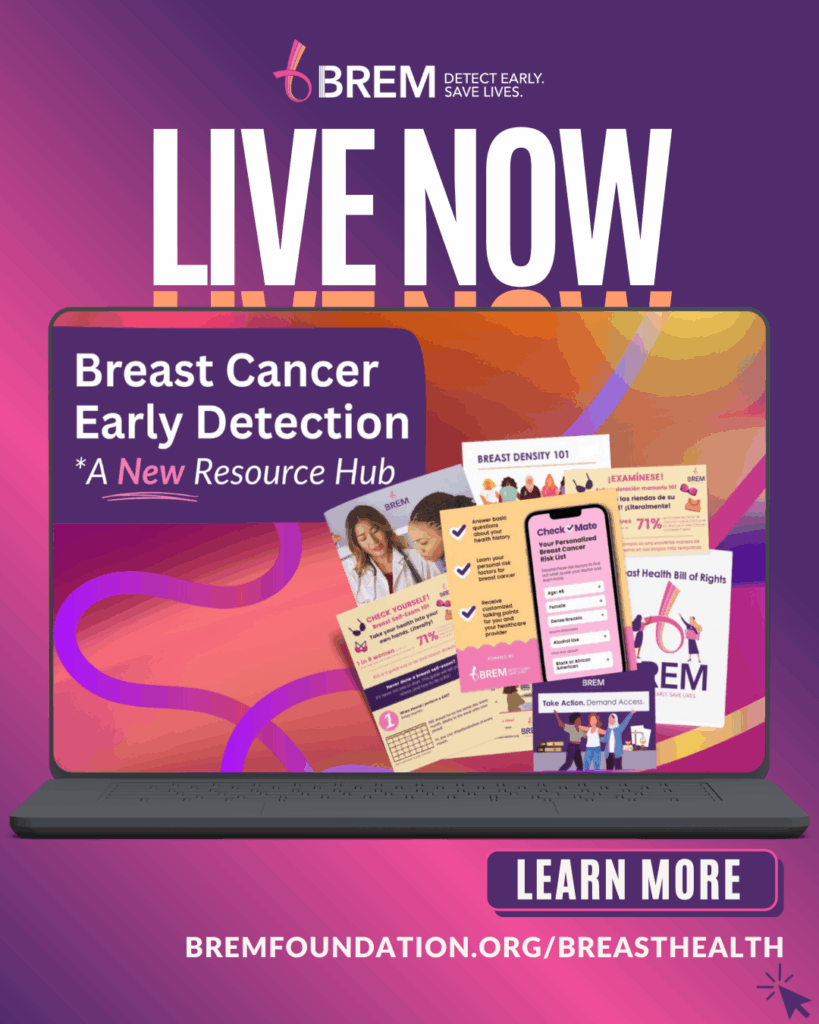
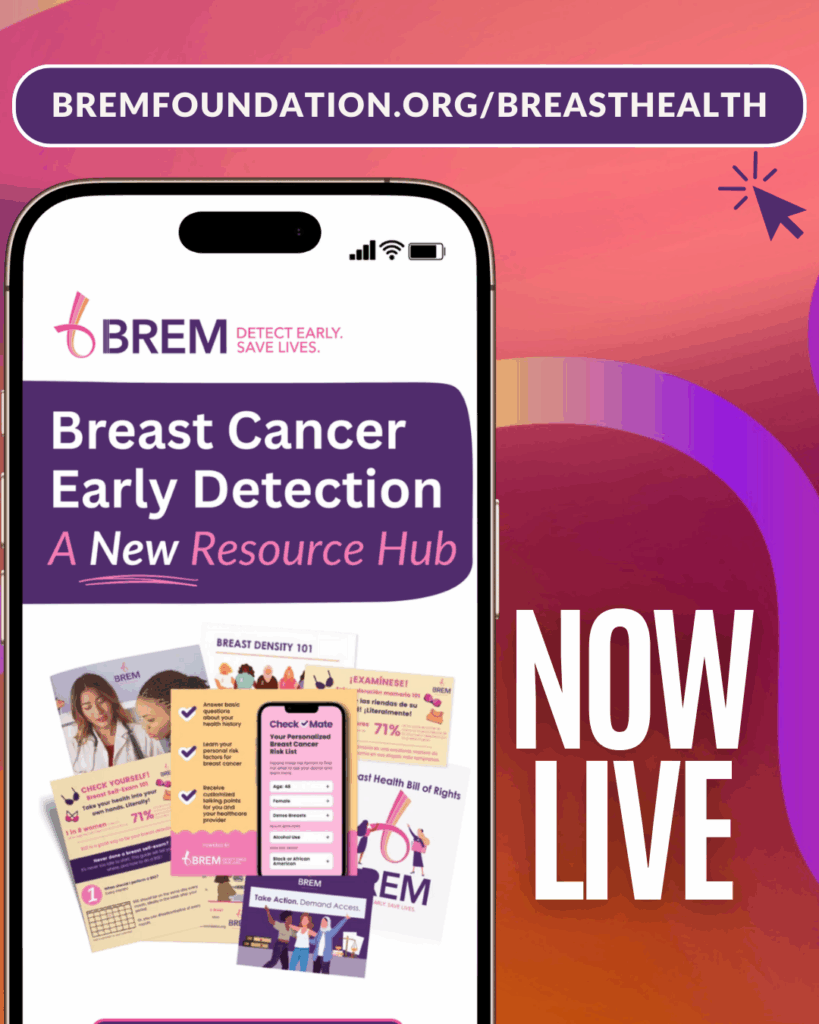
Brem Foundation is launching a new Breast Cancer Early Detection Resource Hub — a free, easy-to-use site with simple tools that provide actionable information that can save lives.
Their brand-new Resource Hub makes breast health simple with tools to help you:
✔️ Know your risk
✔️ Make a screening plan with your doctor
✔️ Get your mammogram every year
Stay in the KNow!
Get our monthly email featuring expert interviews from the healthcare industry with real insights, no fluff. Get the latest information that help you better understand your healthcare options.
Thank you for subscribing! We're excited to have you here.
You’re all set and will receive our monthly email with expert conversations and insights from leaders in healthcare.