
Rural Healthcare In America
Access is one of the biggest challenges in rural health, but it is only part of the story
Health Dame’s Robin Strongin kicks off a new series on rural healthcare in America with Christine Hamp, president of the National Grange. Their conversation looks at the critical issues facing rural communities, including hospital closures, access to care, telehealth and community resilience.
Chris also explains the vital role the Grange plays in everyday life, from bringing people together locally to educating members about healthcare and advocating for needed services. The conversation highlights practical solutions and the importance of intergenerational and cross-sector partnerships in strengthening rural communities.
Takeaways
- Rural healthcare is about more than hospitals.
- Telehealth can help, but only when rural communities have reliable connectivity.
- Rural hospital closures create a chain reaction.
- Delayed care can turn manageable health issues into serious conditions.
- Mental healthcare in rural communities faces unique barriers.
- Rural communities need a seat at the policy table.
- The Grange plays a practical role in local health and community life.
- Community resilience matters.
- Partnerships are essential.
- The future of rural communities depends on both legacy and new leadership.
Chapters
00:00 Introduction to rural health and Christine Hamp
02:17 Christine Hamp’s Grange background and membership legacy
04:33 The Grange’s local role and nonpartisan community work
07:39 Rural healthcare, telehealth and infrastructure challenges
10:39 Rural hospital closures and access issues
12:02 COVID-19’s impact and community adaptation
15:46 Why rural voices need a seat at the policy table
18:27 Healthcare deserts and rural health disparities
23:39 Mental health, stigma and trusted health information
27:47 Partnerships, grassroots support and local action
28:34 Robin’s music question and Christine’s song choice
30:23 Resilience, the future of the Grange and closing remarks
Robin Strongin
All right, hi everybody, Robin Strongin here with Health Dame. And today we're gonna be talking about a really important set of issues that is rural health. And I'm really pleased to have Christine Hamp with me today. I'm gonna introduce you Chris in a moment. ⁓ ⁓ of the National Grange. And for those of you who may not be familiar, we're gonna learn about that as well. Today's topic is really a kickoff to a series that Health Dame is going to undertake on rural health because I would have to hog up all of Chris's time for the next couple of weeks if we really wanted to do justice. There's such a wide array of challenges. And at the same time, there are also programs that are working well. So this isn't only about what's not working. I think it's really important as we always do to remember that a lot of people are working really hard. despite the challenges to make sure people are to access high quality healthcare. It doesn't mean that it's not getting harder and harder to do that, but we do want to shine a light on the people that are working under stress to get things going where we know they can be and absolutely must need to be. Because as we're going to hear lots of crisis ease when it comes to healthcare. So Chris, before we hopped on, we discovered that we could not be further apart we were growing up, but yet we're coming together to solve some of these issues or at least shine a light on them. Chris from the Western part of the country in Washington, right? On a dairy farm, am I correct about that? And I'm from Brooklyn and I just actually learned as an adult. that there were different kinds of cows. I didn't like put together that there are dairy cows and meat cow. I just learned cow. so there you go. you were elected in ⁓ 2023, ⁓ you're fourth generation ⁓ member of Grange. Do ⁓ I have correct?
Christine Hamp
I am, right. Which means that my great grandparents had been members and of course grandparents and parents making me a fourth generation, which is something that this organization has a lot of pride in is that legacy of long standing membership. But also, you know, we recognize that the most important thing walking through our doors right now are new members. Yep. a great place ⁓ everybody to come together. ⁓
Robin Strongin
Are your members younger and younger these days or is it across the board?
Christine Hamp
Yeah, no, think it's across the board. think we've, know, membership in a lot of ways. There's, you know, a lot of members stay with us. Different from many organizations, they stayed with us for life. In fact, we just presented a lady with her 90th consecutive year of membership recognition. consecutive years, 104 years old. And a young teenager ⁓ just that 90 year award. But the new members that are coming in the door are first generation members, right? They're folks that have found that what the Grange is doing at the local level is of and is something that they want to get involved with. And so it's finding that way to mix that longevity and that legacy member ⁓ those new folks and making sure that succession planning is taking place and that we're preparing,
Robin Strongin
Wonderful. So at its core, it's been around since the late 1800s and you've been doing this, well, not you personally, but the Grange has been doing this work for a good long time. ⁓ is one of the major ⁓ of focus for...
Christine Hamp
So almost a hundred Yeah, we've been we've been at this for almost 159 years. December 4 is our is our birthday. wow. It'll be 159 years on fourth of December. And so we've been we've been doing it for for a while. And I think you know, as we talk about health care, it's interesting how you how you soon start talking about some other things as well, like One of the new things that we see with healthcare, for example, is telehealth, right? But telehealth only works if we have a connection where you and I can talk like this, I can speak with my doctor or my health provider. there's much ⁓ in country that does not have this sort of connection, that we can't utilize telehealth. So when you bring folks to the table and talk about a solution that includes telehealth, it's a tool that
Robin Strongin
is not completely reliable all the time.
Christine Hamp
for everybody. Right? can't, I can't pick that if I live in Fort E. Right? Right. So there's, and then, you know, there's, there's things about the postal service. Some of their things where it takes a day or two longer because of having to go to a regional sorting facility than my, my medication. It to be. or kept at a certain temperature. By the time it works through that, it may be past the length of time that cold pack works, right? And is it going to be viable it arrives? And so healthcare, but it also extends into these other things. And you're like, well, you know, what is is ⁓ our policy is as wide as the room because we're focused on rural America. And so all of these things affect rural America. Healthcare and education and transportation and connectivity, all of these things together make sure that ⁓ can have these communities be the place that we want to live and ⁓ provide us with the resources to be able to do that.
Robin Strongin
Absolutely. And I know that your organization puts out some pretty terrific reports, which we will have linked on the website so people can reference them. But I'm going to take a minute because in doing some of the research, you guys point out that about 20 % of Americans live in rural areas. And since 2005, more than 180 rural hospitals have closed. 35 rural hospitals closed since COVID. And as of today, more than 700 rural hospitals are at risk of closing, which is 23%. And 2.3 million people live in areas considered ambulance deserts. I did not realize that. 29.7 million lack access to level one and two trauma centers within 60 minutes. So that's pretty staggering, not to mention what we're going to do a little bit of a deeper dive, mental health services, maternity and delivery units are closing and on and on. I know that since COVID things have been particularly dire. What's been going on since COVID that you're noticing? Whoops, are you able to hear me?
Christine Hamp
Yeah, you know, it's difficult to kind of zoom in. Yep, I can. Okay, great. It's difficult to zoom in on the exact impacts from COVID. know, from surge that's been done that it that it took a toll in in our rural areas, both with illness and with mortality. You know, the of long COVID are, I think, being figured out and what looks like and how that's treated. But again, it's it's access. having those rural care provider in those areas to be able to say these signs and symptoms are from COVID. Here's you need to do to survive, to get ⁓ to all of different things. like our girls, so never a meeting. They transferred from an in-person to this sort of a meeting where they could look each other in the eye and make things happen and they found ways to continue to serve their community. They were nimble, they were able to to what was going on in own atom. And so rather than ⁓ than that monthly meal where people would pack into that Grange Hall and sit down next to each other. They did it as a drive-through. And so they were buying clamshells and they were putting their meals in a clamshell and people were pre-ordering and driving through and taking dinner home in order support that Grange. And many of them, those funds that they raised in that manner ⁓ going to things their community that needed help. help during the time of COVID. So people granges, you know, adapted, they made things happen. Others weren't able to do that quite as well. And, you know, and ⁓ know that some of them are just kind of getting back up on their their feet and, and really back to a cadence that they were used to pre-COVID. And, know, it's, but I think it all comes back to the access issue ⁓ with with being able to... I don't know, to say that the sign or the symptom that I'm experiencing is something that can be treated and not just because I had another birthday, right? Or not just because, you know, something else. And we see that all the time where, you know, I'm on a medication and I look at the list of side effects. And like, too, ⁓ that is a side effect. And then something else starts bothering me and I'm like, well, that's a side effect too. ⁓ then all of a sudden you're like, wait a minute, I do have something else going on. And it was just being, it's, is a side effect, but this is actually something new. Yeah. And so a, there's a lot of this where, ⁓ you know, trying to figure out and It's
Robin Strongin
Thanks
Christine Hamp
incumbent on rural America to grab that chair and to pull it up to the table and to be a part of those conversations to say, look, folks, you can't continue to make policy. You can't continue to do these things for rural America without having rural America at the table.
Robin Strongin
100%. Way back in the day when I worked at GW University, we had something called the National Health Policy Forum. And one of the most important that we did was to take the people making policy and legislation from Washington into the communities, because their heart could be in the right place about what a community needed. But if you didn't understand that when it rained, the road washed away and people couldn't get through. If you didn't understand that there isn't at that last mile a connection with technology, if you didn't understand that it takes 60 minutes to get to a dialysis center or a cancer center or God help you and Nick you if there even is one, then the policy you're making is meaningless. And coupled with that, there is the policy wonk problem of a lot of the loopholes. And I know we have one of your reports on, if I get this right now, it's the dual classification. So essentially what happens, even though the rural hospitals are so financially fragile, Congress ⁓ make ⁓ arrangements for additional funding, but urban hospitals, are using an administrative loophole to classify themselves as rural, siphoning off money from the rural. So there's a lot of trouble going on. know Health Affairs also did a study and posted. I know you wrote an op-ed on this whole issue. So there are some very regulatory and reimbursement policy issues that need attention. There are severe worker and workforce issues. And as you said, it all wraps up into access. The intent is there. People want to stay healthy, but we all have to be working together to figure this out. And because of the nature of ⁓ ⁓ the challenges ⁓ really daunting,
Christine Hamp
They are. you, you know, the numbers that you read for rural America are a best guess because everybody is a different initiative. If you're looking at health and human services, if you're looking at HUD, you're looking at, which is housing and urban development, if you're looking at the U.S. Department of Agriculture, everybody has a different definition. And I guess I like to say, ⁓ We know it when we see it right, I mean if this community is is rural and you're right there's you know if folks would spend as much effort solving the problem as they do finding these loopholes that are that are in homes where I don't think that that was the intention ever right. it's just us there's a missing link to connect something and in that gap.
Robin Strongin
No.
Christine Hamp
Boy, they took advantage and have made it a freeway and you're absolutely right that the largest most well funded facility in some of our largest teaching healthcare facilities are able to call themselves and take a large chunk of those funds that ⁓ should be supporting truly rural hospitals. ⁓ that you see when you're driving through a small town they're not a high rise. They're usually one level. there's a drive through for the local ambulance and there's a front door and that's about it. that's what communities have. And you use the term desert. We're hearing that word, kind of one of those new buzzwords that we're hearing whether it's a food desert, whether it's a desert for healthcare, and it can be specific to cardiac care, it could be specific to mental healthcare, it could be specific to maternal care, where there's this space that you've gotta go X far to get that help because those specialists have left our rural communities. They're following the money. They're following where those facilities, if the hospital leaves, so does the workforce, right? And so we're no longer able to get that. all of these, And so people were like, well, I don't get it. Why is cancer worse in rural America? Why is diabetes worse in rural America? Why is almost every health diagnoses worse in rural America? Why are the percentages higher? It's because of access. It's because, let's just say I'm the son a rancher and in my, you know, and we're raising some kids ⁓ we've got our elderly plus, and we're trying to make it work with what we're able to generate on a ranch. And if all of a sudden mom or myself ⁓ one of the kids has a sign or symptom that would should get checked out, you of push it aside. Let's see if it gets worse. Let's see, let's see, let's see. And then of a sudden when it gets worse, we're not at stage one, we're at stage three or stage four, right? And so ⁓ the mortality is all of a sudden, you higher because we didn't find it soon enough. Or we choose not to go to get that dialysis done every day. we choose not to refill that prescription because the pharmacy's finding, yeah, gotta go ⁓ an or more each direction. ⁓ And I'm not home driving the truck that that we need to as part of harvest or I'm not chasing parts or I'm not picking up kids from.
Robin Strongin
Yeah, it becomes a trade off and it's a deadly trade off. you know, it isn't even a question of convenience. It's just not there. you know, these are not simple conditions to have to be dealt with. These are lifetime chronic conditions that require ongoing treatment. And it's just tough road for the whole family to have to figure out how to make this work. ⁓ it's, it's really something and I do.
Christine Hamp
being raised by the...
Robin Strongin
Go ahead, say again.
Christine Hamp
I'm sorry, I was gonna say being raised by the, I was gonna say Being raised by generation after, you know, of farmers, right? You're raised in a situation of rub some more dirt on it. I it wasn't, we weren't gonna take time to go to town to get a couple of stitches. was, you know, wrap your sock around it, rub some dirt on it, and let's, you know, we've got ⁓ hay get in or whatever that was, but that's, That's the mentality. It's that silent, just pull the bootstraps up and going. And I'm not going to make an announcement at Granger in or at the high school band that I was just diagnosed with something. You do ⁓ what you got do. And that kind of leads us into the mental health arena of even if there ⁓ a a local practitioner that could help with that. There isn't a rural person in America that wants their truck to be seen outside office, right? And to announce to the town that I've got an issue that I need help with. And so that's whole other piece of this. How do address it? You know, we've got an amazing partnership with a group called Rural Minds. I would that Rural and Jeff Winton is their and he be a great person to have on chat with more about what's going on with Rural America. we're very much engaged in the efforts that they're undertaking and wanting to make sure that the resources are provided. mean, that's what we've done also from the get-go is provide information, is to educate our members, educate our neighbors on, for example, let's talk about vaccinations. Yes, the range does not take a standing that you should or you shouldn't. Right. But but here's the best science. Here's the information. And then you can make a decision for you and your family based on on what you want to do. But here's the best stuff. Just like candidate forum. Right. We're going to invite a candidate. Are there a D or an R? Here's what the candidates have to say. So again, it's an opportunity to inform and educate the community. That's what we're going to do. And so in a lot of our events, we have a lot of medical. are available for folks to pick up and home and they can read at their leisure and they can make those connections is ⁓ the best can do. And just to try to keep our eyes open and stay connected. And that's the other thing that Grange does and that Grange did throughout COVID to back up to that is to stay connected, is to make sure that ⁓ somebody's not. their own without somebody checking on them and feeling like they're a part of something bigger. We talk about that all the time about why join Grange. Well, to be a part of something greater than than just you. Yes, right. For all the reasons that we've talked about. If you want to save your rural community all by yourself, that's a heavy, heavy
Robin Strongin
Yes, yes, I can imagine.
Christine Hamp
If you can do it with all your Grange member friends, then what we do better than anybody is we partner, right? We find those other organizations that we can connect with in order to expand the influence and expand the reach and expand, you know, we're multiplying our experiences and our expertise across a greater number of people to make a bigger difference. That's what Grange does, is bring people together, expand that experience, and then go conquer the world, right? Go.
Robin Strongin
⁓ my god
Christine Hamp
we want it to be. Yeah, what we want it to be.
Robin Strongin
Yeah, yeah. mean, you caught me. Every state has a rural area in it somewhere. So you're everywhere. You're just everywhere. And before I let you go, because I know we were talking about you have an awful lot to get done. I ask everybody to please give me a song that best reflects ⁓ the that you're doing so that we can add it to our playlist. And then again, for people who don't know, the reason I do this is husband loved music. We both love music and I've done a lot of work with music and the brain. ⁓ before my husband passed, ⁓ died early of ⁓ body dementia not too long ago. We always listen to music. And so as a legacy to him and the work I'm carrying on doing, putting together a music playlist because why Music is good for not just your brain, but your soul, I would say. So with that backdrop, what is the song for the Grange and for you, Chris, that we can add to ⁓ the of playlist?
Christine Hamp
Well, I could not imagine a playlist of anywhere not having Eye of the Tiger. ⁓ I ⁓ the tiger of course that's a survivor song from 1980. Yeah, to 1982. nothing ⁓ 80s rock dating myself but yeah, that's that's the sweet spot.
Robin Strongin
⁓ yes, exactly. Love it, love it, love it. And you know what? We don't even have it on there. So I'm glad you are bringing it to us because that's a must have in my mind as well. So.
Christine Hamp
about when they talk about the thrill of the fight, you know, it's that determination that just, that's what that's what Grange is. That's what Grange does is, that's why we're here almost 160 years later, doing all these amazing things is that it's that resilience, it's determination to make sure that these ideals that we stand on that have been around and for this organization from the get-go still make a difference, still resonate today. And we're doing everything we can to sure that folks know we're still out there and make sure that we start expanding into some of those communities that currently don't a Grange. Maybe they used to, maybe they never have. but every community and it's not just rural. mean, that's our sweet spot. But granges are in urban areas, they're in suburban areas. And think that makes sense for any place. mean, picture this, picture standing in the coffee shop and a conversation behind you about a house last night where the Smith family ⁓ lost their home and all their possessions. Where if I'm a member of a Grange, I could get on my phone and in the app, the group app where everybody's linked together and I could just say, hey, the Smith family on Route 2 or whatever road or whatever street lost their home last night, let's, who wants to take the lead on gathering some stuff up and you can you get that I mean that's called hyper local right? I that's like eating the need on the spot at the minute. Everything about that is just pure beautiful ⁓ what Grange does and and and that can happen as easily in Capitol Hill. ⁓
Robin Strongin
Anywhere.
Christine Hamp
in rural upstate New York, right? So what we're looking for. That's the energy and the vibe that we're looking for that can maneuver and flexible ⁓ and meet needs of today. Yes, know all of this cool stuff that we've been involved with back here, but my members would be sad if I didn't use the windshield thing with you here. But we're going this direction. We're looking out the windshield, not that tiny little rear view mirror. And that's we're looking for folks to join us is out that windshield, working together to solve these things ⁓ and to sure that tomorrow's better than it is today. Every single day.
Robin Strongin
Love it. And please count Health Dame as being in that driver's seat with you looking out the windshield. you know, we have a lot of work to do. ⁓ to your point about partnering, I don't think we'll get any of this done if we don't continue to partner intergenerationally so that we share the wisdom of ⁓ in front of us and how people move forward. I think we need to listen to what young people coming up are thinking about and helping us to keep moving, alone forward.
Christine Hamp
Yeah, absolutely. you know, that's Grange's is very much intergenerational. I mean, that's that's really one of our our secret weapons is, you know, there's no place else where today's family where, you know, maybe you've got a parent that's moved back in with you. Maybe your kid has boomeranged back. with their spouse and their kids. guess what? All of sudden you've gone from one generation in your house to four generations in your house.
Robin Strongin
to suddenly the nest is overflowing.
Christine Hamp
that local Grange meeting is a place that ⁓ ⁓ up the car, grab a hot dish and go to the local Grange meeting and and every single person there has a place and that they can be engaged in. I think that's super important. I think that's something that families need to know that that we provide and that they're going to be looking for is something that they can all do together. They don't have to leave. one home with the kids or they don't have to leave somebody home to keep an eye on mom everybody can go together and participate and be welcome. absolutely.
Robin Strongin
That's amazing. It's very hard to find that. It really is hard to find that. So, wow, thank you. I've learned so much and ⁓ we'll be back in touch with you and your team and we will follow up. I will reach out to Jeff at Rural Minds. Thank you for that. That's gonna be really important. ⁓ keep. keep eye of the tiger, we'll keep fighting the good fight together, I hope. So yeah, on. All right, wonderful to talk with you today. Thanks for taking the time and ⁓ I will in touch. You have a good rest of the day and I'll get you the tape and everything. Thanks a lot.
Christine Hamp
Bye bye.
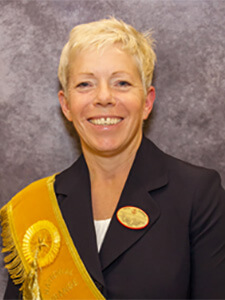
President of the National Grange
Christine “Chris” Hamp is President of the National Grange, a nearly 160-year-old organization focused on strengthening rural communities through advocacy, education, and connection. A fourth-generation Grange member raised on a dairy farm in Washington State, Chris brings decades of leadership experience in rural policy, community service, and public safety, including a 30-year career in the fire service.
The National Grange Reports:
- Rural Health Report:
www.nationalgrange.org/rural-health-report/ - Dual Classification:
www.nationalgrange.org/hospital-dual-classification/ - Alzheimer’s:
www.nationalgrange.org/alzheimers-crisis/
FAVORITE SONG: Eye of the Tiger
Stay in the KNow!
Get our monthly email featuring expert interviews from the healthcare industry with real insights, no fluff. Get the latest information that help you better understand your healthcare options.
Thank you for subscribing! We're excited to have you here.
You’re all set and will receive our monthly email with expert conversations and insights from leaders in healthcare.