
Men’s Health
André Blackman in Conversation with Health Dame’s Robin Strongin
André Blackman joins Robin Strongin for a thoughtful conversation about men’s health, prevention and the changing ways men engage with care. He discusses how technology, community, family roles and trusted information are shaping health decisions, and why dignity, empathy and more inclusive research matter in building a better healthcare system.
Takeaways
- Men’s health includes mental health, physical health, sleep, stress and prevention.
- More men are paying closer attention to their health than past generations did.
- Wearable devices are helping men track habits and better understand their health data.
- Health data can help patients have more informed conversations with their doctors.
- Fatherhood and family responsibilities are shaping how many men think about health and care.
- Community and peer connection can help men share experiences and trusted information.
- Better representation in clinical research is still needed to improve health outcomes.
- Men are becoming more aware of family history and how it affects long-term health risks.
- Dignity, empathy and listening are essential parts of good health care.
- Building a better health system will take stronger connections between patients, clinicians, researchers and payers.
Chapters
00:00 Reconnecting and Introduction to Men's Health
02:52 Exploring Men's Health Challenges
05:35 Technology's Role in Men's Health
08:08 Changing Attitudes Towards Mental Health
11:09 Participation in Research and Clinical Trials
13:52 Community Support and Health Conversations
17:08 The Future of Medical Education and Empathy
22:06 Embedding Dignity in Healthcare Experiences
23:27 Key Takeaways for Future Healthcare Professionals
28:04 The Role of Payers in Patient Care
29:37 The Changing Landscape of Men's Health
33:43 The Importance of Community and Connection
37:15 Privacy Concerns in Healthcare and Technology
Robin Strongin (00:00)
Okay, good morning. I'm here today with Health Dame and a super special friend and colleague who I'm just beyond excited to be reconnecting with after a few too many years, right, Whatever age we were at the time. Yeah, yeah, yeah. And so Andre Blackman.
André Blackman (00:12)
Absolutely too-
Robin Strongin (00:20)
It is just a real treat to be with you today. We talked before we started the interview and I think we could have talked another three hours, you have things to do and I have things to do. So we're going to get right to it with today's topic, which is men's health. And I'm really interested. I have so many questions as I always do. And I know you'll have some really cool answers. So.
André Blackman (00:27)
as always.
Robin Strongin (00:46)
What we're going to do to get started is I'm going to give you a chance to talk now. And I would love for you to talk a little bit about the work that you're doing now. I know you're involved in a multitude of endeavors, let's say, talk to us about what you're doing in the health space at the moment. Introduce yourself if you will.
André Blackman (01:09)
Absolutely.
Thank you so much again for this opportunity, Robin. Anytime that we can team up on anything, I'm all smiles and energy. But it's also very relevant and timely, just kind of given our current landscape. And sometimes we've been so in the weeds of life that sometimes we forget about some of those kind of basic things to take care of ourselves. But yes, I know we've been teaming up for quite some time. I think that
some of the common threads for me with my body of work has been around health, population health, digital health, the uses of technology, in innovation when it comes to building the future of health. back in 2017, I founded Onboard Health, which was an executive search and advisory firm that was really focused on building the future of health through talent and community.
and making sure that the leaders who were building the future of health also represented the diversity and the diverse fabric of our society in our communities. kind of touching on things like the social determinants of health, the built environment, right? where we live, work and play, things, you know, health in place, which is, now kind of given where technology is going, right? we have all these different opportunities.
to at least have a line of sight into things that are impacting our health. But these days I'm still in ecosystem builder mode. I partner with organizations around their talent strategy, still kind of in the executive search landscape as well. So making sure the right people are at the right organizations doing the right thing to build the future of health. And also kind of the ecosystem building piece really is around.
convening the right people as well for events, fellowship programs, things of nature too. So, still the people person.
Robin Strongin (02:54)
which is why I was really anxious to talk to you when you're out and meeting with people and working with organizations, you really are at the intersection of health and social impact. And there is a lot of discussion about women's health and men's health. And I'm not sure how I feel about breaking things up that way. But the reality is there are issues unique to each set of
health. And I really was excited to talk to you about it because you talk to so many people. And in your experience, both personally and with others, what when I say men's health, what does that mean to you and to the people that you're interacting with?
André Blackman (03:43)
Yes. So when I hear the terms of men's health, think about, obviously, people that are in my, in my chair, right? I'm a father. And that's one of the most immediate things that pops up into my head, what are the unique challenges, that that I've been experiencing, right? particularly as a cis, hetero male in our society, that's kind of just my lens of my experience. And so
thinking about it from that lens and what are the kind of unique challenges that might happen in my life? So I think about health from that perspective. And I also, and we'll probably get into this as well, but I also think about, I just had a breakfast conversation with another colleague and so we're the elder millennial landscape is what I'm hearing, right? And so I think about being in that scene, all those kinds of different identities that I just kind of mentioned.
but also in the age bracket that we're in right now as well. So my mind immediately goes to those challenges that happened when we entered the 40s for sure.
Robin Strongin (04:41)
Just you wait, Yeah, yeah, just you wait. I'll still pretend I'm in my forties. I mean, actually, embracing age, it's a gift. I mean, It's a blessing. is not easy. And it's not, I mean, it's not easy in the ways you would think.
André Blackman (04:49)
Yeah
Robin Strongin (05:01)
of aging but then there are all the surprises that just hit you like a Mack truck and it's like my God someone needs to us remind us this is coming but for this is a beautiful time and you have a beautiful family and so you know it's it is a special time but for for men in the United States seeking health care and health care obviously means mental health it means physical health it means.
whatever it needs, know, assists of different types, physical. What does that landscape look like? And I know that's just a really broad question, but where is it working? Where do you think some of the technology work you're doing might prove to be helpful?
André Blackman (05:47)
Yeah, I will say, and I'll start with kind of like the, you know, at this point in my life and the kind of generation that I grew up in, there's one foot in front of traditional, like free iPhone, that sort of thing too, where a lot of traditional tropes and stereotypes of men and health are still very prominent, right? So even not taking care of yourself, not going to the doctor, not having a line of sight into your health and wellness.
Prioritizing sleep right driving hard all those kind of different things That's been up on one half of the coin for me, right? Obviously being in public health I have a different lens because I know the importance of prevention but what I think about are those kind of aspects were like hey I'm good or just kind of keep working That's the priority and then you'll be able to get to health when you get older that sort of thing, too
The other piece though, the technology aspect is that like right now, a lot of those stereotypes have been re-imagined, I'll say, where a lot of people my age are paying attention to their health. You you hear the terms longevity right now at the same time, right? Where, and this is a term that you and I have known for a long time. there's the wellness piece, all those kinds of different cycles, but it's like, you know, the...
how you're able to stay connected to the effects of not sleeping enough. This is another thing that was a point of conversation early this morning where, now we have the technology and the tools I'm wearing my, my whoop band right now alongside of Apple. Like a whoop, W H O O P. Yeah. And, back in our days, when we were just kind of figuring all these kinds of different things, you had the, obviously you have the Apple watch now, but back.
Robin Strongin (07:18)
What is
André Blackman (07:28)
Back then you had the Fitbit, that was like the big thing or like Jawbone, right? all those kind of different things where you had an opportunity to link what you're doing in movement. But I will say now for me, men's health really has to do with, okay, here's the roles that men are playing. Once again, like I said, specifically for me, as a dad, and then how does health like wrap around those kind of identities?
Robin Strongin (07:53)
Do you think men are more open about talking? You know, back in the day when I was growing up, my parents' ages, particularly men, I they almost never went to the doctor and then they ended up, having heart attacks or something. Of course, nutrition was different. We didn't know as much about blood pressure. Smoking was all the rage, blah, blah, blah. It was a very different time. But also,
people didn't talk about going to a psychiatrist or psychologist for help. Now people, seems to me, are more open. I don't know if those are my, I don't want to be stereotypical. So is it an eight generational thing where people are used to sharing more personal, know, patients like me kind of started a whole revolution to some extent.
André Blackman (08:40)
Yeah, no, absolutely. And to your point, I I truly feel like the stereotypes have it's actually for those in my age group, where we've kind of grown up with a sort of level of technology, it's become readily available, right? So I think before it's we had to actually talk to somebody, we had to make an appointment, you know, we had to craft a narrative of the why that we're coming, particularly around mental health. And now we have our phones.
Robin Strongin (09:05)
Do you feel like you're getting good enough care through the devices or do you feel like that's a stopgap till you can get to that appointment with someone in a white coat that's gone to medical school and has a certificate and rust the information you're getting with all these devices? how is that? Like I think it is for younger folks. I mean, they're very comfortable in that world. It seems almost more than going to.
André Blackman (09:20)
Yeah
mean, being able to just allow yourself to be, I mean, and this is like the generation that got used to Uber and Airbnb, right? they're a tech company. They don't actually own a hotels. They don't actually own properties. They're facilitating the ability for you to participate exactly. So with that mindset of being able to be open to participate in experiences, I feel like that's really kind of led over into health, right? So for example, just being.
just being willing to wear a device on my arm that is keeping track of my movement, my sleep, that sort of thing too. And then, even looking at it to see what is it saying about my actual habits and behaviors and how that directly ties into my health and wellness, right? So there's an openness, not only to participate in those activities, but also to look at the data and say okay, Andre, this is actually unique to me.
in between my appointments, I can actually use that information to tweak and change my behavior to act accordingly. So.
Robin Strongin (10:31)
So
you go to your clinician with this data, are they patient about, in that little bit of time you have together face to face, are you able to really do justice to it or you have it down to a science?
André Blackman (10:46)
for sure. And I think this is another kind of piece, right? you're able to collaborate more with your PCP. But more importantly, you're able to actually do a little bit of homework to find out is this the right person for me? Because if I'm going to be inquisitive and want to have conversation, now we have opportunities for doctors to say hey, this is this is my strength. This is how I show up. Fortunately for me, my PCP is very on the cusp of technology.
and he's kind of dialed into having conversation as well. And now you're able to even message, physicians, back and forth, right? you remember Dr. Jay Parkinson, um, he was the doctor of the future, in fast company, years ago, but having some sort of opportunity to interact with, your care in a way that wasn't able to before, which I think almost it was that black box of health, I don't even want to go through that.
Right? So let me just kind of keep going. But now you have a continuous loop of feedback information.
Robin Strongin (11:40)
What are you hearing about men's interest in participating in research, like clinical trials? Are men willing to do that? Do they say they're too busy with work and juggling life, you know, responsibilities, or is there a willingness at the same time all this innovation is happening with, let's call it digital health. There's also innovation in the more traditional R and D in the medicine.
and treatment and therapeutic, whether it's biologics or genetic. mean, there's just this world that's exploding of potential that the data that you're talking about could help inform and get us to a cure, let alone prevention. So it's really important to continue that. Are men in particular, because you know, men, men of color, really important to get involved in research. Back to your earlier point about
the importance of including diversity in all of that too. sure. history of the nonsense that went on and the horrific stuff, is there more of an openness or is it still a hesitation?
André Blackman (12:49)
Yeah, I think there is. Yeah, I think it's a combination and a lot of that nonsense is ongoing, of course. OK. Yeah, but we have solutions, right? So for example, the company Acclinate, if we're talking about representation diversity in clinical trials, Del Smith, I believe, is doing amazing work as CEO over there. I got the chance to meet him a few years ago and see how they were.
Robin Strongin (13:15)
The
mission is to ⁓ diverse populations into clinical trials.
André Blackman (13:16)
Yeah, the mission is so...
Yes, to use an AI powered platform to reduce the barriers of clinical trials, but also to partner with pharmaceutical companies and other kinds of organizations in that exactly that rely on the data and really kind of optimizing to have better data and more representative data to power their services and products, right? So you have companies out there that are kind of mitigating some of those issues.
I'll say that, and that's like on the enterprise level. I would say that, and once again, speaking for me, more men are more aware of their own family history, right? And also the struggle that a lot of their family members and friends are having. know, 15, 20 years ago, we didn't have this constant flood of how people are doing and what's happening. But now I can say hey, two of my best friends just went through a really tough diagnosis and they're able to track back some of their
pathway to that, right? So lifestyle or even genetic components, right? That oftentimes we're not even aware. So I would say men, particularly once again, like in my circle, in my kind of group and even older are more aware in general and say like, okay, these are the steps I can do to prevent or at least become more aware and to participate. So on the kind of larger scale of participation and health equity and things of that nature too.
I'd say there was definitely a golden era these last, the last couple of years, right? That opened the door to more opportunities to connect with others, right? And I would also say, and we talked about this all the time is Health also looks different, right? Especially for men who want to participate in their health. It's not just going to the doctor. It's being part of a dad group, right? We're starting to see a lot more fathers getting together to talk about
their health to share stories, right? Things that they do too. So these kind of new ways of living that are, less pressurized, that are less isolation, that are less like, hey, this is a concept that I'm gonna hold onto for the next 25 years. no, let's have more conversations about what's happening. So I'd say those are the multiple levels that I'm seeing men participating and becoming more aware. And also just kind of you know, ⁓
unlearning a lot of those kind of stereotypes.
Robin Strongin (15:42)
And to me, it's so critically important that there's this appreciation for all of the support and the community and the, because support groups are not the right word. They're just, they're the people. They're just like getting together and helping one another. And it's not only you, you have advice for one another.
And it's a real opportunity to share trusted information because we know this is a real problem because some of the tools are so powerful and they're so positive, but they can also be used to, provide a lot of bad information deliberately. And so learning how to sift through that, because the truth of the matter is people really aren't, everyday people all the time are just not going to the CDC website the way they once were. So they're going somewhere.
And it's how do you understand that information is safe, is good for, know, and who do you talk to? But you can't always get your physician or PCP or clinician or whomever. So how are you supposed to figure out, whatever the issue is that it's the right thing? So many issues. And as a new grandmother, I hear what my kids are doing with their...
child and then I come in and ⁓ did you try this and they wouldn't be like ⁓ my god, feel like you've lost your mind and I'm like I don't know you guys grew up fine but it's different now and so things do change and with good reason but it's just the where you get your information and as you're talking and the life science companies the R &D kind of ecosystem if you will are really open to what you're talking about.
André Blackman (17:06)
Right.
Robin Strongin (17:24)
Where I wonder, I haven't heard as much and I think the missing link. So here's another idea for you is, medical schools hearing this? Because they're training the doctors. And what you just said is I'm looking for someone who's willing to have these conversations with me. Doctors, when they set up a practice, they have business consultants that tell them how many minutes with someone, where the reimbursement advantages are, et cetera, et cetera.
But where is that? How do doctors and patients, we almost need like a match.com for doctors and I guess Zoc Doc and other kinds are trying, but.
André Blackman (18:04)
Yeah,
well, that's a great question, Robin. things are happening fast. I will definitely see.
Robin Strongin (18:09)
Fast and I don't see them reflected in medical school all the way.
André Blackman (18:13)
Yeah, and that's great point. And usually, a lot of early postdoc physicians and that sort of thing too, or they've done their rotations and that sort of thing too, they are augmenting their own education around AI. There's more and more of these kind of programs that are looking for clinicians, especially early career clinicians to help to transform the...
I guess the educational component, because especially now with AI tools being embedded in so many different things, that's another big part of where I'm seeing kind of the training get implemented at the same time. But it's a wrestling, right? Because there's a lot of the curriculum that's been passed down generation after generation.
Robin Strongin (18:57)
The
thing is it takes a long time to change and adding an AI class is not going to get you to goal.
André Blackman (19:07)
Exactly. I will say that I remember several years ago, like the Dell Medical School, I think in Texas and in Austin, UT, University of Texas, the Dell Medical School there, I remember hearing about programming before you're able to move forward as a clinician, you have to do a rotation in the community. So kind of being, understanding the community, understanding, what is
What are the issues that your community are facing? And then attuning your clinical lens to that at the same time. I remember that was such a big deal, especially at the height of the social determinants of health, what health is happening outside of the four walls of the hospital. And I remember they were kind of a shining beacon because they were making sure that the doctors that they were graduating were attuned to that. Aware, yeah.
Yeah, very aware but also have the tools to actually do something in the community. really? Yeah, this is not, yeah, it was not just a knowledge thing. was
Robin Strongin (20:06)
Yeah, and here's how you then use, yeah. You know, it's not unlike, and I know this is another point of intersection for us, the appreciation of arts in informing how you do that. So you had Fast Forward Film Festival that we had worked on. Way back, way, way back. But you know,
André Blackman (20:09)
Yeah, it is required. Yeah.
Bye!
Robin Strongin (20:30)
I did some research and some of the medical schools are really using art in their programs to teach medical students how to see. The first time you have a new patient and they're sitting in their little gown at the edge of the table and the door's closed. So they knock and they walk in and the first time a med student lays eyes on this new person, they're making assumptions about this blank
canvas in front of them and all their world experience are making assumptions before the person opens his or her or their mouth and so learning how to see is something that's taught in art school but now it's being taught in medical school and it's really powerful I think.
André Blackman (21:20)
Yeah, absolutely. mean, there was, and I'm sure we'll have like some show notes as well. So because you're going to have like resources. Yeah, yeah, now there's like a resurgence around empathy and dignity. And that's the thing that I think you're honing in on is not only are you able to see the kind of person sitting across from you, but you're almost able to empathize and know hey, at end of the day,
Robin Strongin (21:29)
And our website will list. Of course.
André Blackman (21:48)
This is a human being that is deserving of a dignified experience with you, right? And so this is something that Chris McCarthy and Amy Heymans are doing really well with a conference that just actually happened, I think a month and a half ago, called Dignified Futures, I believe. But it's also all about embedding dignity into the experiences that touch on health, right?
And that could be anything from end of life care as well, which is a huge one that I know you and I have touched on in the past. But these are the kind of things that make the difference, right? And AI can't replace that. Also, like narrative and storytelling is another kind of aspect that really equips not only clinicians, but everybody who is touching healthcare.
⁓ with that lens that you just mentioned, right? Around what's the narrative? What's the story behind this patient? what are they going to go home to? Do they have something to go home to, right? And how that is going to affect their decision-making process, right? These are the kind of things that absolutely matter.
Robin Strongin (22:50)
So if you were going to get in front of a class of med students and they're graduating, you're the speaker at the graduation, what are the three things you'd want them to walk away with as you, as a man seeking health, the care in the United States? What three things would you like them to walk away knowing you wish they
could understand about you as a patient who maybe is afraid, maybe is whatever you are.
André Blackman (23:24)
Yeah, no, I would, and just really quick, going back to thank you so much to Robin for believing in the vision for Fast Forward Health and the Film Festival and the narrative, you were the first. really? To say hey, let's make this happen, Andre. And so, and I feel it's a great segue into one of the things is talk to more people, spend time with people in their communities, in your own community.
listen better, learn how to listen better. We have information at our fingertips all the time, but that's not helping us to attune our listening skills to people. just kind of what we just talked about around dignity, respect, those are things that cannot get automated, right? Those are things that, you know, don't just kind of, get filled out really quickly on a questionnaire, but you have to actually spend time with people. I would say spend time with people. Once again,
how they live, how they work, how they play, and what brings them joy. And that's going to go to my second part is think about yourself too. if you're unable to tap into what lights you up, what brings you joy, what's important to you, it's gonna be hard to align with another person, right? And this is what I talk about a lot, especially in my executive coaching with.
a lot of leaders across social impact and healthcare for so long, we've been outward facing for so long. How do we take care of this person? How do we take care of that? And we oftentimes, as we saw during COVID, a lot of burnout and even suicide amongst a lot of clinicians, right? Because once again, there was a disconnect between how they were showing up for themselves and what they were doing, from an outward service perspective as well.
Robin Strongin (25:06)
And
that goes for the nurses to just got to do a plug for my nurse. ⁓ The physicians for sure. was the whole team, the entire hospital staffs, everybody. Please something.
André Blackman (25:11)
Yeah, like nurses
for was.
Yeah, and it has not recovered.
Robin Strongin (25:24)
I was going to say, yes, it has not recovered and we are very, we are poor learners. We don't take what we saw and then try, you know, it takes us a while to fix it. We've done a very good job yet.
André Blackman (25:39)
certain people are poor learners because they don't really have to learn. That's a whole nother stop. That's a nother conversation. But a lot of the executives and people in power, it's, a, Hey, we'll just, you know, get bailed out and do something else. Right. But, know, shout some kudos to the people who lost their lives or our lives are forever changed. But, that's a whole nother topic as far as how the healthcare system works and like,
But I would say the third one is to do your own curriculum and continuing education. And what I mean by that is, go out there in the marketplace and see what organizations ⁓ are doing work that matters to you, right? A lot of clinicians and once again, nurses, people are figuring out hey, I can be ⁓ multifaceted with how I want to show up about
my body of work, right? And this is what I talk about all the time. This is what I coach about. It's this era right now, making sure that you understand what you want to do more of and then figure out the best ways to do more of that, right? So there's conferences, there are organizations, there are ways in which you can come alongside of a startup company, right? At the same time and use your body of work and your knowledge to help a specific
solution and tool do more of the good that you want to do at the same time, right? So I'll say those three things are talk to more people and spend more time. It's this is the basics kind of stuff too, but that you don't become so far away. Yeah, it's the humanity piece. And then once again, bringing that back to you, becoming more self-aware, taking care of yourself, right? Those are the kinds of things that will keep you
in the long game of what we're doing here.
Robin Strongin (27:20)
what I also wonder, Andre, is we always talk about the clinicians who are always then going to point fingers at the payers and say, the systems we, you that would be great, but we're only given 12 minutes per interaction, or we're not allowed to do this, ba-ba-ba-ba-ba. I also think, and when Brian was sick, I've had
Unbelievable. I can't even believe sometimes I'm not in prison for you know, I was very Brooklyn when I had to And so the things I would say but people understood I was fighting for Brian so however and some people worked really hard with me and many just read from the talking points and you know you get in this terrible loop of Babel that is getting you nowhere but frustrated
André Blackman (27:52)
I love it. I don't like what you mean.
Robin Strongin (28:14)
But I wonder if there's a way to take some of the people in the payer world and let them meet the real people because I think, you know, they're even further removed from the decisions, but it's what they're putting in place that's affecting everything that the clinician does, that we are trying to do to maintain the health of us or our loved ones. I mean, there's a piece missing there. So I think that
André Blackman (28:36)
Yes.
Robin Strongin (28:43)
We just have to reach more people at that human level. And it's how do we do that? think that's for sure. I think that's a giant opportunity, frankly.
André Blackman (28:53)
Yeah, and it's always been there, right? how are we stitching together the people in the ecosystem of health, right? And bringing it back to men and men's health and that sort of thing too, participate in those kind of round tables and conversations that might be happening in your community, right? those are the most- For example. Yeah.
Robin Strongin (29:11)
in big companies because I
mean, if you look at the paternity, not maternity, you know, my husband, my husband, my daughter's husband has always gotten better leave than she has when my husband passed, when they had the baby, he has better paternity leave than she did with now, one's in a nonprofit, one's in a corporation, but
The big companies that want to keep good talent understand that men are now more involved in their families. And they want that reflected in their benefits. And benefits for health care aren't always in the medical side of the ledger. It's on the social side too. Maybe you give up, you know, want to work at home more, you want a more flexible schedule, you maybe don't care about a corner office as much as people do.
You want to be able to telework a few days if your job allows, you know, it's the kind of work you can do that. Whatever it is, it's a reflection of the changing role of men, their health and their family's well-being. I think we'll get some of the benefit structure too.
André Blackman (30:16)
For sure.
Yeah, so many men around my age have seen what their own fathers did. it's you know, I'm good on that, right? But also, right now, to be completely honest, a lot of corporations are making it easy for most people in general to say, this ain't it. You saw what happened with Accenture. Was it? No, I'm sorry, not Accenture. Deloitte, I believe it was. might have to fact check. happened.
They just announced that they're cutting a lot of their benefits, in half, like 10 days, PTO, IVF as a benefit. I feel like they got rid of that. A lot of different things that they just kind of scaled completely back to kind of meet the market right now too. And it's like, this is the wrong way that you need to be going specifically, as you're making like hand over fist money.
be on the backs of these individuals, right? I feel like you might have to fact check me on that one too, but it was one those large consultations. Exactly. And it's been kind of like rocking the whole HR world of work. And I feel like that's at the end of the day, we're at a very interesting inflection point about the world of work. we're seeing and hearing a lot, but whether it is the complete reality is always
Robin Strongin (31:14)
Deloitte?
André Blackman (31:40)
the question about how much AI is taking away jobs versus is the
is like the loudspeaker around AI is taking jobs, creating a smoke screen for a lot of corporate leaders to use as a conduit to say yes, exactly. And that's been a big conversation that's happening right now. is it really taking away jobs or are you all just kind of using this as a great way to say hey, I'm sorry, we're getting back to more efficiency, you know? And there's definitely going to be a reckoning coming because
with all these people being displaced, who's going to be purchasing these products that we'd already don't need, right? But how's, how's that going to impact capitalism right now? if people aren't able to afford, the basics in their lives, you know? And so I think for once again, tracking you back to men's health and that sort of thing too. and how I have identified as a father, as a partner, that sort of thing too.
that whole aspect of it's on me to get this done, to be a provider, that's what they do. some of those things are still very much right in front of us. But I think just kind of circling back, people are becoming much more aware to take care of themselves.
Robin Strongin (32:55)
That's great. I'm really happy to hear that. And I'm happy to hear that there's an openness and appreciation to share people's stories because I just think when you have that safety net of knowing there's someone out there that could maybe help. It's not the clinical help, but at least is someone can help you get to the help you need. But without that first step and that knowledge that other people understand
what you're going through, where you might need help, where you're just so overwhelmed or where you have ideas and you wanna bounce them off. It's not always a negative. It's always like, maybe there's great ideas and you wanna be able to share them. It's all of it. I mean, that's just life. And the more you have people that you trust that are there to help you in whatever capacity, it's just better for everyone, in my humble opinion.
André Blackman (33:40)
Yeah.
Yeah, and I will say the return of community is really big right now. People getting together in person. there's peer powered health, our friend Susanna Fox wrote her book Rebel Health about those kinds of different things. But people are really looking to, especially the youngest generation right now, people are going back to dumb phones. They're not wanting to be connected to the internet anymore. People are going back to old iPods, asking like their parents for
know, iPods or that they have a device.
Robin Strongin (34:17)
The
LPs, the long playing albums. have hundreds and hundreds between Brian and me. We saved them all. have like an actual stereo. And those are like, my God, those are.
André Blackman (34:32)
I I think an article came out that by 2027 next year, all vehicles in the United States will come with surveillance technology, right? I think it's masked under the narrative of eye tracking to see if you're falling asleep or that sort of thing too, but that will be part of vehicles like everywhere is that you'll have a camera on you. And you we already know the-
Robin Strongin (34:56)
using that information about tracking everywhere you're going.
André Blackman (35:00)
Exactly. And it's becoming a surveillance state is what a lot of people are very concerned about. They said that Atlanta is one of the highest surveilled cities in America right now. The amount of cameras and police drones and that sort of thing too. Yeah. Wow. Yeah. So it's, it's, um, and, know, that, but, but once again, this is the darker side of the last 10, 15 years of us being, wearing a device on your, on your wrist,
It's fine, right? Going to Airbnb, you're literally going to a stranger's home and you got a little bit of technology in your pocket, but you're spending time in somebody else's home. And a lot of the laws and policies do not protect you like you do at a hotel, right? You're getting into a stranger's vehicle. Someone's picking you up. You don't know, right? it's all those kinds of different things that have allowed us to be like, okay, this is fine.
This is fine. This is fine. This is fine until we're sharing all of this. have my partner. What's going on?
Robin Strongin (35:57)
It's crazy. still, man, so the word privacy, definitely. I did a couple of interviews with experts on privacy, a couple actually, and what that means in healthcare. it means that we need a lot of updating is what it means. These are all really phenomenally interesting.
policy issues to be chewing over and there's no shortage of these issues, Andre. So what that means is I get to have you back to have many more conversations. But before I let you go, have to ask my always my closing question, which is you got to tell me what song resonates for you that I could put on the health game playlist.
André Blackman (36:45)
Yes, I would say.
Robin Strongin (36:47)
What you're doing or where you are in your life or what is it?
André Blackman (36:51)
Yeah. That's a great question, Rahman. I will say it is Drive by Incubus is a band, I-N-C-U-B-U-S. Why? Yeah, the chorus of the song is whatever, pretty much like whatever tomorrow brings, I'm going to be there, right? with an open heart and open mind.
Robin Strongin (37:01)
That's all.
André Blackman (37:14)
So basically it's like, I'm going to keep going and whatever tomorrow brings, I'm going to be there. I'm going to show up. I'm going to be present. And I think that cuts across so many different areas of my life for sure. So yeah, that's, that's my answer.
Robin Strongin (37:27)
I love that and I love talking to you and we have to get you back to DC one of these days because odds are better you'll come here than me going down south.
André Blackman (37:36)
Correct!
Robin Strongin (37:37)
You never know. You never know. I still think of DC as the South. I have a twisted worldview of it, but that's okay.
André Blackman (37:46)
Yeah, yeah, we're Brooklynites. It's all good. ⁓
Robin Strongin (37:50)
Right.
doesn't change. Thank you for taking the time to talk with me. you know, I'm really encouraged to hear. mean, I see it with young younger generations. And to me, Andre, you are young. I think I'm young, even though I know I'm not. again, it's a mindset. Right. You know what you think you are. At least I like to believe that on most days. But the fact
that there's so much interest in wanting to connect with people and that that's happening is so encouraging to me that people are really trying to figure out how to take hold of their health care. And I think we just have to keep talking to one another so we figure out, we can't get rid of the misinformation and the disinformation, but we can figure out ways to.
work around it. can figure out ways to work around the barriers in the system. We can figure out ways that when the legacy of research was horrific and unethical and just monstrous, we can make it better because we need everybody participating in every aspect if we're ever going to get to where, we need to be as a society here. And
we'll make progress and we'll slide back and we'll make progress. I must tell you, I have, from all my marches I've done, I have like a sneaker collection. It keeps growing. And as long as I can put one foot in front of the other, which some days, I must tell you, it's a lot harder than it used to be. that's, yeah, that's yet another story. But you gotta keep marching.
André Blackman (39:20)
Wow.
Robin Strongin (39:35)
Figuratively and literally or, especially, you know, the next generation is counting on us so we can come down, right?
André Blackman (39:43)
We have the agency to keep it. Nothing is written in stone, right? Nothing is written in stone. We can push back and we can get into place for what we need to get done to serve us as well.
Robin Strongin (39:54)
All right, my friend, I'll let you get back to your business at hand. It's so good to visit with you.
André Blackman (40:01)
Thank you
Robin Strongin (40:04)
So
much. will be coming back for all the links and everything. Get everything up on the website. Thanks, Mike. You have a great day. be well.
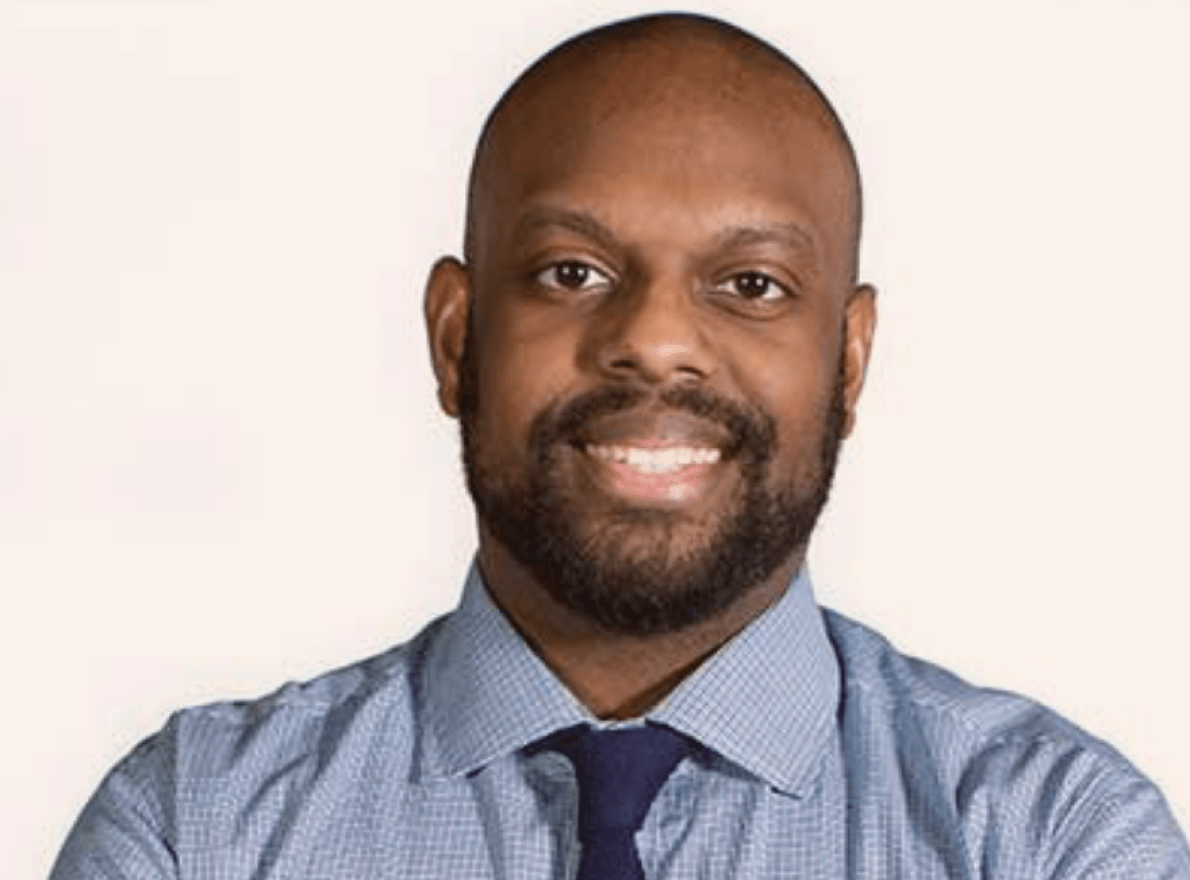
Founder, Onboard Health
Founder, Onboard Health
André is a pioneering strategist with deep ties into the public health/healthcare, social innovation, and strategic communication landscapes. He is dedicated to building the future of health through an inclusive lens. His work and insights have been featured in CIO, Fortune, Forbes, NPR, Reporting on Health, U.S. News and World Report.
FAVORITE SONG: Drive by Incubus
Stay in the KNow!
Get our monthly email featuring expert interviews from the healthcare industry with real insights, no fluff. Get the latest information that help you better understand your healthcare options.
Thank you for subscribing! We're excited to have you here.
You’re all set and will receive our monthly email with expert conversations and insights from leaders in healthcare.