
Women in Medicine, Leadership and Changing the System
Women now make up a major part of the medical workforce. So why are so many still missing from the highest levels of leadership?
In this episode of Health Dame, Christine Malcolm and Dr. Shikha Jain join Robin Strongin for a conversation about women in medicine, leadership and the systems that still need to change.
They discuss the progress women have made in entering the medical field, the barriers that still keep many from advancing into top leadership roles and the burnout that can push talented women out of medicine. Dr. Jain shares how her own experiences led her to create Women in Medicine, while Christine Malcolm reflects on the importance of mentorship, sponsorship, and helping women see themselves as leaders.
The conversation also looks at how patients, caregivers, and colleagues can support women physicians in practical ways, from using their professional titles to recognizing, and advocating for their work.
Takeaways
- Women now make up a large share of medicine, but that has not translated into equal leadership at the top.
- The system still has not adjusted to the competing demands many women physicians face.
Burnout is not just a personal issue. It is tied to how medicine is structured. - Dr. Shikha Jain’s own experiences helped her see that the problem was not only individual. It was systemic.
- Women in Medicine was created to move from identifying problems to building solutions.
- Mentorship matters, but sponsorship is also critical. Women need people saying their names in rooms where decisions are made.
- Men can be part of the solution when they learn how to amplify, credit and support women colleagues.
- Professional networks beyond a woman’s own workplace can give women physicians support, advice and perspective when they face career challenges.
- Patients and caregivers can help by using women physicians’ titles, writing positive reviews and recognizing their work.
- Supporting women in medicine is not just about fairness. It affects the strength of healthcare, patient care and the future workforce.
Chapters
00:00 — Introduction to Christine Malcolm and Dr. Shikha Jain
01:59 — Progress for women in medicine and the leadership gap
03:54 — Dr. Jain’s path into medicine
05:35 — Facing bias, self-doubt and systemic barriers
07:19 — How Women in Medicine began
08:11 — Moving from problems to solutions
10:29 — COVID, work-life balance and gender roles
13:30 — Unconscious bias and making women smaller
15:00 — Teaching women to lead and be seen
16:14 — Allyship, sponsorship and amplifying women’s voices
17:08 — Why networks beyond one workplace matter
19:13 — Why supporting women physicians matters for America
19:36 — How patients and caregivers can help
22:24 — Carol Emmett’s legacy and the power of mentorship
24:07 — Lessons from Women in Medicine and the role of connection
26:04 — Health Dame playlist: Favorite songs
Robin Strongin
Hi everybody, Robin Strongen here with Health Dame. Today I am really delighted to be able to be speaking to two I consider inspirational women, Christine Malcolm and Dr. Sheka Jane. As always, we're not going to take a ton of time with ⁓ introductions because I'm going to have all the information on the website. But I do want to kick it off by saying ⁓ Malcolm, you are a nationally recognized leader. ⁓ ⁓ you've been a senior advisor, me, to leading health systems, academic health systems ⁓ centers, and founder and CEO for five years of the Carol Emmett Foundation, which I do want to ask you about and hear more about that. And Dr. Jane, you are a hematologist, oncologist, and if I'm not mistaken, today is World Blood Cancer Day. That just happened to come up. So ⁓ Perfect timing for that, I suppose. Associate Professor of Medicine at University of Illinois Cancer Center, where you head up the GI Oncology program, among many other programs. you have three children. ⁓ Christine, a grandmother, and this is relevant for what we're going to be discussing today: the work life balance and how women are needing. ⁓ to still do the work of getting a seat at the table in leadership in the profession of medicine today. So to kick things off, I would like to ask you, Christine, ⁓ your main when look at medic the the women in medicine today, what is it that you're most proud of that you see, and what ⁓ is terrifying to you?
Christine Malcolm
Well, certainly the participation of women medicine overall has changed dramatically during my career ⁓ the healthcare field. And it's more than 50% of all medical school graduates. And if you look at the new hires into a health system, again, very high proportion female. And if you at the people who are caring for, providing the medical portion the care. To patients in the hospital, a very high proportion of those women, those individuals are women as well. So the participation is exciting. the part that's terrifying, I think you used the word terrifying. I did. is ⁓ we've been at this a long time, and women began participating quite ⁓ quite early in my career personally, and ⁓ still haven't broken through the highest ranks of the field. And when people make it to those highest ranks, they're often for a guy. And so it is ⁓ and the field is not structured, hasn't made the adjustments it needs to make to pay attention to ⁓ competing demands ⁓ women physicians' lives. So we're seeing a very high rate of burnout. We're seeing people leave the field. At the same time that we're facing on the one hand a workforce short shortage. We're not preparing enough caregivers for the for all of us who are aging. at the same time, we're closing down immigration, which has always been this the the relief valve for the cr that that crisis that is brewing. And ⁓ we haven't really looked at systematic solutions. So there are very few systematic solutions.
Robin Strongin
So have to ask you, Dr. Jane, ⁓ I know your dad is a physician, and I'm sure that had something to do with your going into this profession, but certainly there must have been other interests of yours. And know, what motivated you ⁓ towards profession? And then once you got through schooling and the residency and fellowships, you still felt like there was much more work. To be done in terms of what Christine's mentioning, and that's why you founded Women in Medicine Summit. So to help us understand that trajectory.
Shikha Jain
Yeah, so you're right. My dad is a surgeon and I used to go round with him in the hospital on the weekends when I was little. So I still remember, I mean, it was good and bad because I saw him taking staples out of somebody's leg once on rounds. So I went home and tried to staple my brother's leg because I wanted to be bad idea. But it it was definitely inspiring for me to see my dad and the way he had saved people's lives.
Robin Strongin
I don't know, I think that's pretty cool.
Shikha Jain
lives he had touched and the relationships he made with people. So that's what really started that interest in medicine for me. I loved science. I loved math. I knew I wanted to go into some sort of STEM field that was back when we didn't call it STEM field. We just called it math and science. Right, right. ⁓ and so I decided that medicine was definitely the path I wanted to go on. It was very challenging as anybody who's gone through it will tell you, MCATS and testing and biochem and organic chemistry. And there were many times where I really thought I wanted to quit. And being a woman, a lot of people told me I should not be doing it. I had, I just gave a commencement address the other day where I was telling the story of how somebody said that I should become a party planner instead of a doctor. This is a mentor of mine in college who told me I should become a party planner because I was so social and I loved planning events. And so I mean there were a lot of people who basically told me I shouldn't be doing this. And it was a struggle to get to where I got to and get through med school residency fellowship and ignore the people who were telling me that I shouldn't be going into medicine. And fast forward when I was in, you know, training, there were a lot of challenges that I faced that I thought were my fault. I thought I was making issues, making problems. I thought that I wasn't good enough. And so I was constantly trying to improve on myself. When I became faculty, I started talking to other women and I heard my own stories being reflected back at me by other women who are sharing very similar experiences. And a light bulb went off. And I said, ⁓ my gosh, maybe I wasn't the problem. Maybe the system is the problem. And so that's I know it was like eye-opening. And then I actually I called my dad. I was like, Dad, what the heck? Why didn't we talk about how maybe I'm not the problem? And he said, Well, I didn't want you to ever feel like a victim. I didn't want you to feel like, you know, that you shouldn't constantly be improving. He was like, You're absolutely right. He's like, I've he was an immigrant when he came to this country. He said, I dealt with a lot of racial bias. ⁓ My entire his entire career changed because of the way people interacted with him, the advice he got. And but he told me, he said, one thing I've always told you is don't come to me with problems, come to me with solutions. He was like, So you needed to navigate your path and That's how I s I actually he had run a conference prior and I said, How hard is it to do a conference? And he's like, ⁓ it's easy, I'll help you. And that's how the Women in Medicine Summit came about. And now we've evolved into a national five ⁓ one C three called Women in Medicine, where we don't just have our annual conference, we also have leadership programming. We have a research lab. We have mentorship and sponsorship for medical students and residents. We have career programming for mid-career women physicians because we know that's when a lot of them leave the the career path that they want to be on. So we've evolved and we've been able to do all of this amazing stuff. And honestly, I think a lot of it has happened because my dad always told me, don't come to me with problems, come to me with solutions. So this is the solution that I came up with that will continue to evolve as we see where the future of healthcare goes. Well you're
Robin Strongin
Dad needs to be a a health dame because that really is the essence of health team. When there are problems, instead of sitting and complaining about them, you roll up your sleeves like you two have done, and you see what you can do to fix it. You may not be able to fix it in its entirety, but you start to chip away. And I I have to share for the systemic ⁓ improvements. before I was doing the work of Health Dame, I had something called disruptive women in healthcare. And because of that, it it was a blog. Nobody really blogs as much anymore, so now we do podcasts. But I was invited to the Women in the Arts Museum to hear all of the women Supreme Court justices speak. It was a retirement ⁓ for Sandra Day O'Connor. And Sandra O'Connor and I did not see eye to eye on many things in in terms of Viewpoints, judiciously speaking. However, one that we really agreed on was what she did when she retired, and she talked a lot about it, and it reminds me of what you guys are saying, which was when she retired, she was the first, of course, woman, Supreme Court justice in this country. She spent her retirement years for many years going around to do the work of getting more women on the bench because she said there are well intentioned men. But they don't they don't understand why maternity leave is important. They've never had to think of it's just not in their realm of what they're aware of. And the all it wasn't that they were a barrier necessarily, but the system was the barrier. And so it's how you work at some of those hidden barriers that we don't think about. But of course, it's getting women not only in the profession. But who's making budget decisions in the hospitals? Who's making tenure track decisions in the faculty? And so the work that you're doing is vital to be able to break down the barriers in the system that is not necessarily designed to help women achieve their full potential. And I wonder: did COVID in some peculiar way Help, quote unquote, because it was horrific. Did it help men in particular understand just how hard it really is when you're talking about work-life balance? Did they suddenly see it in a new way when people were all at home trying to juggle everything? Men in medicine, I'm talking about. Did did that open their eyes or not not enough?
Shikha Jain
So I I can I can share a couple of things about COVID that I think really impacted how we look at you know gender roles. Sure, one thing one thing I will say is that for me, ⁓ COVID was very, very hard, it gave me a lot of opportunities with young children that I would not have had ⁓ I was not at home. So the TV interviews that I did, speaking opportunities, I probably did a hundredfold more. TV and speaking opportunities than I did pre-COVID because I was able to do them from the comfort of my own home. So I didn't have to worry about childcare or flying or making sure that somebody was going to get my kids, you know, to where they needed to be, making sure all the home stuff was taken care of because I was at home. So for me, that was one thing that allowed me to really get a lot of opportunities. I do think that there was some data that came out of McKinsey where they showed that women were the ones, the majority of the people who are doing the work that kept people in the workforce that, you know, was focused on exactly. Yeah. And so I I think the problem is women continue to step up and do the roles that are needed. And men often don't realize that the women are doing it. I'll give you a perfect example. This just happened. I have three children, as you mentioned. We were at a friend's house the other day and one of somebody asked my kids, Does your dad plan your summer camps or your mom? Full disclosure, my husband and I are great partners. We know who has what roles. My husband has no idea what time my kids are anywhere, what summer camps are he doesn't know any of it. Right. One of my sons said, ⁓ daddy plans all of our summer camps. I looked at him, I said, Your dad doesn't know what you're doing. Monday, Tuesday, Friday, he has no idea what camps shouldn't. He's like, No, daddy plans all of them. And I it living in my house, I have no idea how my children see those roles. So I think a lot of it also is, and I I don't think a lot of this is malicious. A lot of the disparities that exist in our systems, they're not malicious. My son wasn't trying to be mean and say, ⁓ daddy does this. This is how He perceived things were going. And so I think that that we need to take that into account when we're talking about why do these gender barriers continue and how do we really address them and make sure we're intentionally changing them? Because it's not just about what people are doing, it's also the perception of what people are doing and how they're contributing.
Robin Strongin
Absolutely. And I know Go ahead, Christine.
Christine Malcolm
And it's a change in thinking. And people don't realize, you know, it unconscious bias is just so critical because I with a lot of very well-intentioned people who ⁓ really never consider themselves sexist or racist or anything else. And then ⁓ stuff out of their mouths and you go, I didn't you thought that. And the and as a result, women in our foundation went women through the fellowship program that we had at Carroll Emmet, ⁓ they would we did full evaluation of psychological and capability and leadership evaluations of them, and they ranked themselves a full on average, a full two points below what their bosses rank them at. And because they thought they were making themselves small. the hardest thing. is to make it okay for everybody to be as big as they as they should be, versus making themselves small so not to get in trouble, sit around the outside of the table, not at the table. And that that's a real challenge. And I actually there's a tremendous benefit in people seeing, I am a leader. You know, ⁓ I've actually tapped on the shoulder. And ⁓ Shiga a lot of environments for that to happen in the programming that she has.
Robin Strongin
So how do you do that? Tell us how you do that because that is so important. It's that creation of an ability for someone who may be on the fence or not certain, but go ahead, how do you do that?
Shikha Jain
Well, it's a multi pronged approach, is what I would say. So, first of all, I think the most important thing, women have a real tough time bragging about themselves and talking about what they're doing. So, one, we teach women the skills themselves of how can you talk about how great you are, and how do you make sure your name is being said in rooms where you are not there? So we help them create networks and communities where if they're not in the room, somebody else in their community can speak their name or sponsor them. We also teach a lot about sponsorship. For example, if I can't do ⁓ an event, if I can't give a a talk, I will never say, No, I'm sorry, thanks for the invitation. I will say, no, I'm sorry, thanks for the invitation. Here is a list of four other incredible women with their email addresses. Yep. Let me know if I should connect you. Because it's the it's the path of least resistance, right? The person who's invited you wants somebody else and they're going to go down their list. But if you give them somebody that you are sponsoring, there's a much higher chance.
Robin Strongin
Exactly. Exactly.
Shikha Jain
Right. Yeah. And I tell men this all the time. I tell men, oftentimes the default person you're going to think of is another guy, not because you're a bad person, but because that might right. That's just who your known entities are. So we also teach men. We actually launched we were the first organization, I think, in medicine to launch allyship programming. And we launched allyship programming for men. And men would come because men would come to me all the time and say, We wanna help, but we don't know how. And so we give them primers. I my boss actually, I tell him all the time, and he actually has gotten so good at it, I don't have to teach him anything anymore. Where I tell him, I say, in a meeting, you need to say what I said and amplify it and put it back to me because then people get that. ⁓ this came from Shika, not this came from somebody else who will rephrase it later on. So there's a lot of tools and skills that we teach women and men on how to amplify and elevate. But really the most important thing, I think, you know, we obviously have our summit program where we teach women how to negotiate, how to create these communities, how to build their brand, all of those things. But most important, what I've learned is building these networks. And Christine and I talk about this all the time because Carol Emmett does a phenomenal job of this as well. Building these connections of women across the country, where, for example, if you're at an academic program in Iowa and you're facing a challenge. You might be able to reach out to your friend at Stanford and say, hey, this is happening to me. Have you ever navigated something like this? So having networks not just within your own institution or organization, but outside is really how we move this the needle. And we really need to work on fixing the system, not the women. So it's not just educating the women, it's also fixing the systems within which we work. And we fix those systems by empowering the people in the systems to help others and lift them up.
Robin Strongin
A hundred percent. When I was mentioning disruptive women, we were invited to launch a chapter in the UK and we got to do it in Parliament and all of this. And one of our our our keynote speaker for that event was the head of ⁓ the head physician at the time. And one of her very concrete offerings, like you just had, of what to do, ⁓ said whenever a journal Wanted something published and they would come to her because of her position. She looked at their list of advisors and editorial board. And if it wasn't at least 50-50 gender split, she wouldn't do it. She because a lot of the peer-reviewed journals that you know they're not 50-50. And if you want tenure, you have to publish. And so it's like mapping out specific. points along the way of where you can put women on the boards, put women in the position of power, put women and and that's back to the networks and that's back to the systemic change. Christine?
Christine Malcolm
Well, I was just thinking the three of us are all members of Women of Impact. Yeah. And if the Women of Impact is anything in healthcare is anything, it's connecting people like us so that we can talk about the things that matter to us and how can we drive the change that's needed in the field. And this is a field that's not only needed for the women physicians themselves, it's needed for America.
Robin Strongin
And that's why I wanted to ask you, how can patients or patients and caregivers help? Because we always think of the people within the health system, but you know, those of us who are not physicians, I don't have a leadership, but I'm not afraid to open my mouth. I'm from Brooklyn, so I can be very persuasive.
Shikha Jain
So there's a couple help. Yeah, there's a couple of simple things that patients can do. So one thing that happens is women often get untitled. So you'll be seeing a doctor and the woman will be called by their first name and the medical student or the resident may be referred to as doctor. So as a patient, a very simple, small thing you can do is if you're seeing a female physician, make sure you refer to her by her title because that is very important when it comes to authority, right? And making sure that they have the same authority. you can always donate to a nonprofit that is focusing on driving change. Women in Medicine is a great nonprofit. ⁓
Robin Strongin
What is your what what is your web address? Your web
Shikha Jain
Address is Wimedicine.org. So we are happy to accept donate donations or foundation money anyone is looking for a good place to give. the other thing, so we have a research lab, and you don't need to be a physician or a clinician or even in the healthcare space to publish. So a lot of times things don't change until we have data showing that these disparities exist. ⁓ And ⁓ things change until you publish what are the solutions. So our research lab does a lot of focus on how do we change things, not just what is the problem. So as patients and people in the system, if you are in the research space, if you're interested, that's another place that you can definitely help. I also say two big things actually. If you're seeing ⁓ a female physician, there's always ways to ⁓ give them accolades in their institution, whether it's writing a review. That is a huge thing you can do. A lot of times most people only, it's like
Robin Strongin
That's really important.
Shikha Jain
Yelp, right? You only put negative reviews. It's less likely you give positive reviews. So if you have a positive interaction with your physician, giving a positive re review or letting leadership know how amazing they are. And if you're in a hospital system where you notice there aren't a lot of female leaders, you could advocate for that. And you can say, hey.
Robin Strongin
We can get bored out about these are these are low-hanging fruit that people can do. And people are looking for ways to people really value their relationship with their health provider. and so ⁓ think a lot of people just don't know to do that. I think these this is really important. And before I forget, Christine, just a a moment on who was Carol Emmett, because I don't think everybody knows.
Christine Malcolm
Carol Emmett at one point worked for Joe Califorano way back in ⁓ which was that? Kennedy? I think it was Kennedy Johnson. Maybe Kennedy Johnson. And then went on to be the head ⁓ the San Department of Public Health ⁓ and then ⁓ Association of Hospitals in California. And then became, after of that, a search consultant.
Robin Strongin
Johnson. ⁓
Christine Malcolm
⁓ for Russell Reynolds. Right. And ⁓ she ⁓ went out of her way throughout her career to find people that weren't the typical person that gets that gets promoted to a CEO role. And and she would ⁓ much tap people on the shoulder and say, you need to ⁓ more assertive and and realize you can take on more here. You need to step up. You need to look at this job. I know it means you have to move, but it's really worth it. And you'd be a great fit and I'm sure you can do it. The number of women that that feel that she made a profound difference in their own lives really quite dramatic. So when she's legacy. Yeah.
Robin Strongin
What a tremendous legacy. And that's what we're trying to replicate, you know? Just absolutely we have to just keep doing that. I think one of your eight points was when you move up, you keep that door open for the next group coming through, right? I mean, that's what we have to do. ⁓ and I know our time is coming to a close, but I just Shika, was there any unexpected learning that you like surprises in the work you're doing with Women in Medicine Summit that that You were shocked to sort of ⁓ my gosh.
Shikha Jain
So many. I could spend an hour talking about them, but I will I will be very brief. Yeah. I think the thing that I did not realize before I started all of this was how important your network is and how important having those relationships was. I did not realize how much of leadership and advancement really relies on who you know. I mean, Christine has been one of my most trusted mentors and now phenomenal friends. And there is so much in my career that I very much attribute To just how fortunate I was that I met her when she spoke at our first summit eight years ago. Okay. And I can't even tell you how much she has changed probably my entire career and my life. And I think I think that having those it's it's very true. I mean it from the bottom of my heart. Those types of relationships and networks and building those, those building blocks, I don't think anyone teaches you how important they are. And now I'm living proof. at how important they are and how much they can drastically change your career trajectory.
Christine Malcolm
Wow. And you're bringing a bunch of people on with you. Just think of all the people whose lives you've changed. It's incredible. And I think I, you know, it's more important now than ever because healthcare is in this really pressured environment. The attorneys are telling all health systems to take remove all words. And so we we have to we have to find a way to not lose the commitment we have to creating a fair environment for all. And for making people who can make a dramatic contribution to the health of their their patients and to the health of their community, have to get everybody involved and make them feel like their contribution is valued, which goes the longest way to dealing with the burnout we were talking about at the beginning of this conversation.
Robin Strongin
Burnout is a really that one is a tough one. ⁓ my gosh. That's a that's part two. think that will be part two. ⁓ before I let you ladies go back to the clinic and the consulting work and and the day to day, my last question is always ⁓ about music because I always share that ⁓ my husband who passed away about a year and a half ago, music was really central to what we spent time. we're able to do together and ⁓ music in the brain is a big area of focus for my work. And so we have a Health Dane playlist and I ask everybody at the end of our conversation to share a song that we could include on the playlist that's either your favorite or reflects the work you're doing. And ⁓ Shika, what what would you say would be yours?
Shikha Jain
So I'm gonna share too. I'm gonna cheat. So I
Robin Strongin
Some people can't pick one, I know.
Shikha Jain
Perfect. So the two songs I think that are the most inspiring for me and powerful these days. So the first one is Defying Gravity from Wicked. Because I feel like many of us often feel like that is what we are doing. Yeah. And the second one is Fight Song by Rachel Platton because I one love that song. And two, I was fortunate enough to see her perform it live at Cheryl Sandberg's house several years ago. ⁓ my god. ⁓ it was incredible. I met her and She was just an incredible woman. And so I love that song. And it got me through the pandemic. and I think that it is
Robin Strongin
It's a fabulous in fact I played it for a friend of mine who has defied all the odds with multiple myeloma and that's that's sort of our theme song for her. Yeah.
Shikha Jain
Not that
Christine Malcolm
Dean. You know, I you know, the song Fireworks by Katie Perry. yeah, I'm that just reminds me of what happens when I love that the women that I've encountered actually acknowledge and embrace who they are. And they are you know, they go off almost like fireworks. They're like Chica. They're just amazing. And they're gonna deliver a better world for all of us.
Robin Strongin
⁓ yeah. Well, I don't know how to end any better on a more positive note and just however I can be helpful, you know, all you have to do is reach out and ⁓ I know you have a summit coming up. We're gonna post the website. So all donations, interest in the work that that you're doing, both of you, the Carol Emmett Foundation will put up there as well. And ⁓ I will be in touch, ladies, but I do want to thank you for your time and ⁓ really appreciate all the work that you guys are doing. Have you for a good rest of your day and I'll be in touch by now.
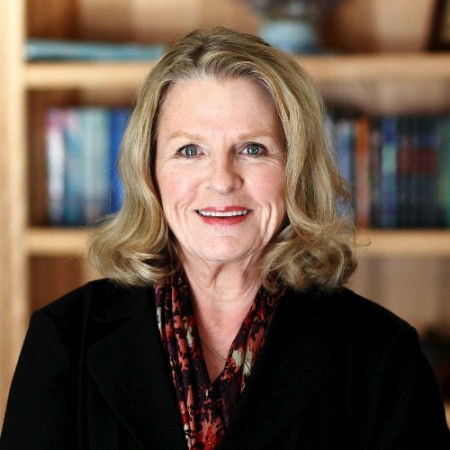
Christine Malcolm
CEO, Salt Creek Advisors, LLC
Founder & CEO, Carol Emmott Fellowship for Women Leaders in Health
FAVORITE SONG: Firework, Katy Perry
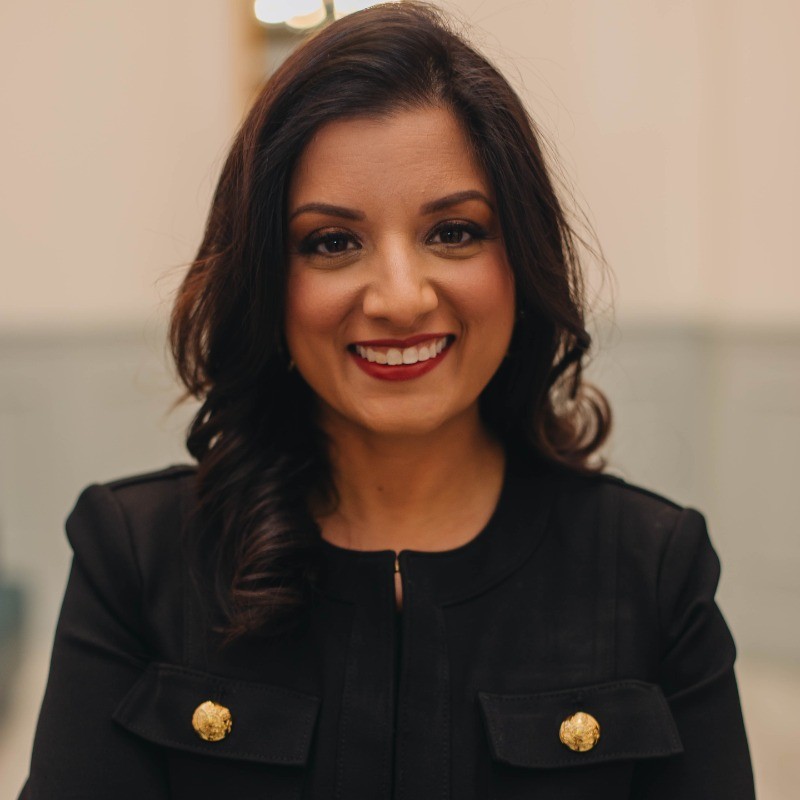
Shikha Jain, MD, FAC
https://shikhajainmd.com
Founder, Women in Medicine & Women in Medicine Summitt
Board-Certified Hematology & Oncology Physician
Tenured Associate Professor of Medicine, University of Illinois Cancer Center
FAVORITE SONG: Defying Gravity, Cynthia Erivo, Ariana Grande & Fight Song, Rachel Platten
Stay in the KNow!
Get our monthly email featuring expert interviews from the healthcare industry with real insights, no fluff. Get the latest information that help you better understand your healthcare options.
Thank you for subscribing! We're excited to have you here.
You’re all set and will receive our monthly email with expert conversations and insights from leaders in healthcare.