
Breaking the Stigma: A Journey into Dementia Advocacy
Creating Inclusive Spaces for Dementia Care
In this episode, Robin Strongin speaks with Rebecca Wellner, a speech pathologist and dementia advocate, about her journey into the field of dementia care. They discuss the importance of memory, the experiences of caregivers, and the need to break the stigma surrounding dementia.
Rebecca shares her vision of creating inclusive spaces for people living with dementia and her efforts to establish a nonprofit organization aimed at supporting caregivers and individuals affected by dementia. The conversation also highlights the powerful role of music in dementia care and the importance of community engagement.
Takeaways
- Rebecca Wellner is a speech pathologist and dementia advocate.
- Her journey began with a focus on memory studies and caregiving.
- She emphasizes the importance of working with caregivers and care partners.
- Rebecca aims to break the stigma surrounding dementia through advocacy.
- She believes in creating inclusive spaces for people living with dementia.
- Music plays a significant role in dementia care and can evoke memories.
- Rebecca is starting a nonprofit to support caregivers and individuals with dementia.
- The narrative around dementia needs to hold both joy and tragedy.
- Community awareness is crucial for improving the lives of those affected by dementia.
- Rebecca’s vision includes a bakery that serves as a supportive space for caregivers and people with dementia.
Chapters
00:00 Introduction to Rebecca Wellner and Her Work
00:53 Journey into Speech Pathology and Memory Studies
06:36 Experiences with Caregivers and Dementia Advocacy
13:57 The Importance of Speech Pathology in Dementia Care
20:02 Creating Inclusive Spaces for People with Dementia
28:07 Building a Nonprofit for Dementia Advocacy
33:08 The Role of Music in Dementia Care
Rebecca Wellner
Speaker 1 (00:03.234)
Hi guys, this is Robin Strongin with another episode of Health Dame and I'm extremely pleased to be speaking tonight with Rebecca Wellner who's in New York City. So right away I'm very jealous Rebecca. You're living my dream. But aside from being jealous, I'm really pleased because I'm impressed with all the hats that you're wearing. You're doing a lot of different really interesting work and
Before we dive into the work, we're gonna introduce you. And so what I'm gonna do is start out by asking you to talk a little bit about what you were studying in school and how it helped get you to the work that you're doing now. And for those who are listening, we are gonna be talking about specifically the work you're doing as a dementia advocate, but you're doing a lot of other things. And I think it's important
for people to understand what you're doing during the day, but also where your passion lies, because they really do intersect and you have a lot of interest. So let's kind of roll it back a little bit and you start at the beginning and tell us, tell us how it all began.
So, Yeah, absolutely. Yeah, thank you. Thank you for the introduction. So yeah, so I'm Rebecca. I am a speech pathologist now, but how that happened was in my undergraduate coursework, was focused on, I was very focused on the idea of memory and I was looking at it through different lenses. I was taking a lot of...
neuropsychology classes, but then also screenwriting classes. And I was sort of trying to examine the idea of memory and storytelling in all of these ways, just the way that we like see ourselves and tell our stories and almost why memory has such an it has such an important place to so many people. Even though it memory really is a combination of so many different things, like what we refer to as memory.
Speaker 2 (02:13.678)
But yeah, people sort of put a very high importance on it. And then I was working in a neurocognitive lab at Memorial Sloan Kettering Cancer Center looking at the impact of chemotherapy on cognition in women who are breast cancer.
The impact of chemo on memory or.
No, broadly or more broad. was broad. Yeah. And it wasn't my study. You know, it was a study that I was assisting with. was right out of college. Yeah. So I was looking at a lot of different factors. It was looking at like the APOE gene and that type of thing. And I was looking at like smoking status. It covered a lot of ground. And I'm really lucky to have gotten to work on those studies.
In that context, I was administering neurocognitive assessments and doing interviews of the participants. And I got to know so many incredible women who were, you know, many of them were caregivers themselves. Like they had they had not only been cared for by people, but they had also become caregivers as well.
Your women who were there because they had a diagnosis of cancer, but in addition, they were also caregivers. It's possible.
Speaker 2 (03:37.24)
Just was a problem. Yeah, it was just an overlap that happened. It was a coincidence, you know, not all of them. So the studies were specifically looking at women who were 65 plus. so there were just so many stories of like, not just family caregivers, but like, my neighbor lives alone and so I've become her caregiver and all of this kind of stuff.
and taking care of people's partners, close friends, family members, all of that. And I kept hearing about, specifically I would say people were becoming caregivers after loved ones or friends, had strokes or people being diagnosed with dementia. And this was all something that had sort of already been of interest to me. I had...
multiple family members who had Alzheimer's disease specifically. And it was like a huge narrative in my family was was like around this like fear of getting Alzheimer's disease. And so it was always talked about.
Statistically, your family's not alone because as you know, we are facing like an explosion and to your point earlier, it isn't just the person diagnosed. It affects everyone in the family in a profound, significant way. so again, here I go interrupting. Let me just clarify, but at this point with all the talking to all these women,
Please,
Speaker 1 (05:17.506)
Were you still doing the Sloan
That was with Sloan Kettering. part of my job for them was, I was recruiting people for the study. I would call them up. It was a longitudinal study. So I would have these long-term relationships with these people. I would see a few times. And when you got to know them, they would share. just like in their inner downtime, you take breaks and stuff. Very well. Yeah. And so it just really sparked this curiosity in me.
you get to know me.
Speaker 2 (05:52.138)
And I also would have people come in who ended up like not being eligible for the study because they were showing signs of mild cognitive impairment or even later like stage dementia. So they actually were not eligible for the study if that was the case. But I was just like really getting exposed to this and more than I had before. And I should say I also like when I was in high school, I was like volunteering in
nursing homes and things like that. really just genuinely... Well, and I like meeting people. I really like hearing their stories. I like meeting people who have different perspectives than I do. I don't know if that sounds cheesy. think a lot of people like meeting people who have different perspectives.
You were drawn to it.
Speaker 1 (06:41.922)
But you learn so much because when faced with something as challenging as a really tough diagnosis, it is interesting to see how people respond and just generally.
Yeah, yeah, absolutely. And I mean, and I think part of it honestly, is I was also, I was an am very close with my grandparents. Yeah, and so, I don't know, I, yeah, this was just something that I was interested in. My dad's dad also, I never met him, he had ALS. died before I was born. brutal. Yeah, but so I just sort of always had this
personal connection.
Speaker 1 (07:22.158)
Yeah
Speaker 2 (07:26.772)
interest in learning more about neurodegenerative conditions. And then I, let's see, so while I was at Sloan Kettering, I was meeting these people and I was realizing that what I really wanted to do was work with them and with like, with their people. Like I wanted to work with these care partner sets, the person living with dementia and their caregiver care partner. And I looked into sort of the best way to do that.
and thought about what my interests had been in the past. And I made a decision to sort of pivot. I had been thinking about going a PhD route and doing more like cognitive neuroscience, that type of thing. But I really felt like I just wanted this more, I wanted to be more involved in like cognitive rehabilitation and stuff like that was what I had been thinking. So I got a job as a lab manager at NYU.
for the psycholinguistics and neuromodulation lab there. So yeah, so they were doing studies specifically that were looking at the impact of, it's called TDCS, transcranial direct current stimulation. Basically how that could be used to increase the benefits of speech therapy for people who had.
So what does that mean?
Speaker 2 (08:55.114)
aphasia and apraxia, are both language disorders that can happen often like after a stroke or something like that. Also can happen with brain cancer, lots of different things.
Because I did read that there's a lot of studies that show that as you start to lose your hearing, that can impact dementia and cognition because you're missing a lot of the speech and the conversation or something. So there seems to be a growing peer-reviewed literature on how important hearing, so therefore speech, and cognition is. Is that what?
your studies or you have shown is.
Well, it's a funny, it's a coincidence that you would bring that up. What I'm doing right now, this month on my social media, I'm doing like a whole breakdown of the basically that, like looking at the connection between hearing loss and dementia and looking at just auditory comprehension and dementia and that type of thing. So I've been, yeah, this just happens to be what I'm spending my downtime on right now.
can people find your social media? What do they need to know?
Speaker 2 (10:07.246)
I tried to do TikTok, but it stressed me out a lot. You can technically find me there, but I'm not really there. I am mostly doing it on Instagram. These days the handle is a sweeter course. Yeah, so.
So, yeah.
Speaker 1 (10:24.91)
We're going to talk about that in a moment because it's directly relevant to the dementia advocacy work. So keep going. Yeah.
Yeah, I'm like losing my train of thought a little bit. No, it's not.
So you were talking about the NYU and the lab and so
So and then I you know applied to grad school I got in at NYU so I just went there because I was already right hanging out there and I did grad school and While I was in grad school The thing that speech pathologists do that a lot of people don't realize we do actually I should Step back there. I think most of what we do people don't realize we do I think you think speech pathologists and you think
helping a kid like say they're ours, maybe helping someone who, mean, yeah, I think you think speech, is very fair because that's our name, which is unfortunately a misnomer, I would say we cover, you know, we cover cognition. memory, attention, concentration, like the ability to learn new information, things like that.
Speaker 1 (11:32.385)
Not know that. Wow.
And then the other thing we do that's really important is swallowing. And when I went to grad school for speech pathology, I was like, well, I don't want to do that. Sounds terrible. has nothing to do with my interest. It's actually one of my favorite things to work on and one of my favorite things I've studied. It's also an area that, you know, it needs, we need a lot more research in that area. As always, know, clinical stuff tends to lag behind research.
And so we have a lot of really good.
about swallowing. know elderly people have trouble sometimes but do younger kids also or
Certainly, I mean, I don't work with pediatrics, so I'm going to be cautious about speaking with that, but absolutely, there are wonderful pediatric swallowing therapists who work in places like the NICU, who work in places like schools, who like, mean, it's, it's, yeah, children all throughout the lifespan, people have difficulties with swallowing.
Speaker 1 (12:31.982)
related to like a medical condition?
Yeah. So I mean, and to like, I think maybe the point you're making, like, there are issues, things can happen with a swallow that maybe aren't, I mean, it's always a medical condition, but that maybe aren't like an acquired issue, like, people will have pretty severe, it's called dysphagia, swallowing disorder, as a result of dementia, as a result of a stroke, as a result of all of these things. And it looks different in everyone. But so when we're talking about
someone with like dementia dysphasia can look like oh I don't know quite what I'm supposed to be doing right now. I see. Like I can't really quite see my food in front of me. This food doesn't look right to me but it can also look like you know it's happening in the setting of age related changes at times or even in the case of an early onset dementia.
There can also be a movement component. like if someone has Parkinson's disease, specifically, for example, you know, having those smaller movements, having like taking a lot of time to initiate a swallow, things like that.
So all the muscles that you need are affected by both Parkinson's and dementia because you forget how to do the very act of, so at least my husband did.
Speaker 2 (13:55.086)
Right. Yeah, absolutely. And I mean, that's the thing is that there are a bunch of things that are happening all at once. And yeah, something like a blue body dementia, know, which like Parkinson's is on that spectrum. So it is all of those things. And, you know, you you start to have difficulty using tools, all of this. So this is all kind of falling under the umbrella of dysphagia.
and falling under a speech pathologist scope of practice, but I would say that some of it also falls under the occupational therapist scope of practice. do have quite a bit of overlap.
Well, all of this stuff is over. You know, it's hard to just say it stops here and starts here. Welcome to getting older.
So true.
Well, and I like love working with occupational therapists because they bring a lot of insight. They know things about like hands that I don't know. So like they have a really specific, they're really good at environmental modifications, adaptations. I sort of wish that I'd gone the OT route instead a lot of the time. I really admire the work they do.
Speaker 1 (15:05.55)
You know there's always tomorrow. You haven't had fun on your plate, literally.
Not going back to school.
Yeah, and then what happened? I don't know. After I graduated, I was working in a skilled nursing facility. I was in a skilled nursing facility during COVID. I was seeing a lot of people writing off people living with dementia and it was just starting to piss me off. To be honest, yeah. Because I was having
these really, I had these incredible relationships with these people living with dementia. I genuinely enjoyed my time with them. I learned about music that I hadn't heard before. I mean, I have like such incredible stories. And I also lost a lot of people at the skilled nursing facility during COVID. And that was very hard. And yeah, so a lot was going on. And I decided
to start trying to, I guess my like timeline is kind of messed up. I had started before COVID a blog where I was sort of baking with caregivers over.
Speaker 1 (16:28.0)
say a little bit about the banking so that's another area of interest right and you're
Yeah. Yeah. so yeah, in maybe 2017 ish, I decided I had wanted to, yeah, interview caregivers, okay, and bake with them. Over. Back then it was Skype, so over Skype. And I
I just liked the idea of, you know, yeah, and the ways that, you know, food is really important to families and to people. And I think it's like a good, warm, comfortable place to start. I also just like baking, so it was also an excuse.
connection.
Speaker 1 (17:22.167)
So this was something you really enjoyed doing and it was separate from what you did in your quote unquote job.
Yeah, in my job I was just a speech pathologist.
Did this based on the love of your grandparents, everything you'd experienced along the way from what you were sharing, plus your love to bake. So like all of it starts to come together.
I so. think people were like a little confused about it. appreciate that. that's the thing. Yeah, I mean, as a kid, I always said I wanted to have, I mean, but you know, people say they want to have a bakery all the time. That's like a thing people say. Like, so when I was little, I wanted to have a bakery and I wanted to have classes for caregivers and people living with dementia. But I was like, well, that's not gonna happen because like, who has the time?
So, you know, we're.
Speaker 2 (18:17.8)
or the capacity or the money. So yeah, I decided to do like a smaller version of it, right, and just do it that way. And then and then during COVID, I started selling baked goods to raise funds to give to caregivers. that turned into them paying caregivers to like, I would interview them and I would pay them. And then I would put that on my blog. And I sort of took the
baking out of those interviews because I wanted to get more focused. And I was getting more intent on, I mean, like I had said, I was getting really pissed off that people were writing off people living with dementia. Sorry, that sounded not, yeah. And I started to like look into what we refer to as the tragedy narrative around dementia, which I think-
Got it, yeah.
Speaker 1 (19:13.248)
screenwriting education comes in you know how to do a narrative. You know how to frame a narrative. Believe me, you'll come back and be valuable.
Maybe.
Speaker 2 (19:23.006)
Well, and in this case, it's about sort of breaking that stigma, breaking that tragedy narrative. Because what happens is it causes people to not seek help. It causes us to not support other community members. I think a lot of the real tragedy that comes with dementia is the way that we treat people living with dementia, the way that we as a society treat caregivers and people living with dementia.
And I know that, you know, like any terminal disease, there's obviously aspects of it that are tragic. And I think, you know, there are people who try to say like, no, only like, let's just focus on the joy because there's enough tragedy narrative out there. But I think that in order to sort of meet people where they are, we need to be able to hold both pieces. And I think that's something that is very true now, always.
is that it is really difficult to hold multiple things at once. You know, when someone is living with dementia and you're experiencing anticipatory grief, grief and like...
terrified and it's you know you feel helpless and so if somebody is kind and wants to talk to you it's just it's such a gift to be there for people my god wow
I think it's a gift to be able to be there with people. I am really aware that I, in my job now, now I work in home health and I'm meeting people who are in this, and I don't just work with people living with dementia. It's adults with, I would say largely like strokes, Parkinson's, brain cancer.
Speaker 1 (21:13.836)
lot of it is the speech and the swallowing that you're doing in the home.
A lot of it is honestly, I would actually say at this point, it's mostly so language. like difficult finding words, difficulty understanding, then yeah, memory and attention and that type of thing. Or there are some more specifics depending on the diagnosis and the person and their context. But yeah, I lost my train of thought again.
Well, you were talking about how you're doing more work in the home now. And so I think that what you're seeing with the caregivers and the people with dementia, I know that you're going to eventually get to, I wrote it down, is it called, a cafe space? I getting it?
how it looks.
Speaker 2 (22:08.138)
Yeah, well so with all of this kind of happening I sort of was thinking about the thing I used to want as a kid which was a bakery and then classes for people with dementia and caregivers but I was thinking about like a tragedy narrative and the way that we you know shove people with dementia out
and I realized that like actually also I should say I meet a lot of people with mild cognitive impairment and like early stage dementia of all different kinds. Yeah. you know, frontotemporal degeneration, Lewy body, dementia, Alzheimer's disease, vascular dementia, like all of these, there's so many different causes and so many different humans. And you know, everyone has different things that they want. A lot of people I meet would like to be able to continue working or to work in any capacity. and so.
A lot of what's available, I mean, there isn't like a real job job available, a real like inclusive space. There are cafes that exist that are accessible cafes that employ people living with intellectual and developmental disabilities, autism, Down syndrome. They're incredible places. I've been lucky enough to connect with some people who run these places.
there isn't a place like that anywhere that specifically employs people living with dementia that is also just a part of the community. So I realized like my old idea as a kid was missing something, which is like, I want it to be co-created with people living with dementia. And I want them to be able to work if they want to work because I know so many people living with dementia and none of them are like, they're not.
all the same person, they're certainly not what people tend to picture when they picture dementia.
Speaker 1 (24:01.932)
That's the thing, there's such a lack of education and understanding. You know, there may be limitations for sure, but there's also abilities that are not all gone, you know. And giving someone, it's such an overused word, but it's true, is the dignity and, you know, to be able to contribute and feel useful.
Exactly.
Speaker 2 (24:13.454)
Exactly.
Speaker 2 (24:26.338)
Yeah, and it's real because a lot of the sort of opportunities we offer for meaning are like they're not necessarily what people would want, right? It's like, yeah, this.
They know that they're, you know, like in school when you, they give names to the different classrooms, but you know, if you're in the pandas, artists, the kids in the, I don't know, chipmunks or something, like you just know people are trying to help you, but some people don't.
Yeah.
Speaker 2 (24:50.634)
Your Christmas.
Speaker 2 (24:59.438)
Yeah, and I just think like there are so many things that exist that are really wonderful for people living with dementia and caregivers and But I think that we can do even even more and I think that because one of the biggest issues is lack of community awareness and understanding of what it actually is to be a person living with dementia and to be a caregiver for person living with dementia like Like I just think that's something that we can address in this way. We're like there's a cafe and you walk into it
It just is like any other cafe and like, the person serving me does happen to have dementia. It isn't a big deal, but they do, you know, and it's I think that if.
If you haven't known someone living with dementia who would want this, think it sounds like a little crazy and I know with that.
It's like anything else. If you work towards figuring out ways to make something challenging work, you keep working at it. And the people that can benefit from it will continue to benefit. if you really believe that it's an idea that you need to give it all, then be all in. mean, that's the whole, that embodies a health danger.
Can you see?
Speaker 1 (26:20.76)
need and you're like, don't care if you don't think this is a good idea. I know what my vision is. I know how I can help people. I've had training. not, you know, I can get this done and I can ask for help along the way and I'm going to make mistakes, but I'm going to keep trying and get it. And even if I only help a few people, that is a magnificent contribution. And, know, it sounds to me like this could scale. This could really become something.
That's the point.
You know, think about in the past, people, you know, I'm old enough to know back in the day, people never thought children with Down syndrome could work or autism. And now look, people understand that they're like the sky is you can do so much.
Thank you, I appreciate that.
It's a younger person excited to work with a population that people associate with elderly and they don't want any part of it. It's back, it's just, that is a tragedy because on so many levels, on so many levels. So are other young people working with you on this whole, so say a little bit how you got them involved.
Speaker 2 (27:41.162)
Yeah, well, so I have connected over the years with some amazing caregivers with some amazing occupational therapists speech therapists and so I was sort of hoping that I would run into someone who was like good at business or money or law or something and I never met such a person so I
I, well, for a bit I was like, I just, give up. This isn't going to happen. I'm not the person to do it. And then I realized I had to do it because no one else was going to do it. And I also just kept hoping someone else would do it by the way. And I kept putting the idea out there and being like, you do it. So I ended up starting a nonprofit, a sweeter course, thank you. And I, a sweeter course. Yeah.
And I submitted the paperwork a little while I was pregnant. And just was thinking like, well, like, it's in. We'll get to it when we get to it. And I felt, yeah, I had this incredible team of my board members, my advisory board members are all these really incredible people. Absolutely. Yeah.
Because you didn't have enough to do.
Speaker 1 (29:00.546)
Bound your pupil to help.
And if they're not in New York City, I don't know where the hell they...
Well, there's still no law or money people. Perfect. No, mean, I have they're not on my board, but I have people who are Apple. And, know, we're going to we're having to be scrappy to start just like trying to put everything together right now. We're basically I mean, so our like goal overall is that we really would like to
I'll help you find
Speaker 2 (29:35.552)
reimagine the way that communities are engaging with people living with dementia.
This would be a brick and mortar physical space where people living with dementia and their caregivers could come, could work, could sit and socialize, all of the above and people without dementia so that it's just people.
Exactly.
Speaker 2 (29:57.806)
It's It's inclusive to everyone, regardless of cognitive status. If you have a neurodegenerative disease or not, it doesn't matter. We want to be in this inclusive space. so right now, because that's obviously quite a lofty goal, having a brick and mortar space and all of the things around that, wanting to...
employee consultants who are experts in dementia care and occupational therapy and speech therapy who can really help people leverage their strengths in order to be able to continue to work in whatever capacity they want. It's all going to cost a lot of money. So right now, our focus is just sort of laying the groundwork for long-term sustainability while we work towards building the brick and mortar space.
Amazing. wow. Do you have a website or information about it or is it early on?
We do have a website. It's not anything right now. We're going to have someone work on it soon. But it is there. And I have my old website. Which is what? Do you want to? I'm happy to direct people to my old website. It's just asweedercourse.com. OK. it still has resources for if you're having difficulty.
with Mealtimes, with your person living with dementia, like a guide for sort of different steps to take there and resources about communication. It also has the blog, all these caregiver stories, these incredible people that I'm so lucky to have been able to interview. yeah, so if people want to check that out, they're welcome to. Eventually it'll redirect to our nonprofit website.
Speaker 2 (31:52.106)
Yeah, for now, that's sort of the goal is just we really want to, you know, it's hard because when I first started this, there were people living with dementia who wanted to do this and who I wanted to do this with and they're not around anymore. So, you know, it's finding new people and I can't use I can't use my job to to do that because it's a conflict of interest. So.
You have to be.
But I'm also very lucky to be involved with Reimagining Dementia, which is a coalition that's like a worldwide coalition of people who are all trying to sort of break the stigma around dementia and challenge the tragedy narrative.
One of the sort of through lines in the work that I'm doing is just stigma is such a barrier, whether it's, I mean, whether it's addiction, whether it's menopause, whether it's dementia, whether it's whatever it is, there's so much stigma.
Yeah, even like aging in general, right? Like so much.
Speaker 1 (32:59.768)
Get over it!
It impacts everything. impacts policy. It impacts the way that we care for each other, the way that we see each other. It gets in the way. It gets in the way.
at 1000 % gets in the way, but I think what you and your friends are doing to try to get this off the ground, it's so encouraging to me on every level. And if there are ways that our network here in DC and really all over can be helpful, we should brainstorm because I do think that this, the whole cafe,
idea model has been working. You're bringing a couple of new dimensions to it in terms of having folks with dementia actually be working. So it's more than a social location. It's a work environment.
Yeah. Yeah. Yeah. And I should acknowledge, as I think I did when you and I spoke before, but like the concept of a dementia cafe, this is sort of an unfortunate problem that we're going to run into because a dementia cafe is a term for an event that's held like in a church or in a skilled nursing facility and assisted living like random places, sometimes in a restaurant.
Speaker 2 (34:27.085)
But it is what you said, right? It's a social event and they are wonderful and research consistently shows that they improve quality of life for care partners, for both the caregiver and for the person living with dementia. And there's all kinds of activities, music, art, like just chatting, eating. Love that, love everything about it. And it's not drawing other people from the community.
who wouldn't normally be interacting with people. So it's doing nothing about stigma. And that's what we really do want to be addressing with this.
And I think another goal is involving intergenerational community to work on challenges. because ultimately, whether or not these issues ultimately affect people, just having younger people part of helping, it does so much for the person that's helping, for the person who needs help, the way that you can reimagine something.
because of how you've come up with your generation, it's different than how I've, but together we can be pretty potent.
That's what I think too. I think people operate in their silos of like their occupation or their generation.
Speaker 1 (35:43.562)
No, it's how you train, but when you get people together, and I also believe when you get people together in a really cool, fun place, so like not in a boring hotel conference room, but you do some creative thinking, you know, in a park, in a really cool museum, in a space where you can get excited about big ideas, because if you can allow yourself to think it, you know?
Yeah, absolutely.
Get people on the moon. We do all kinds of things we didn't think were possible and yet here we are.
It's true. And I think like also this is something that either has touched or will touch everyone. I mean, there's that I'm trying to I'm going to butcher this quote, but the Roslyn Carter quote about like, there are four kinds of people in this world. Do know the quote I'm talking about? It's those who have been caregivers, those who will be a caregiver, those who need a caregiver. Yeah, I get it. But but I just think that it's something that is going to touch everyone.
And it's not just like, you your typical like, the aging population, blah, blah, rates of dementia. Sure. And even with that weren't true, I mean, this is just such a.
Speaker 1 (36:59.788)
goes back to where you started with memories. And I think you and I talked a little bit, not on this, but when we talked previously, just, and that's a whole separate conversation, but I do think watching somebody slowly disappear and they know it, it is not only aging. And it is...
So for a young person to work with the community of people who are affected by dementia in all its ways, it gives me a lot of hope because I do think, and honestly, I mean a bakery, how could you go?
wrong. I mean, now. Well, I hear things about overhead and all of that, but I think that we can figure it out.
Really?
Speaker 1 (37:53.774)
But if you're going to worry about overhead and you get a brownie or a cookie, somehow it just makes it better. you know, at least you don't need a liquor license too.
to do. Unless we do, but yes, no. No, we're not going to.
What else are you serving on the side? It's okay by me too. It's just one more regulatory issue. But this is just amazing. And I'm gonna wrap things up by asking you. And if I didn't already ask you to think about it, you don't have to answer right now. You can certainly email me, but I try to ask everybody who I'm interviewing. And I think I mentioned for people that have listened to previous episodes,
A lot of people know that my husband, Brian, did live with Lewy body dementia and did pass about eight months ago. And one of the things we did together up until literally the day he, the moment he died was to listen to music and music in the brain. And I already did a conversation with Dr. Connie Tamino at the Institute for Music and Neurologic Function. She worked with Dr. Oliver Sachs and the whole importance of music and the brain and
music and health and wellness. But all of that is to say that I'm curating a playlist for all of the health games I speak to. And so if you have either a favorite song or a song that really reflects the work that you're doing or speaks to what it is you're doing, if you know it now, let me know. If not, I'm going to put it together on
Speaker 1 (39:37.92)
a playlist because every day with Brian, I would create a different playlist. And I would try to do different, he loved music a lot and he was very knowledgeable. see, he didn't have one. loved, we both loved the blues and jazz. He loved big band. He had, we did one on guitar gods, you know, I, that was a bit much for me, but you know, the more metal for him, the better.
What was his favorite?
Speaker 1 (40:05.802)
And now I'm appreciating Ozzy Osbourne and I'm like addicted to watching all these little clips of his life. He was very funny. He was wickedly funny Ozzy Osbourne. But in any event, one day I made a mistake and I included Barry Manilow. my God. He wasn't speaking much anymore then, but he made it very well known that no, anything but Barry.
you
Speaker 1 (40:35.534)
Barry, I don't know about, but I, and in fact, right before I got on this interview, I was watching Ozzy Osbourne and somebody asked him who was favorite, you know, favorite album, all that. And they said, who don't you like to listen to? of course he said, Barry Manilow, he's the Antichrist. And Brian, what is it with you two? So he was Brian was a good company, but he had a lot of favorites. One of our favorites, and in fact,
There we go.
Speaker 1 (41:04.578)
When we got married, one of our songs, or our song, it was a Ray Charles song. you. Very sweet. The Ray Charles is one of our all-time favorites.
Wow, I love that.
million favorites. So, you know, in his honor, I still want to keep curating playlists because it helps me remember him and I just think music is such a wonderful way. And it's been fascinating to hear the range of music that everybody comes up with. And so I'm going to write up a whole thing and I'll do it. You know, it'll be a thing. But some thought and
love that.
Speaker 2 (41:46.446)
I will.
what one or two of your favorite songs are, as I said, as it relates to the,
Yeah, I'll have to think about it a little bit. I have a friend, guess, Collie, would say, who their name is Emerson Lee and they're dementia readiness coaches, I think the title that they use now. And one of the things they encourage people to do is to write down the song or songs that you would really want to listen to over the course of your life.
And I think, yeah, it's a really meaningful way to sort of honor yourself, I think, and think about what feels good. Think about the songs that were most meaningful to you when you were younger or like in your 20s and your 30s. And your. Yeah.
Why not?
Speaker 1 (42:42.382)
brain with long-term memory where you know that stays with you really, really, really far to the bitter end. Music, even from when you're little, really young, people's memories can still pull that up.
that way.
Speaker 2 (43:02.798)
Completely. I think, I mean, music is so much more powerful than people realize. even, had a patient who was a musician who was living with dementia. And when I went into his home, I started like talking to him and just like waiting for him to respond. And I went, I was going to ask him to sing one of his songs. I happened to like know his music and his wife was like, well, he's not going to, he doesn't talk.
and I played one of his songs and I paused it and he started, you know, singing and it's just like, yeah, that's my favorite thing.
Yeah, and Oliver Sacks and Connie, have a whole liter- it's not just them, but there is a whole literature.
I know and musicophilia the book like yeah
Exactly. It's, it's, and I think we've just begun to unearth the tip of the iceberg and what it can teach. one of the things Brian struggled with because Lewy body dementia is very different than Alzheimer's, but terrible delusions and hallucinations. And one time in this pretty much killed me. He thought he was being eaten alive by a tiger.
Speaker 1 (44:22.99)
No matter what I could say to explain there was no you can't tell someone when they're in the trial of a delusion that they're wrong Anyway, he would not listen but then I got this idea and I got my phone out and I started playing loud music and It distracted him enough that he started it got him out of the delusion by distracting him My my words didn't but the music did
Yeah, you were able to redirect him. That's amazing.
But you know, it's who knows what the answer is. Thank goodness it worked in that instance because I thought I was going to lose my mind because I couldn't get him to stop screaming. But in any event, I'm just so excited. I can't wait to hear more and see how I can help. I can't wait to have my first cookie in the.
Anything with chocolate would be good for-
me. And I'm so excited to see everything that you're doing with Health Dame. I think it's incredible and well, I think
Speaker 1 (45:29.944)
Thank you. I know you're so busy, so I really appreciate you taking the time for this. And I will definitely be in touch. Let me know about your song. And we will go from there. So you have a great evening. Thank you. I will let you know some next steps.
That sounds great. It was so good to see you.
Great to talk to you. You take care now. very much. Bye now.
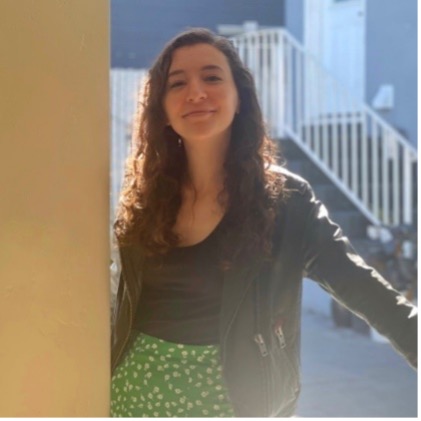
Rebecca Wellner, MS, CCS-SLP is a licensed speech pathologist with a focus on neurodegenerative diseases. Though decades younger than most diagnosed with dementias, Rebecca is a dementia advocate with a love of baking.
She turned both passions into a cool initiative that promotes connection between individuals living with dementia, the people who love them, and the broader community. Sweet success is around the corner.
You can visit her website at https://asweetercourse.com/
FAVORITE SONG: This Will Be Our Year, The Zombies
Stay in the KNow!
Get our monthly email featuring expert interviews from the healthcare industry with real insights, no fluff. Get the latest information that help you better understand your healthcare options.
Thank you for subscribing! We're excited to have you here.
You’re all set and will receive our monthly email with expert conversations and insights from leaders in healthcare.