
Embracing Menopause: A New Era of Awareness
Menopause Reality with Dr. Sarah Berg: The Wisdom of Women
This conversation delves into the complexities of menopause, exploring its stages, the importance of patient advocacy, and the cultural perceptions surrounding it. Dr. Sarah Berg emphasizes the need for women to educate themselves about their health, particularly during menopause, and to advocate for their needs in medical settings. The discussion also highlights the evolving understanding of hormone replacement therapy and the significance of building strong patient-doctor relationships. Ultimately, the conversation aims to empower women to embrace this phase of life with confidence and knowledge.
Takeaways
- Menopause is often stigmatized and misunderstood.
- Education is key for women to advocate for their health.
- Perimenopause can start in the late thirties or early forties.
- Menopause is defined as 12 months without a period.
- Postmenopause is a significant phase of a woman’s life.
- Cultural perceptions of menopause vary widely.
- Women should prioritize their health and well-being.
- Hormone replacement therapy is a personal choice.
- Building a trusting relationship with healthcare providers is crucial.
- Women should feel empowered to speak openly about their experiences.
Chapters
00:00 — Why Menopause Is Finally Being Talked About
02:15 — Meet Dr. Sarah Berg and Her Focus on Menopause Care
04:45 — Why Asking Questions About Gynecologic Health Is Hard
06:30 — Comfort Levels Change as Women Age
08:10 — Perimenopause, Menopause and Postmenopause Explained
13:10 — Advocating for Yourself in Daily Life
17:40 — Hormone Therapy and Trusted Information Sources
21:15 — Advocating for Yourself in the Doctor’s Office
25:30 — Reframing Menopause as Wisdom, Not Decline
30:15 — Favorite Song and Closing Reflections
So I saw a recent statistic in the Harvard Business Review and it indicated that by 2026, global corporate spending on wellness is set to top $94.6 billion. That is a lot of money. Sadly though, at the same time, mental health and wellbeing are declining. So what does that actually mean? That means that billions of days are lost to sick leave, to underperformance, to decrease productivity. What the heck is a company supposed to do about that? You know, it's a big problem out there. I'm Robin Strongin and I'm here to talk on Health Dame today with two experts, both of whom decided enough is enough and they're gonna do something about this challenge that's really impacting anybody who is working.
particularly in a workplace where there's a lot of stress, where there's a lot of demands, where work-life balance is tricky, and who isn't challenged by that. So I am really delighted to welcome two amazing women, fierce people who just decided we can really do something about this. So please welcome Libby Bainy-Burstein and Ali Schreyer.
I am so thrilled that you guys are here today and I'm gonna ask you each to introduce yourself. Allie, why don't we start with you?
Thank you so much, Robin. Thanks for having me. And I agree with everything you said. It is a big problem. And that's why my practice, my firm is called Mental Scope Consulting. And we are really set up to help support the wellbeing and the mental health efforts in corporate America. So we do work with high achieving organizations, as you said, a lot of type A kind of gunner personalities out there that are really trying to make a difference in their own industries.
Speaker 2 (02:01.898)
And our job is really to come in and help assess and figure out what can we do so that we're not spending billions of dollars on wellbeing and mental health, but we can infiltrate the system within that organization, both from kind of that internal lens, thinking about that cultural piece and maybe the leadership piece, as well as the more reactive piece of how do we support people when they do have mental health challenges or when they do have wellbeing things going on in their worlds?
And so we do both of those pieces and work with organizations to kind of better that goal and that initiative.
One of those organizations, Libby, is a Fagry. So I'm gonna ask you to introduce yourself. then, you know, when we get to the question of what is a corporation, a company to do, as a case study, I wanted to talk about how you guys decided to tackle this, because it is a tough issue, stigma and everything. And before we dive in and get too far afield, introduce yourself, Libby.
Thanks for having me, Robin. And it's really nice to be here with Allie, who you'll soon come to find is related to me or I'm related to her as sisters because we speak very similarly. So I'm a partner at Fakery Drinker Law Firm. I grew up with my wonderful sister Allie and I live in Washington. All of those things gave me a unique lens on mental health in corporate America. I am not licensed clinical social worker. I'm just a lawyer.
And I get to do a lot of things in healthcare. I've had the pleasure of working with you Robin over the years on things like internet pharmacy safety, counterfeit drugs, supply chain, patient access to medicine. So I can talk all day about those things.
Speaker 1 (03:40.686)
Do. We'll give you a break, Allie.
Well, the thing that really has been capturing my attention and as a leader in a law firm, my concern is the need to have a focused effort on corporate mental health. And you mentioned Gunners and high achieving and Type-AL. Yeah, we work at a top 100 and in some cases, this big law firm in the world thinking about how to solve our clients' problems. And we are in the stress transfer business.
People hand me their hardest things and they expect me to solve it. I love that. Like I actually love that. That gives me a lot of sense of self. And it means I'm in a really high stress job. And so when push comes to shove, we need to have a support system inside the law firm to recognize the unique cultural and personality challenges of our day-to-day interaction so that we can be successful in taking that stress from our clients and solving their most difficult problems.
does define mental health in a particular way? I've heard the word stress and anxiety and type A personality. Mental health, of course, means many things. So if we're framing this conversation in a corporate setting, it's a two-part question. The first is what do each of you mean when you say mental health as it relates to this conversation? Let's start with that question first. Ali, maybe you want to go first?
Yeah, usually when I think about mental health, I think about it first from the wellness side. So I'm thinking about kind of that upstream. We want things to be going well, functioning well, feeling happy and joy and really kind of the whole gamut of our emotions, but that we always are continuing to come back to our status quo of feeling pretty content. If we are not feeling content or if we're kind of on that other side, if you will,
Speaker 2 (05:35.276)
then we're looking at when our mental health or our wellbeing is negatively impacting our daily functioning. And that's when I start to think about, especially in corporate America and in law firms, that we need to be kind of more proactive in reaching those people. And so if your mental health, if your kind of daily status quo is not contentment, it's maybe a lot of stress or burnout or anxiety or depression, or really truly even mental health diagnoses,
right? We can look at it from that lens and say that's really what we're trying to approach and to kind of push those people and upstream those people so that they can feel that contentment, that joy, the happiness, kind of that whole gamut again of their emotions.
And Libby, how does that translate to what you see going on in your firm?
Yeah, I think it's in every workplace. I just happen to have a perspective on it and really was highlighted in the pandemic when you started to really see people where you are. suddenly, like, you know, the backstage comes to the front of the house and you're like, oh, wow, you have screaming children in the background and two, know, sick parents with you and no place to go. And it's all in your face all the time. And that really
speaks to Ali's point about like the whole person being able to thrive or sometimes just survive in an environment that requires a lot of any individual. And so for me, whether it's in the law firm, I was seeing it in my clients or even in my friends, I think it's about the ability to be, I like your word, out content, but also just thriving in sometimes a really dynamic environments. I don't, mean, Fagery is a wonderful place to work and I could
Speaker 3 (07:19.714)
give a commercial for Vagary Drinker, but I won't because I think it's really about how do we make sure that anybody where they are has the tools that they need mentally, physically, socially, spiritually, as you see to survive and hopefully feel content and thrive.
So in the past, there have been wellness programs that corporations have used, businesses have used, EAPs, right, employee assistance programs, and they're notoriously not working, frustrating, under-resourced, whatever the issue. There was a lot of stigma associated. Certain professions make it hard to ask for help, particularly with the, or at least they used to. I do think since COVID,
There is more of an openness because as you said, Libby, it was in our face. There was just no avoiding it. were seeing your life and then some. how have the employees taken to this whole idea that not only are there tools, but that there's a need? Is this something people are?
looking forward to? Are they having trouble asking for help? You know, some people ask all the time and others, you know, would rather stick needles in their eyes.
Boom.
Speaker 3 (08:44.95)
I have a feeling Ali's got some real insight on this from the older population. And Mike could have an anecdote, but I'll let you go first,
Sure. I was going to say, you I think it really spreads the gamut. I think some of it is the culture of an organization. I think a lot of it is how it is set up. So if I look at my practice, mental scope versus maybe an EAP or some of the other organizations that are out there trying to address this, we're addressing the same issue in very, very different capacities in very different ways. And so I think if you go back, Robin, to that traditional route of saying like, hey, we have some benefits.
for your mental health. Good luck. They are underutilized still. The people are not taking advantage of those. They don't know if it's confidential. They don't know who sees what. They don't even know quite honestly how much red tape is involved to access those. And so that's a huge barrier. And then now more organizations are trying to get apps and they're trying to do things so that there's confidentiality, yet it's kind of in this web-based form.
I think I see all over the map, some are successful, some are not. And it does come back to how is it advertised internally? How is it promoted and utilized by leadership? Is a big piece of it as well. And so what I would say is, what my practice does is a little bit different in terms of we are working truly kind of an integrated into an organization so that we break down some of those barriers. We make it really easy.
look like to someone like me, like just a high level example of what you mean by integrating. Does everybody get together? What does it look like? Yeah.
Speaker 2 (10:28.51)
Yeah, great question. So it can look a whole host of different ways depending on the size of the organization, but kind of a high level would be that I work with the leadership team, the executive team of some sort. I can work with them individually on some of their own stuff. And I also work with them on how to infiltrate the culture through workshops and small group activities, through health assessments, trying to understand what that organization needs. And essentially, I have access to the organization.
One of the things somebody said years ago to me, you know, you're kind of like the flow of progressive around and you say, hi, how are you? Hi, how are you? And I try to be known within an organization or anybody my firm tries to be known within the organization so that we feel like we are in touch and really understand.
You
Speaker 1 (11:18.804)
So a personal connection is really critical.
really important for trust. mean, I'm speaking as a lawyer. We are risk averse, high society professions, who I did not realize how unique at least Washington culture is. And I'll just speak to the audience that maybe Robin, you know well, Washington is a kind of a high energy environment. Probably your listeners are high energy people that want to do things in the world and don't spend a lot of time in self reflection.
So if you don't have a constant reminder that like there's the flow from from you know there's Allie there's we have a mental health and well-being program it's accessible it's constantly kind of in your face it's confidential like it's also in lauded by the leadership there's not we're kind of breaking down barriers to entry and I think when we launched this program with Allie back in 2021 what was really important is we had
It's confidential.
Speaker 3 (12:18.84)
full leadership buy-in, like this We Are Human series to really create vulnerability, which then builds trust across the organization.
Okay, started.
Speaker 1 (12:30.796)
I'm the lawyers I know doing this and some of them I think would really love it and some of them would would hide under their you never know what you're faced with it.
Pretty good.
Speaker 3 (12:43.694)
So that is, I think, a really important point, Robin. And an example, if you were working at Fagry Drink or Ally, you may say Robin's a leader. People love and trust Robin. And so one way to break down that barrier, to de-stigmatize it, would be, Robin, come and just let's have this interview in front of the law firm. And we're going to just tape it, confidential, only accessible by the employees.
But Robin, tell me about the hard times of your life. Tell me about your menopause journey. Tell me about the time you had to cancel a trip, right? Like any version of those vulnerability moments allow people to see like we are actually all human, which means like we are going to have ups and downs in our day, which makes us better professionals to each other. And I have real life examples of this, which then makes us better for, at least in my world, And like this all gets back to client service in our world, but it's about just solving a problem.
I will say one thing that I do think my timing is everything. And I think that some of the stigma associated with certain discussions that whether they're employees or anybody wants to have, mental health was always very much kept private. But I really think
the way people share just about everything and then some on social media has not just broken barriers. I think they've like obliterated. my God, none whatsoever. so, but I think that's, it's not always a good thing, but in this instance, I think people are much more comfortable talking about things that they couldn't imagine talking about 10 years ago, for example.
Yeah, no such thing as boundaries anymore.
Speaker 3 (14:29.443)
Yeah.
I also think that, especially when we look at it from the corporate lens and from kind of those high achievers again, is that the messaging around it, at least that I say in my practice, we talk about, especially even at Figry Drinker as a client of ours, is that we talk about like, my job is to help take care of your brain so that you can take care of your clients.
And so we start to kind look at mental health back to your question earlier, Robin of like, not just when things are going terribly and you're sitting in the mud and the world is falling apart around you, but how can we be more proactive upstream use this as tuneups, right? Like, Hey, you have a huge trial coming up and you're going to be away from your family. There is absolutely a business case to this. And I can say, Hey, Joe Schmo, you're going to be living in New York for two months doing this trial. And it's going to be really intensive. And you have a kid at home.
As a business case, yeah.
Speaker 2 (15:23.53)
I help you prep for this, prep your family for this. And so I think some of the language around it and some of the, I don't know, just acceptance of it within an organization, at least again, the ones that I work with and my team works with is because leadership is saying use Ali and her team in this way. Please prep yourself. Please think about your own wellbeing and mental health because we expect you to show up to that trial ready to rock.
And if you're not, and there were ways to help you do so, we're missing the boat.
Well, and I keep telling our clients like you're buying, like you paid by the hour most of the time for legal services. So my, you know, expensive hour better be 100 % valuable to you. That's it. do not want half used hour because part of my brain's thinking about my dog's sick and I didn't remember the lunch for my kid. And I'm going into trial and oh, did I remember the binder for the exhibits? Like, no, you get 100 % of my energy focus and, hopefully like willingness to advocate for your position.
for that dollar. And if I'm not doing that, like A, I'm violating ethical obligations to my clients, like that's a bad thing. B, like you're not gonna wanna hear me again and see like, I want to be hired because I like solving your problem. helps me feel good. So it's like the circle of like the circle of goodness here, if we can just make all those things come together, but the missing piece to this point, which Vagri is kind of piloted as a unique thing in law firms, which is now taking off. get a lot of credit.
because we are well above the curve on this one. It's like, have someone there as your brain trainer because you need to buy 100 % of my brain, which means I need help getting it ready for the team, the fight, the job, whatever it is.
Speaker 1 (17:07.758)
Well, it's really the same as when you travel getting ready for whatever, a trial and you want to make sure there's a gym somewhere so you can work. It's the same sort of parallel and you wouldn't want to do one and not the other because they're all going towards a very similar goal. And so what are you hearing from other law firms? Are they starting to ask you about what's working? How they might like, how do people ask?
of that's right
Speaker 1 (17:37.454)
for help, you know, if other firms are interested, how does one even get started? Is there, do like big HR organizations? Where does this fit?
Yeah.
Well, that's a great question and a complicated one because people don't really know, right? Some people house this under HR, some people house it kind of with the leadership team. What I would say and what I would recommend is that this position, the wellbeing position or the chief mental health officer or whatever you want to call it, right? I'm a consultant to the clients that I work with like Fagry. I would say that it is housed somewhere within the leadership.
Yeah, well.
Speaker 2 (18:17.902)
kind of table so that we can talk and have communication. But also that I work very closely with benefits and with HR and with, you know, the diversity team and whoever it may be, just the people leaders. And so it is kind of its own avenue in that regard, as it should be also because of confidentiality, in my opinion, but also needs to have access to all those different pieces in those worlds. And so how people get started,
I would say, you know, with myself, it would be contacting me and my firm, right? That's easy. But with other kind of places, EAPs are starting to think about this a little bit more. There are different mental health organizations that are starting to try to figure out how to fit within corporate America in some form or fashion. Maybe it's having a consultant, maybe it's using an app that's kind of tailored to that organization. So it looks...
a little bit different kind of depending on what you're looking for.
of the firm, do you, I assume you customize to some extent the needs of the organization or the company that you're meeting the needs. so, so that leads me to ask, I guess Libby, when you were thinking about this, were there two or three top metrics that you had in mind? Like what, how do you measure if this is working? And
That's what me.
Speaker 3 (19:46.584)
question.
A million dollar question.
It's a tough one also, but so be it.
for billion dollar companies, it's a multi-million dollar question and it's a really hard one. A couple of ways that we would love to quantify it, but confidentiality is most important. So we can't say how many leaders have you seen? Who are they? Were they going into, what did you do for them that made them so successful? We won't know that. So what can we know as a leader of a law firm? We can know things like, well, you've used, how many employees generally speaking?
professionals have utilized the service. What can we see from attrition, right? Just like retention, attrition, productivity. we have a lot of data on productivity because that's like the widget we sell. So we have a lot of data on productivity. The other things that I think would help us as leaders understand is like from a risk management perspective, and this is really how I can sell my clients, like you do not want to have used brain going in doing your hard days. Like that's actually a legal liability. And so
Speaker 3 (20:53.182)
My clients understand that and they're like, yeah, I really want someone that has a brain trainer. That's a really good idea. Why do we think of that? I'm like, yeah, no kidding. And so that is just the fact that we can get our clients there and our clients sometimes are even asking us, that's an ROI for us because we can say, look, we're partnering with our clients. Multinational organizations are also doing this for their employees. They understand that we are committed to the whole human at Fagery Drinker and wellness is part of our core values. Well-being is very important to us.
But because it makes us more effective, and that's the ROI. And so when we're winning for clients, when we're being hired and executing a great work, that's my ROI. But, you've had to do other types of reporting for organizations, so welcome to the talk.
I agree with all those Libby and I also think another one that I would never ask again as a therapist myself, but that happens often within organizations and I know has happened with Fagry is that people who have used or worked with me or use these services, they just naturally tell people and they tell leadership they're like,
had down recommendations.
So that is also, that's helpful from a buy-in standpoint from the culture and so that people will use this and they know that it's a safe place to go. It's also really helpful to show the value of this, right? That somebody can say, gosh, something really terrible and traumatic happened in my life. Obviously I wasn't expecting it. It was out of the blue and Allie was there to support me. And because of that, I did X, Y, and Z, or I was able to still go help that client or I didn't have to take a leave of absence.
Speaker 2 (22:30.378)
All of those anecdotal stories are also really critical back to leadership. But oftentimes we're looking at utilization, back to Libby's point, we're looking at utilization of the services because I just provide numbers, as well as thinking about how does that kind of in comparison to or with kind of the company of attrition, retention, even measuring some organizations, law firms are measuring like happiness of their people.
They're measuring from people leads as well. Are you feeling more confident in having courageous conversations? And then some of them have even asked like, are you willing to share? You can leave it blank on kind of a survey at end of the year. Were you able to utilize any services for mental scope?
And do the different companies structure, like for example, is this a benefit to the employees? Do they pay? Is there a copay? I don't understand how it works.
So I'm a consultant to all the organizations and I'll use Fagry as my example here since they're crushing it. So Fagry foots the bill for all of my work. I'm just a consultant to them. There's a set number of sessions that people can utilize me in a calendar year. And then leadership also has consultation access to me 24 seven anytime, especially if there are safety concerns or concerns about somebody and their mental health, leaders can reach out anytime truly and they do day or night of like,
Hey, I really feel like is not necessarily back to that. It's not an HR problem, but like, I'm really worried about this person. What am I supposed to do? And I say, sure. let's jump in the ball. Let's figure this out. It's It's the easy gun when it comes to mental health.
Speaker 1 (24:10.306)
They have a built in.
Speaker 3 (25:18.934)
Help us Robin, we want to do that. I mean, I think we have, we all three have a very compelling sense of purpose around this and could find ways to, I hope, offline collaborate on that.
Speaker 1 (26:03.054)
But they're coming to you for the workplace challenges, but also having a personal issue.
that is infiltrating the work part of themselves. If it is like I'm having a hard time with Joe Schmoe at, you know, either like internally, right? As a colleague, sure, I can advise on some of that, but as a therapist, my question is going to be why does Joe Schmoe bother you so much? What is this about for you? And so I kind of put back on my therapy hat, I can't not and work from that context.
You got it, Al.
I would say most of the time it is not a work related issue. It's just impacting your work.
Got it. Part of what I love when I talk to people now is some of these solutions are hiding in plain sight, right? The resources are there. You just have to access them and bring them within. I want your, we'll obviously, what I love is it just, I'm all about smashing stigma because I think
Speaker 3 (26:53.078)
I'm at dancing, but I feel better when I'm singing. So I sing Natasha Bedenfield's Unwritten.
Speaker 3 (27:04.046)
We'll send it to you too.
Speaker 3 (27:09.507)
written.
Speaker 1 (27:16.206)
So my sister many years ago was an audiologist and she chose to work with elderly people. I mean, in school they worked with kids of course, but you tend to specialize. And for years and years and years and years, nobody wanted to wear hearing aids. You know, it was a sign of old age. Well.
Fast forward to Apple and everyone has things sticking out of their ears. Like it's almost weird if you don't have some technological piece sticking out of your head walking. The number of people using hearing aids has exploded because it's not a stigma anymore. know, even for kids, they, you know, like everyone has things in their head now. It's almost like if we would just
You're right. It's a tough one. F-A-E-G-R-E, drinker, because everybody knows how spell drinker, but faegredrinker.com and reach out to me anytime. I love this stuff and all things health policy. So Robin, we can talk about that.
Speaker 1 (28:04.078)
normalize whatever that means, asking for help for God's sake, you know, there is a business case for it. There's a human being case for it. We need it. The numbers are obvious. People are struggling. It is really hard out there for so many reasons, so many reasons. And they're different for everyone, but they're the same at the end of the day.
have a solution is what I really applaud. But Libby, kudos to you for helping you and your colleagues in leadership understand. This really can make a difference in so many ways for people and it's so doable. Yes.
there's a financial cost, but there's a cost to not doing it. You know, there's a tremendous cost in many ways that we can't even begin to calculate. And it's obviously a global gazillion dollar challenge with terrible ramifications if it's not dealt with. You know,
things I was going to say, Robin, is that one of the reasons I would say, Fakery does it so well and some other clients that I work with as well, is because part of what I really believe is the mission of my work is to give people skills that they don't have to see me ongoing forever.
Speaker 2 (29:37.274)
And there should be. And the research echoes that as well when it comes to therapy is that we want to break down that stigma. We also want to encourage resilience and grit and that we use the skills that we have to get through hard things as well. And if I can just help fine tune that for people during hard moments or hard periods, absolutely yes. But I also want to be a proponent and an advocate for connection, for social connection.
for looking within our systems and our communities to support each other and to make things kind of better holistically. Because Robin, back to your initial stats where you started this conversation, I am one person or my organization is one firm and we can and should be, in my opinion, things like me. We should be in every corporation and we should be working with leadership and the corporation to infiltrate the culture.
so that they also should be using us as needed, but not, I should not be flooded 24 hours a day with every single employee, right? That is not the goal either. So I think we really have to start thinking about what are the other pieces of wellbeing and mental health, back to your question as well about those definitions that help people to do well long-term. And we can help, we can be reactive when things come up and we can be proactive and we can also be community and connection driven.
to support those missions so that those numbers start to drop.
So before we close, because I know we're getting up on time, but there are sort of three things that I think could be a part two conversation. One is, and I know we don't have time to get into it, the role, if any, of AI in any of this. I'm skeptical because to me that trusted personal connection when it's such
Speaker 1 (31:38.008)
deep issues one's working with, it's very hard to open up. I mean, it's easier, but it's still not easy. And so there's probably a backend role right now for AI and all of that, but down the road, maybe there is a way of scaling and at least getting some level of something to be discussed in a future unless you have some answer here. And I wonder how we help
make this part of everybody's benefit structure? For example, I was invited to be on a research project for caregivers last year and they were looking at what can companies offer as part of a benefit package to caregivers who are having a, you know.
really difficult balancing work life when you're caring for someone who's dying or whatever the caregiving framework looks like for people. And this was not, we had like massive conversations with a leading academic university, with all these things. And this was not, there were a million really creative, this was not one of them. And it's interesting.
They can call me anytime because...
It's how do we get in front of folks who are thinking and doing this every day and getting these kind of examples, not only from Fagry, but other companies that are finding what works, what doesn't work and how they've tweaked it. I mean, it's there's something here that needs to be scaled for sure.
Speaker 1 (33:29.966)
Yeah, for sure. I'm committed to doing that because I think this is such an incredibly important contribution across the board for all the reasons we've talked about. And so the way that I'm wrapping up my sessions, and if you don't have an answer today, that's fine. You can email me later. So Libby knows, Ali, may know my husband recently passed away. He had been battling Lewy body dementia very young.
And one of the things he always loved was music. And every day we curated different playlists and music was really with us through the literally till the end and still continues to be though it's hard for me to listen nowadays. But I decided when I started HealthStame, I was gonna curate a playlist from all of our participants and panelists and experts. If you have either a favorite song or a song that exemplifies the work that we've been talking about.
Let me know what it is because I'm going to add it to our health team music playlist and it's been interesting what people have sent me. So.
I love that. I love I feel better when I'm dancing by Meghan Trainor. Just a great song and I do I just feel better listening to the song and dancing so there.
Wonder.
Speaker 1 (34:51.982)
Cool.
Speaker 2 (34:58.234)
I love that song.
Okay, hold on, have to, in old fashion, I'm writing. Okay, send it to me too. Wait, what is the Natasha one? See, I'm old. unwritten, yes, I do know that one. Okay. And I feel better when I'm dancing. How wonderful. Cool. All right, ladies. Well, I just love talking to you about this and we'll offline think about ways that we can continue the conversation and
They're all different things.
Speaker 1 (35:29.666)
Before I let you go, Libby,
How do you spell that?
Speaker 1 (35:52.731)
We sure will. Ali, mental scope consulting. How do we look that up?
That's MentalscopeConsulting.com. You got it.
Yeah, that works and health team.com and thank you again for your time and I will definitely be back in touch. Thank you everybody for listening. Bye now. Bye bye everybody.
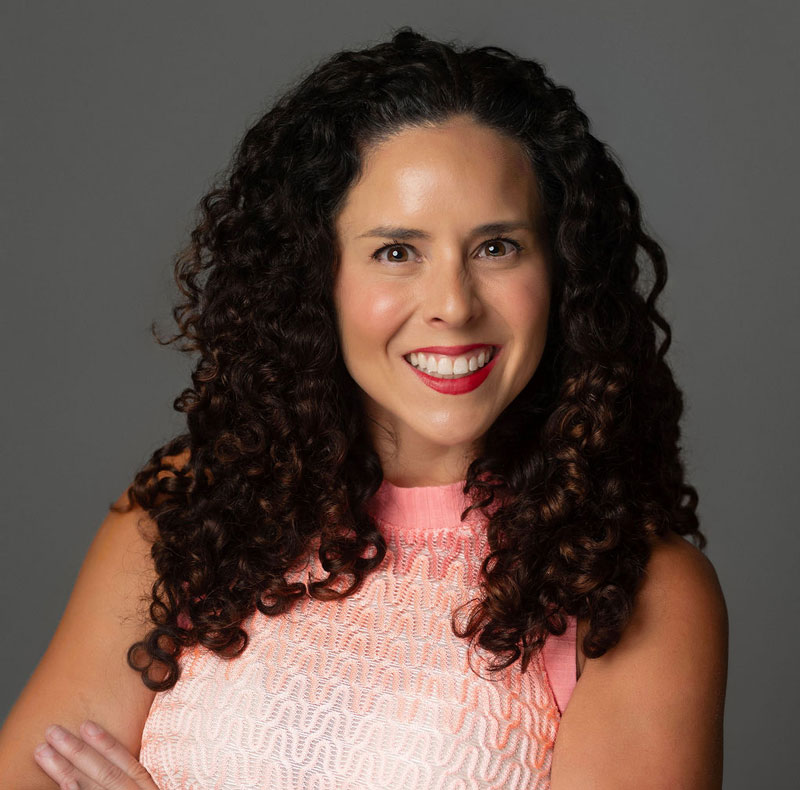
Sarah Berg, MD, FACOG
Board-Certified OB/GYN and Menopause Specialist
Dr. Sarah Berg is a board-certified obstetrician-gynecologist with more than a decade of clinical experience caring for women across the lifespan. She specializes in menopause and midlife women’s health, with a focus on evidence-based education, prevention, and patient advocacy. Through her clinical work, writing, and public speaking, Dr. Berg works to translate complex medical science into clear, practical information that helps women better understand their bodies and navigate a healthcare system that often falls short during the menopause transition.
Selfority.com Substack LinkedIn
Resources:
Menopause | ACOG
The Menopause Society | Homepage
Menopause – Symptoms and causes – Mayo Clinic
Favorite Song: Superbloom by MisterWives
Stay in the KNow!
Get our monthly email featuring expert interviews from the healthcare industry with real insights, no fluff. Get the latest information that help you better understand your healthcare options.
Thank you for subscribing! We're excited to have you here.
You’re all set and will receive our monthly email with expert conversations and insights from leaders in healthcare.