
Massively Better Healthcare
Insights from Halle Tecco
In this engaging conversation, Halle Tecco discusses her new book, “Massively Better Healthcare,” which aims to tackle the significant challenges in the healthcare system. The discussion covers the inspiration behind the book, the importance of understanding healthcare language, the role of idealism in innovation, and the case study of Maven in women’s health. The panelists also explore the age of grievance in healthcare, consumer empowerment, and the future of technology in healthcare delivery.
Takeaways
- The healthcare system feels impossible to change, but there are patterns of success.
- Many people want to fix healthcare but lack a shared understanding.
- Innovation often fails due to a lack of communication and understanding.
- Staying idealistic is crucial for those working in healthcare.
- Maven’s model addresses significant gaps in women’s health care.
- Stakeholders play a vital role in transforming healthcare.
- The pandemic accelerated the adoption of technology in healthcare.
- Consumer empowerment is essential for driving change in healthcare.
- AI and technology can significantly improve healthcare delivery.
- Trust in healthcare providers remains high despite systemic grievances.
Chapters
00:00 — Opening and Introductions
01:52 — Inspiration for Halle's book "Massively Better Healthcare"
04:15 — Surprises in Writing
06:15 — Defining Better Healthcare
07:35 — Staying Idealistic
10:30 — The Maven Story
17:30 — Follow Through Innovation
24:50 — The Age of Grievance
33:35 — The Consumer Uprising
39:00 — Closing and Music Picks
Okay, good morning, everybody. Welcome to Health Dame. I'm particularly excited about today's conversation. Halle, I've been waiting a while to be able to do this and to reconnect with everybody. So welcome. We have an author in our midst today. Halle Tecco has a new book coming out called Massively Better Healthcare, The Innovator's Guide to Tackling Healthcare's Biggest Challenges.
nothing like a tall order to try to solve the world's problems in healthcare. And you're just the person to do it. And we have a great team here to help us think through and talk about some of the issues. for those of you who are interested, the book is available for pre-order on multiple sites, Amazon, Barnes & Noble. The book has its own website if you prefer to order it there. Halle, you are an entrepreneur.
An investor, a professor, but what's really exciting to me is you were one of my early disruptive women in healthcare along with Jane. So this is really very special for me when you founded Rock Health. And Kate, are Maven's founder. You founded it in 2014. You're the founder and CEO and Maven has won many awards, including one of the world's most innovative companies. Congratulations. That's a very big deal.
Dr. Neel Shah, obstetrician, welcome. You are Maven's chief medical officer, assistant professor at Harvard Medical School, and founding director of Delivery Decisions Initiative at Harvard's Ariadne Labs. And then we have Jane Sarasohn-Kahn, wonderful Jane, also a disruptive woman in healthcare and health economist extraordinaire.
Speaker 2 (01:52.162)
who founded Health Populi blog in 2007, which is a must read and really fabulous at pulling big trends together. I love you call yourself a trend weaver and I think you're phenomenal at that. So it's really my pleasure to be able to talk through the book, Halle. And I wanted to open with a quote from one of my favorite musicians who's not only a music person, but really I think of her as the high priestess of poetry.
And I'm speaking of course of Patty Smith. And she had this to say, no matter how we advance technologically, please don't abandon the book. There is nothing in our material world more beautiful than the book. And so I can think of no better quote for you guys with all your love and work and technology and innovation. And now of course, the book. So Halle, tell us a little bit about the inspiration for your book and why this book and why now.
Yeah, well, and Robin, thank you for bringing us all together. think we've been working together for 15 years now. On time. so supportive of me personally when I was new in healthcare. And part of the reason I wrote this book was because when I was new to healthcare, most people were not very welcoming. No. You were an anomaly. And the people that were helpful and believed in my vision, I will always remember and hold a special place in my heart for them because they
They gave me the hope that I could actually make a difference in healthcare. And I promised myself then that if I were to ever become, have the privilege of becoming the old guard, that I would do it differently and I would welcome folks into healthcare. So I wrote Massively Better Healthcare because I've spent, now spent the last 15 years of my career watching brilliant people try to fix a system that feels impossible to change. And I started seeing patterns between those who were successful
like Kate Ryder at Maven and those who are not and people who probably threw in the towel, not because they didn't have a great idea, but because they could not overcome the inevitable challenges. And I wanted to share these lessons with more people. And I wanted to give folks, especially those that are new to healthcare, the playbook that I wish I had had when I started. And I really a guide to building something that actually works in healthcare.
Speaker 2 (04:15.902)
there's something that surprised you when you were going through and writing the book. Usually when I speak with authors there's some like a bunch of things that are just unexpected. Can you share a couple of those? Because that's what's really interesting, you know?
Well, I mean, think unrelated to healthcare, we think healthcare is slow, but publishing is, they have a speed. I love my publisher. It's an academic publisher, Columbia. And I couldn't have done it without them, but like it will be a year between when I turned to my book and then it's finally in the hands of readers. I had to go through peer review in addition to all the usual stuff. So that surprised me the most was how slow publishing is.
But probably what you meant was like any surprises and you know, learning. Yeah, you know, I'll say I was surprised by how many people genuinely want to fix healthcare, but are just speaking a different language and writing this book really helped me see that, you know, innovation often fails not, not for lack of will, but for like lack of shared understanding of the nuances. And I even see that in my career, you know, I started out as a business school student. So I started out looking at
Yeah.
Speaker 3 (05:25.88)
healthcare problems very much from a business lens. And then I went back to school years later after founding Rock Health to get a public health degree because I wanted to ensure that I was also looking at everything through the public health lens. And so I've been able to kind of build those two languages through my work. And oftentimes folks kind of come in and it takes a long time to figure out how to kind of speak the language of healthcare innovation.
not agree more and as a communications person, mean words, there's a reason why poetry appeals to, mean words are critical and the words we use and of course there's not one healthcare system, there's multiple systems, people mean different things when they say different things and so I think it's so important that you say that particularly in technology as it relates to healthcare. But
And that gets really to my next question when you talk about terms. So massively better healthcare. How do you know what's the definition of better healthcare? How do we know that we've gotten to something, a tipping point, if you will?
It's funny because one of my original titles for the book was 100X Better Healthcare. And my husband pointed out that people like him would expect like a quantitative measurement. so he's like, people are just gonna like push you on that. And so we pivoted and used the word massively better, which is something we always say at Rock Health. it's not necessarily about perfection. It's not about a measurement, but really about alignment. So when...
incentives, innovation and impact kind of all finally point in the same direction. I think we'll know we're getting there. Some things that you could measure would be when your zip code no longer predicts your life expectancy. When we start investing in as much in prevention as we do in treatment. When patients stop needing GoFundMe to pay medical bills. When medical bills aren't the reason, the number one reason for bankruptcy in this country. And then I think finally, like when clinicians feel proud and supported in their work instead of
Speaker 3 (07:33.656)
burned out and just buried in paperwork. think there are things that we can point to that could be more quantitative, but it's really about all aligning in the same direction.
So when somebody finishes reading the book, what will you feel best about? What are they taking away that you're like, wow, I really, this was worth all that time and effort that went into this?
Yeah, I I hope they feel permission to stay idealistic. I think we start out in a place in healthcare having high hopes, and then it just gets beaten out of us. And a lot of us become really cynical as we continue on our work. And so I think it takes kind of a new perspective and stories and inspiration to kind of be able to stay idealistic, continue to be willing to learn and be pragmatic about things.
Continuing to be hopeful that change is possible even when facing again these inevitable setbacks that every single founder faces.
And that right there, Halle, is why we got along from day one. Because you absolutely, I know you're a self-described optimist, and the whole point of Health Dame is there's so much shit going on right now. There always has been, there always will be, because healthcare is difficult. People die no matter how hard you try to make it better.
Speaker 2 (08:59.874)
But no matter how difficult it gets, whether it's internally or it's external, it doesn't matter. It's tough. But there are always really good people who, no matter how hard it is, they keep trying. They go in. They do the hard work. They're often not seen. But they do it anyway. They keep trying to push those boundaries. And all I want to do is shine a light on them, get them together, and let them go and do their thing. Because...
You know, we can complain about it all day long, but even if you can move the needle a little bit, you make a difference. And if we lose that optimism, if we lose that desire to try things that may very well fail, but that's okay, it would be better if it didn't, but it's okay if it does.
businesses do fail and I we have to be okay with that as long as we're failing responsibly and not harming patients. I think having, know, my book is made up of a lot of really great case studies including Maven, a chapter called work from the inside out, not the outside in, which is all about not starting with a solution and searching for the problem, but really
I'm hip person.
Speaker 3 (10:08.128)
about becoming an expert in the problem you're trying to solve. I use the word becoming an anthropologist and really coming and entering healthcare with like a curiosity to fix it and then figuring out how to build something that people love. So would love to also hear from Kate Ryder on this panel because it's one of my favorite case studies.
Yes, we are, I'm going to ask Kate next to please tell us a little bit because Maven is one of the case studies in the book. so tell us a little bit about Maven and what led you to found this company.
Um, sure. And again, huge congrats to Halle. Writing a book is really hard. I, I, a ghostwriter at one point in my past. So I know, you know, and, and it's
Gosh, all the work, but none of the glory from it.
It was okay. But anyways, and this is obviously a very dynamic and complex story to tell, so congrats. I can't wait to read the full book. But anyways, so Maven, today we describe ourselves, we're the largest virtual clinic in women's and family health. What that means is we cover fertility through menopause, including pregnancy, including pediatrics, in a virtual care model that gives access to
Speaker 5 (11:26.84)
providers, 30 different types of providers across OB, pediatrics, doulas, midwives, mental health providers. a holistic care model. And then we also, when our mission is about access, financial access is also really important in our category. We also provide fertility benefits and doula reimbursement benefits. And we offer that as part of our platform as well. But back 10 years ago when I founded it, really the
the impetus, I'm a woman, I now have three kids today. My friends started having kids. So was from a deeply personal place of seeing so many women go through their 20s and be on equal footing with their male peers, their female peers to kind of have, you know, so many hopes and dreams in the world in front of them. And then to all of a sudden undertake a family building journey where the disproportionate amount of that is falling on a woman.
and to see how unequal that healthcare is for women. And so whether it was my first friend, she had a baby and had really bad postpartum depression, she was the primary breadwinner, had to go back to work, and it was so, so hard. My second friend, this was 12 years ago, so not as many fertility benefits today, but she worked for a fashion company, no fertility benefits, saved up all of her money.
Today has one child probably would have had a lot more if she could have afforded it And so, know, there was just story after story after story and just in the US I was living in London at the time. It was it was global I had Israeli friends and Swedish friends and English friends who also just experienced gaps in care in different healthcare models and public healthcare models So, so anyways, so and I was an anthropology major
No!
Speaker 5 (13:19.52)
not just my friend's stories and my own story. I started my journey with a miscarriage, but really wanted to understand like, okay, if this is one of the most transformative moments in a woman's life, and we now cover women and families and men are an important part of our platform, but back 10 years ago, it really did start with women. And if this is one of the most transformative parts in a woman's life.
and are onboarding into the healthcare system, it just has to be so much more supported and better. And so I thought, wow, we could maybe kind of rewrite the care model if we did it virtually with technology and figured out how to compliment the care that they're getting in person and fill in a lot of those gaps. so, you know, 10 years later, and actually I know, well, some of what Halle wrote in her book, which I appreciate it is, we started with commercial, we also do serve Medicaid.
We serve a lot of diverse populations. So particularly even moving to that population, it was like a whole new research project where I met with a lot of Medicaid moms. Their experiences were deeply different than my own. And so really trying to understand that and continue to anchor our product in supporting all of these diverse experiences.
How did you and Halle meet?
Well, so in the early Rock Health days, Rock Health was like the thing. That's right. know, Cali really pioneered this notion of innovation connecting with the rest of the system. And so really early on, was clear, like, healthcare is so complex. I've always built Maven from the patient point of view, but really needed to kind of meet more people from the inside of healthcare, from health plans, from employers.
Speaker 5 (15:01.25)
from health systems. so Rock Health was so helpful. And then I Halle, you know, has taught business school classes.
I my first year I taught that you.
that's wonderful.
Yeah, like, honestly, probably seven years ago or something. Like, was a long time ago. my God, was 25 years ago.
2015.
Speaker 2 (15:20.248)
Thank you.
Flies, ladies, time flies.
Yes, but Halle has always been a giant in kind of healthcare innovation. so that was great. And then I'm really excited that Neel's here too, because I think as a founder, particularly one who just uses her own product all the time, really things start to sail when our most important stakeholder, of course, is the provider as well. And so Neel brought that clinical vision and really kind of has now over the last five years helped us continue to transform our care model.
to really kind of serve all the diverse populations, but also drive outcomes because that is to be a healthcare company that's truly moving the needle. You have to drive better outcomes and reduce the cost of care because it's unsustainable where we are today, particularly in maternal health, the outcomes themselves, but also the costs. So-
maternal healthcare, the numbers, Jane, you've written a ton about this, it's just talk about needing massive improvement. I'm, you know, I cut you off, I apologize, finish your sentence.
Speaker 5 (16:26.102)
No, no, mean, think it's just that, you know, our care model now, we're we're plugged into a lot of different health plans for fully insured populations or plugged into employers for commercial. have a consumer product. We're plugged in on Medicaid and.
Amazing and you're national right? You're you're
actually. about 10. Yeah, we have about 23 million lives. We serve about 2000 clients and 10 % of our members are global. And so to support a care model that's that dynamic and holistic with aligned incentives to the patient, you know, it's fun. And I feel like we're just getting started. We're only 5 % of the way into our roadmap, in my opinion.
get together. Tell me about that. How did that happen? Who was the matchmaker?
I'm happy to be on, but he was started on our scientific advisory board because Neel has always been, we call him the poet in residence as well as our chief medical officer. I was reading his stuff very early on and I think we spoke and maybe you were too busy or something in the very early days or we met.
Speaker 1 (17:32.078)
Well, you would email me occasionally. Yeah. From the beginning. And there were these long stream of consciousness emails. Remember them. But there was always something in it that was really intriguing to me. And then, yeah, Kate asked me to be on the scientific advisory board. And it was such a privilege to do it. also during the right timing, think, because obstetricians are very tactile people. One would hope. Yeah, right. So digital health, it took me a minute to understand it.
But I think when I joined the advisory board, it was like early COVID, right?
no kidding. interesting.
Yeah, and all of a sudden it was like really clear to me that like just you know, I'd spent my whole career trying to optimize care within the four walls of the hospital and the pandemic took every inequity in our society and threw into a pressure cooker and it made me look outwards in a different way and I started to understand the capability that Kate was building differently, you know, as not just assuming with a doctor but being able to reach people outside of my hospital and then being on the scientific advisory board was a privilege.
And then Kate was looking for a chief medical officer. This is how I tell it, Kate. And I was like, sure, I'll help you find one. What is a chief medical officer? And then I don't think Kate really knew either. we converged on, I guess, what it is today. And it was too good of a job to pass up.
Speaker 5 (18:56.43)
then, oh, and then, no, but I remember. then like, so then I started asking people, what does a good chief medical officer look like? What does a bad chief medical officer look like? How did I approach this hiring process? And so, but Neel, you know, hit all the, but it was a very nerve wracking hiring process because I think that, you know, like doctors, doctors are-
It's a pivotal critical role and it's very different than what you're doing, but it's complementary. And what's really intriguing and interesting to me and goes back to your book, Halle, is the whole notion of what is innovation. Because innovation could be in a payment system structure, in a benefit structure. It could be in how care is delivered, how we measure outcomes. It could be all of these things. And so I think if we're going to get to better healthcare,
and words matter and our ability to be innovative when we realize status quo is no longer adequate. In fact, it's failing too many people. And so, you know, not every physician is willing to come in and be innovative. know, right? Aren't you trained a particular way in school? Changing too, would you say?
I mean, listen, if you're getting care from a doctor and like the way we measure quality in healthcare is by like adherence to protocol, right? If they're like getting super creative, you should probably slowly back away, you know, in that setting. But my mentor, Atul Gawande has this way of describing this that I really, love. And it's part of what brought me to Maven and attracted me to what Kate was trying to build.
He says that the biggest cause of suffering today is not lack of knowledge. It's lack of execution on the knowledge we already have. And he distinguishes between breakthrough innovation and what he calls follow through innovation. Right. And I really felt like, you know, it may even the privileges as a technology platform, we can adopt a lot of the extraordinary new capabilities. I couldn't even imagine this time last year from generative AI to this where wearables are going. And also like what I really think we're doing is solving the last mile problem in healthcare.
Speaker 1 (21:08.59)
which is like how you take all that capability and make sure the people that need it to Kate's point can actually access it.
you
So how does that tie in? have a new initiative having to do with high risk pregnancies, right? And did I read something about that? A little bit about that.
Yeah, I would say it's new. Yeah, so I mean, I think that's the perfect case study in what I just said, which is like, we've always taken care of people who had the whole spectrum of needs at Maven from people who have relatively straightforward pregnancies, but still need a lot of support. Right? Like as an obstetrician, one of my favorite things even today is that my friends and family who are pregnant will call me.
Like I'm a useful doctor, right? To the people I love and care about. And that's actually what brought me into OB in the first place is like a male in my mid twenties was the last thing I ever thought I was gonna do. But I have a lot of cousins. The only person who has more cousins than me is probably Kate Ryder. And were all of this. Yeah, she's got, I don't even know how many, but there's always a new cousin.
Speaker 2 (22:05.998)
I have one. It's so sad.
betting odds is there's a cousin story that'll come up in the-
Whenever I say, Neel, my cousin works at Anthem. different cousins. My cousin's a pediatrician.
I've lost track a long time ago, but my cousins were all in this phase of life that were building their families when I started to go into OB. And actually, the way I ended up connecting with Jane, think, even like way back in the day, is I started an organization that was aligned to the Affordable Care Act and was galvanizing clinicians to work in the affordability space. And I noticed that all of the energy was for people over 65. And very little of it was for people who were
our age, had the same needs when it came to high risk care management and access and affordability and equity. anyway, so Maven has always done this, but our recent press announcement was about taking the emerging technology and deploying it to those ends. So it's about, for example, taking, in 2024, we were in a world of data scarcity, truly. Like for Maven to know about our members, we had to ask some questions.
Speaker 1 (23:17.696)
and we had to wait for insurance claims to get adjudicated or rendered. In 2025, we're living in a world of data abundance where we have passive data that we're ingesting all the time from our members' wearables, from health information exchanges, from all of these places. And that, combined with the capability to take unstructured data and make sense of it with AI, has changed the game entirely from my perspective.
in a good way.
And so our announcement was like, listen, we're going to lean into that capability. And it's been really, really cool. I actually just got done interviewing a neonatologist. And we now in 2025 have the ability to know the exact second when a baby's been admitted to the NICU. And that's a moment where parents are so overwhelmed. But we can proactively now, in a really timely way, come in and support them and make sure they get the care that they need.
wow. That's absolutely incredible. And Jane, your name was taken. I and this is the perfect time for me to ask you. You've done a lot of work on studying innovation, the different dimensions and measurement. And so when you from a big picture look at improvements and improve, you know, how to measure, what are some of the things that that you've looked at over time? Some of the trends.
that you're studying. I bet they're in Halley's book in some fashion or form.
Speaker 4 (24:50.348)
Well, I mean, the time for Halle's book is so perfect right now. Yeah. Because as I think about the origins of Maven and then with Kate and Neel coming in, the need of the patient, the person, the caregiver, the mates in the transaction, I mean, it's all about this noun, which is the patient who's been overlooked.
for a long, long time. And so for me in the work that I'm doing right now, which is heavy on the self-care retail, like people are on their own, what can we do? The fact that Maven treats across socioeconomic strata and globally increasingly delights me to no end because the need is there. And when, as an economist, when we talk about need, there's abundant need.
But it's demand, which translates need and ability to pay is the demand side. So the fact that Maven, as an example, is working across different health plans, commercial, public, self-pay, consumer, know, omnipatient, omnichannel, omnipay, this is all good. But I'm coming back to that consumer now because this is the pivot point right now where we're in this age of grievance.
for both consumers, patients, caregivers, and clinicians.
What do you mean when you say grievance?
Speaker 4 (26:25.036)
And that's what I want to get to, because when I study and have collaborated with Edelman for many years on the trust barometer, this year's trust barometer was subtitled The Age of Grievance. This is across all industries, all verticals. No one trusts, no one globally. This is global study over 20 countries as of January and Davos when they announced it, but it's still true. We have a new study just out a week ago.
on AI and trust. No one trusts government anymore. I mean, no one, meaning the plethora of people. NGOs aren't trusted generally. And so who's trusted is my employer, which is why the Maven model of working through employers can be so powerful. In COVID, we learned that messages coming out of employers, HR departments,
Be stressed.
Speaker 4 (27:23.916)
Where's a vaccine? Where do you get a vaccine? Should I get a vaccine? It was the employer, if you were lucky enough to be employed during the pandemic era. That's where trust was and it still is today. Grievance comes from the fact that globally people don't think government's responding, media is distrusted. Whether you're on the right or the left or the middle. So we're at this perilous time.
where there's grievance, people saying, I don't trust anybody but by family and friends and my employer. So trust goes local now as Edelman talks about his recommendations, their recommendations, how do you rebuild trust? So now we put this lens on healthcare, grievance in healthcare. And I mean, every week now I'm noting and weaving the trends on where is grievance in healthcare? It's everywhere.
We think about this issue of affordability, which is real. It's not a con from any quarter. People can't afford daily living stuff. this week, Dollar General came out and said, the fastest growing market we have at Dollar General is affluent people making $90,000 a year or more at a dollar store. So this is the growth area, people seeking value wherever they go.
and grievance in the form of the ultimate grievance, if you will, which I've written about and taken some heat on with Luigi Mangione's trial in New York going on right now. That's the ultimate grievance. You go and kill an executive from a health plan. mean, we think that's where that came from, from clues. in any case, so we have to, that's the ultimate expression, right? Go postal, go whatever.
And then you have this affordability crisis. And in the middle of all that, if you are wonky like me, you talk about the K recovery in the economy, in the US and around the world. If you have money vested in a 401k or in the market, you're doing better. If you're not in the market, you're doing worse. That's the K. so, and that's a problem when you're, know, a mainstream person.
Speaker 4 (29:45.676)
looking to buy groceries, pay your bills, whatever. So in this age of grievance in healthcare now, patients are saying, I feel like I'm on my own, particularly now if you're hanging on the legislative thread of whether I'm going to have my ACA plan subsidized or not. And new data again this week from Kaiser Family Foundation shows, regardless of party, I can't afford to buy at the retail sticker.
level my health insurance.
Do they still trust their health provider, their doctor, their nurses, their whomever?
So we know, thank the Lord, the most valuable, respected, trust and honest human capital form in the United States in the Gallup poll year after year after year is nurses, doctors and pharmacists. Sometimes doctors and pharmacists fall third and fourth, but generally nurses way beyond everybody. And at the bottom is people in Congress, people who sell cars and people in the ad industry.
the last five, six years is the law. So we have the human capital and that gets to the clinicians now, thinking about grievance among doctors, nurses, pharmacists, frontline workers who feel terribly abused, unfairly treated with growing consolidation, which I'm sure Halle's talking about in the book, the threat of consolidation and privacy. So this week we saw the formation of a new physician group called
Speaker 4 (31:20.672)
Is it IndyMed, independent doctors, 70,000 of them coming together to form a new association on Wednesday. This was announced, Wednesday, December 3rd for people listening in the future. Independent doctors wanting to stay independent, surprise billing issues, all of that. So we can bring clinicians and patients together now in this age of grievance because we've got shared mind share that
We have to do better. And with more patients taking on more knowledge for self-care, for empowerment, for engagement, through things like AI wearables, peer-to-peer healthcare, which our friend Susanna writes about, it's an exciting time to see things will, I believe will pivot in the coming year or two because of this.
So Halle, when you were putting the book together as a roadmap for people, is there something in the book about people, patients, the healthcare system, people who are providing care, paying for care, whatever with care, but the patients have a role and a responsibility and caregivers. So can you talk a little bit about that?
Yeah, I actually have the longest chapter is the chapter on stakeholders and it covers the non-consumer stakeholders. then consumers, we get an entire chapter. felt like having it be part of the broader stakeholders almost buried the importance of it. so consumers have, I have a whole chapter about what I call the consumer uprising, which is so very obvious. And Jane spoke to this.
And, you know, culminating in the shooting, which happened as I was finishing up the book. And I did include that as symbolic of where patients are today in their frustrations with the healthcare system. There are some other examples that I shared, including people now suing their employers for their lack of fiduciary duty to use their healthcare dollars wisely.
Speaker 3 (33:33.442)
And we're seeing more and more of these folks holding their employers accountable. And I'm on the board of collective health and we work with employers as a modern TPA. And we're hearing that from employers as well. Like finally, it's not just containing costs because they're out of control, but containing healthcare costs because our employees are demanding that. And as we all know, as healthcare costs go up for employers and employers are the number one.
way people in the US get coverage, that wages go down. So it's really coming out of the pocket of employees. And in so many ways, we are at a tipping point. And that is an opportunity for us to completely rebuild this. have collectively as patients, as healthcare consumers, we have power when we come together and voice our concerns. And never have we heard so many voiced concerns as we have this year in 2025.
It's really interesting to see. And I think as the wearables and people's comfort level with technology, because they're using it in all aspects of their life. So younger people, of course, they're digital natives. It's much more comfortable. But people my age, it wasn't as comfortable. mean, some for sure were. For me, not so much. But I'm getting there. And it's unavoidable.
And the more you get comfortable with it, the more you feel like you can push back a little, because you have a little bit more to work with, because data matters. you do. You do. And luckily, I'm from Brooklyn, so I felt really empowered and not afraid to use my voice, even before I had any data to back it up. But it's a very good combination now that I actually have facts to go with my, yeah.
feel empowered.
Speaker 2 (35:21.902)
You know, when you're advocating for someone, you're going to go all out for them. They're sick. They're dying. You need to, you know, you're not going to take no for an answer. But so let me ask you one more question before we start wrapping up. know we're getting close to time here.
If it have you seen a change since you started writing the book like if you were going to add one new chapter based on like some of the. You see me coming out there something that if you were writing it today, you might have added to the book.
If publishing timelines weren't as slow as they are, I would have gone into more detail about AI. But I knew that if I were to say anything about it, it would be outdated as soon as the book is out. So I talk more broadly about the opportunities for technology and really leave it up to the reader and the innovator to do that work. And I'm just kind of supporting them on staying on the business model, on kind of staying on the right path.
So that's what I would say. would say I would speak more about AI. And one thing that is big takeaway for me this year, when COVID happened and we saw rapid adoption of technology, specifically virtual care from providers, we all were so excited. And we said, the adoption that we have seen is what you would expect over years, not months. And we were all so impressed at how quickly providers were able to adapt to the new world.
But we all thought that that was a blip. We all thought that we would just kind of go back to very long adoption cycles. But what actually what we've seen this year specifically is that instead what happened was that providers built capabilities for technology adoption. They've hired people and teams and built processes for evaluating new technology. So this actually hasn't gone back to pre-COVID. We have...
Speaker 3 (37:22.27)
now seen adoption in healthcare of AI tools that's faster than other industries. We are now so excitingly leading the way in the use of AI within the provider world versus being like a lagging industry. And that is so exciting. I don't touch upon that in my book. It's not really related to my book, but it's something that I'm really excited to see because healthcare, anything, like deserves, we deserve the best state of the art technology, especially when it has
proven ROI and can help us rip out some of the wasted administration costs, help deliver care faster, better, cheaper.
And more conveniently for patients, know, when NCQA measures quality would do surveys of patients, often convenience was measured from a patient standpoint as a quality indicator. It didn't mean they had a better outcome. It meant they had a shorter stay in the waiting room and all of that, which does matter to people for all the reasons we know. But let me, I always close.
with my question about music. So I hope you came prepared with your favorite song because for those who are listening for the first time, I'm curating a Health Dame Spotify playlist of songs that speak to each of the panelists because music and the brain is so important. think in everyone should be listening to music, Patti Smith and others. So Halle, what's your song for the playlist?
Okay, I'm going to choose my absolute favorite karaoke song. if any of us ever do karaoke together, we can sing it together because it's so much fun to sing. And that is The Dog Days Are Over by Florence and the Machine. it's such a hopeful song. It's energetic. It's a little chaotic, which just feels like the right soundtrack for trying to fix healthcare.
Speaker 2 (39:04.14)
It is like...
Speaker 2 (39:12.056)
you go. Voila. Okay, very good. Kate, you're up.
Well, one of my absolute favorite artists is Nina Simone.
No!
Oh my god, me too. Okay. So which one? That's a hard, it's hard to pick one.
Yes, well if you're asking my absolute favorite it would be Feeling Good.
Speaker 2 (39:32.172)
Yeah, okay, that's perfect. Great choice. All right, Neel.
I don't know where this fits on the playlist, given the vibes of Nina Simone and,
You'd be surprised who I've gotten on this list. So everything is, it works.
Thank
Well, I feel like going with The Reckoner by Radiohead because the title, obviously, but I also think Massively Better Healthcare is like a moral obligation. And I actually have no idea what the song's actually about. Like, who knows what's in Tommy York's head, but I feel like it's a song with like moral weight. And I feel like it's about like leaving things behind towards something better.
Speaker 2 (40:11.144)
that's, I love that. That's great. Jane, take us home.
I so I'm a girl from Detroit. I didn't pick Motown though. I picked the Staples Singers, 1973 classic, Come Go With Me, ending on an optimistic note, which came out of the civil rights movement. And one of the best lines pertinent here is, love is the only transportation to where there's total communication. And that's our book, Massively Improved.
you
my God, how sad. What a great note to end on. So you guys so much. We will have this up next week. We'll have a transcript. We'll have links to all of your sites. Maven, I love the work you guys are doing there. Jane, keep up the big trend setting. Halle, I can't wait to read the book. Massively Better Healthcare.
Come go with me.
Speaker 2 (41:11.074)
by Halle Tecco, congratulations. And I do wanna wish everyone a very happy, healthy holiday season as we get into our wrapping mode and presents and all of the above. So thanks so much for taking the time today, guys, and I'll circle back with you all soon. Thanks again. you.
Bye.
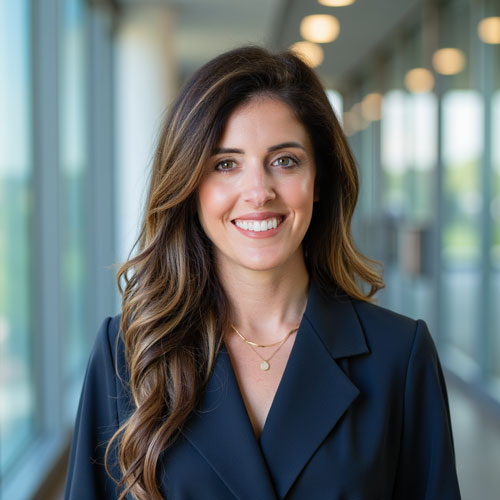
Halle Tecco, Author, Massively Better Healthcare: the Innovator’s Guide to Tackling Healthcare’s Biggest challenges
Halle has been investing in the future of healthcare since 2010 as an angel, LP, and the Founder of Rock Health. She also teaches at Columbia Business School, where she created the first MBA-level course on digital health investing, and at Harvard Medical School, where she leads a course on healthcare innovation. Through teaching, writing, and her podcast, she helps everyone from newcomers to industry veterans work toward improving healthcare for all.
https://www.halletecco.com • Halle Tecco, MPH, MBA | LinkedIn
Favorite Song: The Dog Days are Over, Florence and the Machine
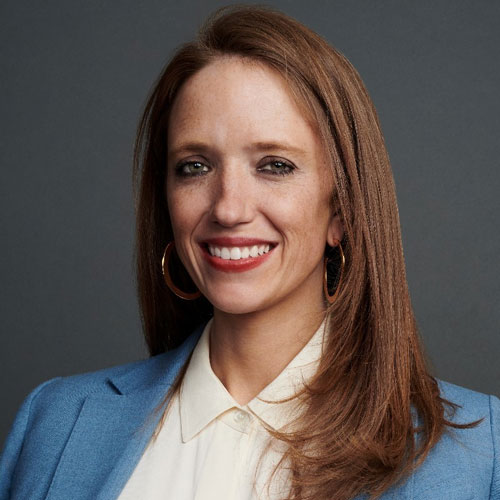
Kate Ryder, Founder & CEO, Maven Clinic
Katherine “Kate” Ryder is the Founder & CEO of Maven Clinic, the largest virtual clinic for women’s and family health, known for her work in telehealth, venture capital, and journalism, having previously written for The Economist, Fortune, and The New Yorker before founding Maven in 2014 to address gaps in care. A University of Michigan and LSE graduate, Ryder transitioned from finance and writing to entrepreneurship, becoming a prominent voice in healthcare innovation and women’s empowerment.
Kate Ryder Founder & CEO of Maven | LinkedIn
Favorite Song: Feeling Good, Nina Simone
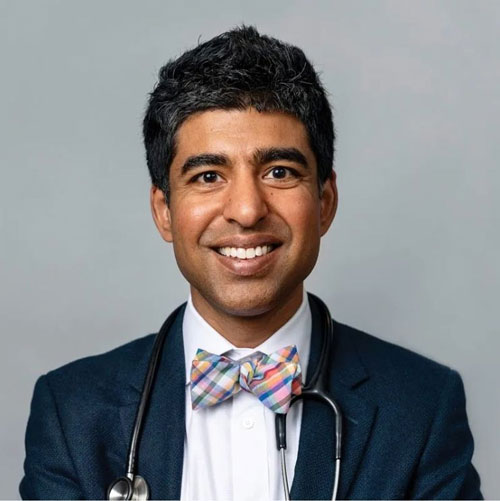
Dr. Neel Shah, MD, MPP, FACOG, Chief Medical Officer, Maven Clinic
Listed among the “40 smartest people in health care” by Becker’s Hospital Review, Dr. Shah has spent the past decade at Harvard Medical School, serving as an obstetrician-gynecologist at Beth Israel Deaconess Medical Center, Assistant Professor of Obstetrics, Gynecology and Reproductive Biology, and founding Director of the Delivery Decisions Initiative at Ariadne Labs, a joint center for health systems innovation at Brigham & Women’s Hospital and the Harvard T.H. Chan School of Public Health.
Dr. Neel Shah, MD, MPP, FACOG | LinkedIn
Favorite Song: Reckoner, Radiohead
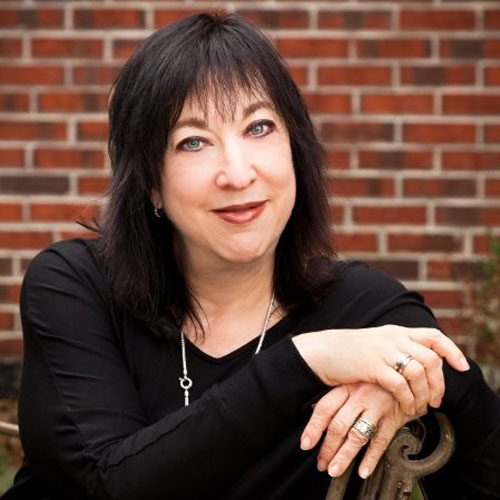
Jane Sarasohn-Kahn, Founder & Principal THINK-Health LLC and Health Populi blog
Health economist, advisor, health care consultant, and trend-weaver for clients across the health/care ecosystem at the intersection of health + technology + people. Collaborates on strategy, scenario planning, and environmental analysis. Blogs at Health Populi, founded in 2007. Sits on several advisory boards. Represented by several speakers’ bureaus. Member of Global Educator faculty, Duke Corporate Education. Working and living between Philadelphia and Brussels, Belgium.
Jane Sarasohn-Kahn Health Economist, Advisor | LinkedIn
Favorite Song: Come Go With Me, Staple Singers
Stay in the KNow!
Get our monthly email featuring expert interviews from the healthcare industry with real insights, no fluff. Get the latest information that help you better understand your healthcare options.
Thank you for subscribing! We're excited to have you here.
You’re all set and will receive our monthly email with expert conversations and insights from leaders in healthcare.