
Living with Vitiligo
Jarrett Brown Shares His Advocacy Story and Coins the Term Disease Party
What does it mean to live with an autoimmune disease that people can see? Jarrett Brown shares his journey with vitiligo, breaks down the challenges of clinical trials and access to care, and explains why patient voices must be part of every health care decision.
Takeaways
- Autoimmune disease is when the body attacks itself, and it can show up in many different ways.
- Many autoimmune conditions are not visible, so people may be struggling without others knowing.
- Having one autoimmune disease can increase the risk of developing another over time.
- Clinical trials are hard to access and often come with real costs in time, money and effort.
- Even when new treatments exist, access is not guaranteed due to insurance, cost and location.
- The health care system often puts patients last instead of centering their needs.
- Living with a visible condition can have a strong mental and social impact, not just physical effects.
- Support groups and community can change how people see themselves and their condition.
- Patients need to be active participants in their care, not just follow instructions.
- Real progress in health care requires better connection between patients, providers, insurers and industry.
Chapters
00:00 Introduction and Jarrett's Personal Story
01:11 Jarrett's Journey with Vitiligo
02:45 Understanding Autoimmune Diseases
05:09 Multiple Autoimmune Diseases and Risks
06:08 Healthcare Specialties and Advocacy Work
07:07 Jarrett’s Op-Ed on Healthcare Access
07:34 Challenges in Clinical Trials
09:00 Insurance and Treatment Access Barriers
15:13 Stigma and Employment Challenges
16:35 Support Groups and Community Building
18:54 Reframing Support: Disease Parties
22:04 Patient-Centered Care and Advocacy
28:24 Advice for Young Patients with Vitiligo
29:40 Favorite Inspirational Song
31:19 Closing Remarks
Robin Strongin
Okay, so good evening everybody at Health Dame. This is Robin Strongin and tonight I'm here with Jared Brown who I'm very excited to be speaking with and we're going to hear about Jared's work in advocacy, very personal story ⁓ any further ado Jared, I'm going to ask you to just introduce yourself ⁓ ⁓ I'll fire away a million questions, but I won't do justice. So why don't you take it away? I will just say for the record, we didn't meet that long ago. We had the opportunity, we met randomly at an autoimmune association advocacy event. you shared your story there. ⁓ I was really taken with ⁓ ability to share a personal story, but the elegance with which you talked about the work that you're doing on behalf of many, people with autoimmune disease. And we'll talk about that more broadly as we the conversation. But as you can see, I keep interrupting. So take it away, ⁓
Jarrett Brown
By all means. No, no, it's a pleasure to be here. Thank you, Robin, so much for your time and for having me on your platform. My name is Jarrett Brown. I am the, I'm so sorry, I'm battling the ending stages of the cold here. Not to mention single-handedly going to destroy the audio here. I'm sorry. Jarrett Brown. I am the founder of Jarrett Speaks. I had vitiligo since I was three years old. ⁓ Vitiligo a dermatological disease that your body essentially attacks the melanocytes or the pigment in your skin. And there's no real rhyme or reason. We're still trying to figure all of that out. So I've had vitiligo since I was three. ⁓ spent a long time as many people not wanting to deal with my vitiligo or talk about it. I just kind of wanted to fit in and be normal and not have to address it. ⁓ ⁓ working with other advocacy programs, namely Beautiful Ambulance Vitiligo Support Group, they're the ones who kind of found me and bought me to the forefront and so many other great groups. I've been able to find my voice and ⁓ building my own platform, Jared Speaks, which is built on transforming a personal journey with vitiligo into a public mission that focuses on amplifying patient voices, bridging the gap between the people, the patients and healthcare providers and insurance companies and the business end and driving empathy and action. So there's my elevator pitch.
Robin Strongin
enough. let's at a super high level. So you mentioned autoimmune disease. So for people who may not know, it's a term we hear a lot, but ⁓ what that mean?
Jarrett Brown
So an autoimmune disease is essentially when your body has, well, I'll put it in very, simple term. Your body has soldiers that are supposed to fight off infection. Your body has its own defense system and it's supposed to see the bad things and keep you safe and protect the good things. When you have an autoimmune disease, for some reason, your body kind of gets confused and can attack some of the good guys instead of the bad guys. And in my case, my own immune disease decides to attack my pigment. Fortunately for me, It is not a physically painful disease. It does have some other side effects, but autoimmune diseases can come in many types can affect all types of organs and all types of ⁓ in a person. ⁓ thing with autoimmune diseases is they're very rarely visible. A of times you might not know that somebody who seems like they're perfectly fine and functioning at a high level is actually battling every day with an autoimmune.
Robin Strongin
What would an example of that be? Some type of disease like that?
Jarrett Brown
I'll give one ⁓ I ⁓ with sometimes. This is kind of, and I guess I'll be careful and say this ventures on, some people say it's autoimmune, some people say it's ⁓ autoinflammatory. Disease like ⁓ Sarcoidosis is a disease where ⁓ your body up, I don't wanna get too far into the technicalities, but essentially cells inside. That are not cancerous, but they're almost cancer like and and they can affect everything from breathing and respiration to your sight Etc. Etc. You end up with just nodules Another one hydrogenitis superativa. That's a physical one and sometimes it's very visible ⁓ but sometimes there's people who have hydrogenitis superativa, which is painful ⁓ ⁓ that that can be anywhere where there's a hair follicle so you might not know it but that person sitting next to you ⁓ be in in extreme amounts of pain because they have a boil that's no fault of their own that they cannot necessarily treat. They just kind of have to wait for it to go and run its course. And there are treatments, but ⁓ with most autoimmune diseases, the treatments are not instantaneous. And ⁓ kind of a you battling those those soldiers and ⁓ that ⁓ treatment actually kind of wins out and gives you some relief, but there's
Robin Strongin
In doing some research for our conversation tonight, my understanding is that it's not uncommon if someone's diagnosed with one autoimmune disease. It often is true that they may over a lifetime experience multiple autoimmune disease, not always, but it's not uncommon. that true?
Jarrett Brown
Yes, it's right. It's a thing that we're learning more about now. And now those of us with autoimmune disease are learning that, okay, once you have one autoimmune disease, don't live in fear that you're going to have another autoimmune disease immediately. But it gives you another reason to keep an eye on your health and to run checks that other people might not run and to have blood work and labs done and to pay special attention just to make sure that you're not ending up with compounding autoimmune diseases. And that one symptom that's usually prominent in one autoimmune disease is not maybe a bridge to another.
Robin Strongin
So in your case, since there are a range of autoimmune diseases, some of them are quite, there are a lot of people and some of them they're more rare or less common. And there are different specialists who treat, right? There is not an autoimmune specialty per se, right? It could be rheumatoid, it could be arthritis, it could be a rheumatologist, it could be a dermatologist. So it really, It's all over the map. And I think that's what makes some of the advocacy work tricky, not unlike cancer where there isn't one cancer. There are many types of cancers. There are many types of autoimmune disease. And when you're advocating, I know you've done a lot of advocacy work in the research side of things and clinical trials. And that's where, you know, your advocacy, well, your voice comes in many different ways, let's say, because I know you recently had an op-ed that was posted in, I want to say USA Today. And say a little bit about that and why you decided to share there. What would, yeah, and we will for everyone listening, we will be including on the website, links to the op-ed and all of the organizations that we're talking about so people will have resources. So that will be, we'll take care of posting those.
Jarrett Brown
Yeah, the op-ed was a gift that was bestowed upon me by the coalition of skintedies and in with a global VitaLigo foundation. They were asked if anybody had a voice that might want to talk about their journey. I was approached and I jumped at the opportunity. ⁓ It really personal to me because I had just finished clinical trials ⁓ of new treatment for VitaLigo and I have done several phases of this clinical trial. Having had VitaLigo for 40 years, you ⁓ or I have undergone several different treatments, then a clinical trial and different phases of the insurance life cycle. Insurance has definitely progressed and regressed in many ways and depending on who your insurance carrier is and what your elections are and who your employer is, it's a shell game. I wrote that article really saying that there's, we're in a, despite how, whatever you may feel about where we are with government and business, et cetera, we are at a, new time in technology when it comes to health and well-being. We're seeing new treatments and new medicines that we've never dreamt of that we didn't think that we'd have before, and they're actually coming to fruition. However, with that being said, there's still this huge unknown as to, there's care right there, right there. But will I have access to it? Will my insurance be okay to get that? Will it be priced at an affordable, an unaffordable way? Will that newest treatment be available at the clinic or at my physician that's down the street or do I have to take a flight or a bus or train a car if I live in a place where transportation is not or I'm in a financial position where transportation is not accessible to me. It was just really personal to me because I've seen met so many people who many people don't want care and some who do want care they say hey I want care but it's ⁓ so burdensome to get it it's so expensive to get it. I don't even know what's out there you know I heard there's something new but I'm skeptical. And my thing is I just really would love to bridge that gap between the care providers, the insurance providers, the pharmaceutical companies and the patient. It seems to me that a lot of times the patient's kind of the last person in the chain of care. Everybody kind of develops markets and prices and then it's like, then there's the patient and we need to
Robin Strongin
going to come back to that because that is monumentally central to just about every conversation I have because I wouldn't be having any conversations if it weren't for individuals, the patient and their caregivers. we were ⁓ just to clarify a lot of what you talked about happens ⁓ a clinical trial. clinical can be tricky to first of all, ⁓ getting in ⁓ Are there enough people of color in clinical trials? How is recruitment conducted? It was, mean, I'm old enough, I'm way older than you to know that, you know, clinical trials, used to have to pay to be in clinical trials. They had to pay for parking and care, let alone other things. So not to mention clinical trials used to be for middle-aged white, healthy, heterosexual, you know, non-pregnant men. And that was the gold standard. And we've been pushing for the platinum standard, is where it's moving. The needle has moved to be sure, but not far enough, as is true in most of us. So there's the clinical trial and where the research happens. And that is a pretty tricky process to begin with. you've participated in part of your advocacy is to encourage ⁓ innovators to continue to look at diseases where there may not be millions and millions and millions of people, but an N of one is still really important to figure out and help an individual who's struggling with something. then once clinical trial gets to the point where the Food and Drug Administration has cleared it to be the product, to be able to be on the market so that you know, someone with your condition could have access, then there's the whole insurance, you know, set of challenges, the whole educate the physician, caregivers, and certainly we call them social determinants of health these days, we've called them other things in the past, but the transportation, the, you know, is there time off from work, all the things that you articulate in your op-ed and in your advocacy work. And you are, taking your story and you mentioned that it may not be physically painful, but that doesn't mean that there are in other types of pain that come along with a condition that people can see and people may be confused about and that can't be easy for anybody.
Jarrett Brown
Absolutely, no, you hit it right on the head. mean, everything you said is spot on. to the point of getting in a clinical trial, I don't even know how I got in the clinical trial. Unfortunately, I was able to do a phase two and phase three. I've had people ask me how, absolutely. And I had people ask, how did you get in the clinical trial? I honestly don't know. ⁓ received a survey, I took it, I ended up there. My mom was very skeptical of this clinical trial. She didn't want me to participate in it.
Robin Strongin
far along yeah
Jarrett Brown
black folks don't have a great history of being experimentally. Once you're in a clinical trial, it really is somewhat of a black box. I have no idea what I'm putting in my body. I know what some of the side effects might be. I know what the hope is, but I really know the timeline or the efficacy or.
Robin Strongin
Absolutely. experience when you were in the clinical trial, were you treated respectfully? Were you given answers to all of your questions?
Jarrett Brown
I definitely was not given answers to all of my questions. And I think that's because the facilitator of the clinical trial did not know the answers to the questions. The way the clinical trial that I was part of worked was I went to a office and it seemed that they did many clinical trials, almost like a ghost kitchen of clinical trials. So knew basically the same packet that I had access to. They knew those answers. And anytime I had a question, they could go ask. ⁓ And maybe they'd bring some information back. but it wasn't always very forthcoming. There were some side effects that I believe is a direct linkage to that weren't really accounted for. And as far as the people there, the staff there that was excellent though. So I will say the staff was excellent, but there's very little incentive to a clinical trial for me at least. I'm 43, I'm pretty much settlement of my skin disorder. That clinical trial was a two hour drive each way.
Robin Strongin
How often did you have to go?
Jarrett Brown
once a month and the initial payments was $65 a visit. That doesn't cover a train, that doesn't cover gas, that doesn't cover time off work, that doesn't cover meals. So there's very little incentive to do it. So it's definitely a hardship and a difficult thing doing. You just kind of have to do it for the love of doing it. And then once it's over, it's over. Yeah, yeah, yeah, once it's over, it's over. for me, phase two went wonderful.
Robin Strongin
Yeah.
Jarrett Brown
But once phase two was over, I couldn't get access to that drug anymore. It was over. So now I had to watch my progress regress and I just had to wait until phase three. Fun fact, phase three didn't have any effect for me. I actually got worse. So a difficult, you gotta wanna do it for the right reasons. You have to wanna do it because my thing was if I could help find a drug that makes one person, one kid's first day of school easier, whereas you remember what I talked about at DC, gets one more person to a disease party, then that's worth it for me. But knowing that there so many people who have not left the house or just elephant in the room, take their own lives because it's just very, very difficult or go through deep depressions because they're combating finances and stigmas, et cetera, that's all that it made it worth.
Robin Strongin
you think that a skin condition like yours, did it affect the ability for employment ⁓ of you mentioned stigma or it's hard to say?
Jarrett Brown
I'll never know. That's the crazy thing. I joke that having a skin disorder or having it, not just a skin disorder, having an outward difference, whether it's a skin disorder or any sort of disability or just difference can create somewhat of a mental illness of sorts. And the reason I say that is because the thing that's typically diagnosed, I would say clinicians diagnose this as an autoimmune disease. Insurance companies will often diagnose it as cosmetic. For me, I'd say it's very much manifested more as a mental disorder than anything because I've spent so much of my life worrying about how other people will see. Now, some people are wonderful with that. They don't care who thinks whatever. And I've gotten very good at that over the years. But when you've had vitiligo since you were three, as a kid, it's a little bit difficult.
Robin Strongin
I imagine it was just absolutely crushing and bruising.
Jarrett Brown
joke that it's made the best parts and worst parts of me. So it's made me very social and able to have conversations like this, but it's also made me probably too good in clapping back at somebody who says something inappropriate to me. So there's that balance. But the thing is, I'll never know what friend groups I wasn't included in. I'll never know what date that I didn't get. know, don't be wrong. There's some funny stories. There's some stories where I've seen somebody look at me and see my skin like, ⁓ no, nevermind. You know, but I'll never know if I didn't get that job, et cetera. But what I will say for me, and the thing that I hope that it manifests for many people is that it's like a weight. And the more you push a weight, the more you push a weight, the stronger you get. And that's what happened for me. But I also had the spotter of support groups and other advocacy environments, et cetera, that helped me get that weight off my chest and helped me build that strength.
Robin Strongin
but you were willing to do the hard work of being part of a support group and seeking it out. That's really hard to do that from, you know, lots of people.
Jarrett Brown
Yeah, that's thing. I didn't do it. ⁓ So Tondra Johnson, she's the founder of Beautiful and Blemish Vidalago support group. Once again, works in mysterious ways. ⁓ have no idea how Tondra found me. She said, hey, we need some men who had Vidalago for a long time to come speak, come speak. And I did everything I could to get Tondra to leave me alone. But that woman has the resilience of a saint. I have no idea how she got me to come to an event. And I came reluctantly and spoke. I even told her I was gonna be very mean about my speech. I said, I'm gonna say that I'd punch somebody in the face to make it rid of the ligo. And she said, if that's how you feel, then come on. I said, all right. I didn't say that though. And what it was for me was seeing other beautiful people, other cool people who looked like me. I saw other men and women who are like, that's a good looking guy. He's got attention, he's having a good time. I'm no different than him. Okay, well, she's beautiful. She has skin like me too. And being in those environments and just having fun and realizing that it wasn't just a, when I thought support group, and I think we kind of need to change the name of support group.
Robin Strongin
I couldn't agree more. ⁓
Jarrett Brown
I was going to be boss, sitting in chair, crying, talking about how hard it is and how sad. No, it's, you know what I'm saying? It was a disease party. know, was a bunch
Robin Strongin
And that's the thing, when you said at the autoimmune advocacy event, you came out, I've been to, can't even count the number of advocacy patient events I've been to over the past 40 plus years in DC. No one ever came up with the two words together, disease party. I thought, and you know, I do communication. So I'm like, oh my God, that's brilliant. Where has this man been? This is fantastic. It's like,
Jarrett Brown
bursting moment.
Robin Strongin
is just magic. And I think we need to the names of things.
Jarrett Brown
It's very simple and it goes a couple ways. We were all in the same position. We're a bunch of, most of us strangers. who had become friends and we had a couple options we could have done. We could have sat there and wilted and just kind of sat around and talked about how sad we were about what we were doing. But we didn't. You looked around the room and it was a bunch of amazing looking people who had walked around DC that day, exhibited strength and were having conversations, were networking, were having, you know, cocktails, et cetera. It was a party with a bunch of people who just had individual, unique autoimmune diseases. So to me, it's one of those things, hey, let's call it like it is. Let's embrace the positivity in it and let's give ourselves a reason to come to the next.
Robin Strongin
100%. were people who were Olympic ⁓ I mean, it's like, you could ⁓ your life with disease ⁓ and have a party. ⁓ And not easy, ⁓ not all easy, but it's doable. It's really hard. But people like you who are willing to just put things out there. you probably get tired of hearing it, but it is inspirational and it gives people hope. And that's the thing that really, to ⁓ when world seems to be going completely off the rails in healthcare and elsewise, knowing that are still people willing to go to work and do the research and the discovery and the innovation. knowing there are people who are really trying to power the clinical studies, the clinical trials, and knowing there are people like you who are fearless about talking to people in halls of power because none of the policy changes, you talk about the insurance barriers, you talk about pricing barriers, you talk about all kinds of barriers. Shame on us if we have the science But we don't have, as there have been many articles recently written, that if the infrastructure wrapped around the science doesn't work, that's the tragedy. Because what good is an innovation if you can't have access to it? no value there. And that's just, it's idiotic. So ⁓ criminal, actually, because you're causing people not to live their best life. And we've got to change that. And so... I personally just want to thank you for everything you're doing. And you are absolutely right that have to make sure patients continue to get not just the recognition, but their time valued by ⁓ the players in the healthcare, we call it ecosystem, to not just ⁓ that they're patient centered, but actually ⁓ like they're patient centered. and put their money where their mouth is. I'll just put it out there.
Jarrett Brown
No, you're absolutely right. mean, you talk about access and the time it takes. I'm fortunate enough that I was just able to be afforded a piece of equipment that I can do with treatments at home. But without that piece of equipment, and my first treatment today, which I did today, was 17 seconds long. And the treatments usually increase in five increments of three seconds. So that's how much time I actually spend in treatment. Without that piece of equipment at home, I would have to drive to my dermatologist office. My dermatologist office is about 45 minutes without traffic. It can be an hour, hour and a half with traffic. So you've taken the fact that I have to take off work, drive an hour to an hour and a half each way, check in the office, wait in the waiting room for 17 seconds worth of treatment, and then pay on top of that? Yeah. Imagine how tiring that is on an individual, especially if you have children you have to pick up and care for. You have other errands you have to run and then you have to get your employer to actually excuse you every single day. Cause dermatologist office don't stay much open much later than 5pm. So every single three times a day in this case, a burden that's just not accounted for. It goes beyond time. goes, mean, cost, goes into cost, time, mental anguish, et cetera, et cetera.
Robin Strongin
And not to mention people with one condition often have other conditions, even if like now you have a seasonal cold or terrible allergies or more complex, you know, comorbidities and other conditions, we have to make it accessible to patients. that's easier said than done, but unless we're all willing to work together to figure it out and keep fighting these good fights. And that's what we're doing. And I think, you know, this notion of a disease party, let's just roll up our sleeves. Hey, frankly, just get, you know, get shit done already.
Jarrett Brown
I'm with it. I love it.
Robin Strongin
What the heck are we waiting for?
Jarrett Brown
And the thing is we have the resources. I mean we're seeing so many treatments now. We have the resources. Like you said, it's criminal that we have the resources and there are people who could use them and they're just not able to get there. They're sitting right there unused.
Robin Strongin
And I do wanna underscore that for so many health conditions, it is insufficient to stop after a physical diagnosis. Any kind of chronic condition comes with so much mental anguish in every different form. And until we treat this as a continuum of needs to be ⁓ dealt with for a human being. We're not doing this. It's not patient centered.
Jarrett Brown
I will always shout out my one PA at a general practice office, Gina Mankin, because she was the first PA. Physician right? Yes, physician assistant. First medical professional to ever ask me how I was doing. she sat down, she took a seat. I know she probably had 15 minutes.
Robin Strongin
Station assistant. How old were you when she asked you that?
Jarrett Brown
So this was probably within the past eight years. This has been since I moved to Florida and that changed my, I had stopped going to dermatologists and my father had said, found this new dermatologist and said, great, you should go see him. And the sap gonna sit with her and I was just kind of prepared to be like, go through the motions and get out of there. And she said, okay, well, I'll you at the little eye, let's do a skin check. And you know, they did the light and he said, how are you doing with this? Like, how's it affect you? know, what do you know about the treatments that are available? And I said, I told her and she said, well, this is what I know. And she said, these things are coming down the pipeline. You're right, we need an approach that one doesn't just say, hey, this is what you have, this is the treatments that my office has. But a lot of times I've found that one office might not have all the treatments. They might have two of the treatments. There might be three other ones or two other ones or four other ones. And I do believe that we need to get to a point where these offices are saying, hey, this is what I offer and this is why, but here's what this other office offers. And on top of that, It's okay to not be okay. This is probably gonna take a little bit of a toll on you. You probably have a lot of questions. I don't know the support groups in the area, but if you Google autoimmune disease, whatever support group, Cleveland, Orlando, Baltimore, cetera, something will probably pop up. might be good for you to see somebody. I can't refer you to a mental health therapist, ⁓ it's good to talk to somebody. On top of that, know, like, here's what you should expect with your treatment. This is the timeline. This is the efficacy rate. These are the side effects. This is what may or happen. And this is what happens if you don't treat. I find a lot of times we're not getting the whole picture our care plan and we're not bought in our care plan. Anybody who's seen me speak has probably heard me say, we have been ⁓ socialized to respect doctors as an authority, which I agree with. They work very hard ⁓ their accreditation. However, when someone's of authority, you typically don't question them. You take what they say. They're the authority, you're gonna keep them out your business. However, a lot of times when we go into doctors offices, we have a laundry list of questions and then that list just blows away in the wind as soon as we walk in, because we ask one question, everything kind of goes away. And then the doctor says, this is what you have, this is what you're gonna do. And instead of asking us, hey, does this work for you? These are the side effects, how do you feel about that? Also, here's the options to not treat, how do you feel about that? And I'm starting to see some insurance providers ⁓ get better about holistically approaching treatment, not pushing their drugs, not insurance providers, I'm sorry, companies. No, no, there's one pharmaceutical company in particular that I've done some work with that I've been really impressed by the fact that they also offer the option to not treat, but will educate you on what that looks like.
Robin Strongin
I was... News flash, news flash.
Jarrett Brown
I do think we need more of an ⁓ where the patient is bought into their care team. If I'm bought into my care team, I'm more likely to be compliant. I'm to be less stressed. And anybody with an autoimmune disease will tell you stress is always a trigger for autoimmune And we're more likely to see results. I'm like said, bridging gap and wanting to see the whole experience bought to the patient, the patient bought in as part of their team and have their voice amplified and heard.
Robin Strongin
So for the next little three year old guy that just gets diagnosed with vitiligo, what advice can you give to him? A little guy.
Jarrett Brown
You know, it's hard to say now because times are so much different. When I was diagnosed, there was no internet, there was Winnie Harlow, was nobody walking around visibly.
Robin Strongin
It is so different. Minnie Harlow is a beautiful model. With your condition and everybody, if you would recognize her, know her, she's famous.
Jarrett Brown
Absolutely, you know, there were no pictures in Target or Claire's with people who looked like me. So at the time I was alone. So even now, I think the thing that I would tell somebody, especially a kid with vitiligo is ⁓ you. And I know it's very simple, but like ⁓ skin isn't you. You have vitiligo. And we say this a lot of times, many autoimmune disease. You have this, it doesn't have you, but like, look, you have vitiligo, it doesn't have you. Get out there, be great. Go play, don't let anybody tell you anything other than you're amazing. And you go out there and be amazing and kick butt. That's it. I think for me, it's given me really competitive spirit. that would really be what it's worth. You're gonna get the feedback, but when somebody gives you that feedback, that's something negative, go ahead and show them how awesome you are. Don't ever let that affect
Robin Strongin
You need to get out there and talk every minute of every day because I'm like ready to pick up a torch now, you know? my God. Wow, wow, wow. Okay, so I can't close our conversation without my song, without your song and me asking you to please share ⁓ song that means something really special that we can add to our Health Team playlist.
Jarrett Brown
Good. song that's really special to me that I listen to whenever I just need a pump up or just when I'm feeling or when I'm, I mean, this is kind of a catch all song. When I'm feeling awesome, I listen to it. When I'm feeling stressed, I listen to it. It's called Be Great and it's by Kevin Ross. ⁓ And song is about just resilience through the journey. It's about empowerment and setting the standard. Essentially, no matter what, the goal is to be great.
Robin Strongin
be great and who is
Jarrett Brown
Be great. Kevin Ross.
Robin Strongin
Heavens, Ross, how do I not?
Jarrett Brown
I'm from Baltimore, Maryland. He's from Washington, DC or the DMV area. So it's a little bit special. But yeah, Kevin Ross is a great musician and that song is just about, hey, going to have people who doubt you. You're going to have fears. Things are going to be tough, but ⁓ the point of pushing? What's the point of doing anything if you're not going to be great? ⁓
Robin Strongin
Z's party theme song. The theme song right there.
Jarrett Brown
Absolutely. Really means a lot to me for that exact reason. Hey, look, we could have all sat back and languished and just been sad about what we have going on. But so we've decided to be great and we're going to keep on pushing and fighting no matter what.
Robin Strongin
can't love that anymore. It's just so perfect. my God, Jared, thank you so much. know you're so freaking busy, so I'm really-
Jarrett Brown
I appreciate you giving me your platform to amplify my voice and really excited to work with you again in the future. I'll definitely let you know next time in DC.
Robin Strongin
Absolutely, absolutely. And we will put up all the links that we've talked about and just keep doing what you're doing. I there's a lot of little kids that are going to be really there. Their life could be changed because of the work that you're doing. And that's really the beauty of people knowing that. You know, sometimes you get dealt a really hard hand in life. And I know this personally, ⁓ but are so many good people who ⁓ are really there to help lift other people up. And we don't do that, I don't know. It's sort of not worth it. you know. ⁓
Jarrett Brown
Little people, I got a shout out one. So I had the privilege of being part of Camp Victory. It's a summer camp for children with vitiligo this summer. And there's a little girl named Palmer who has vitiligo and she drew me this robot doing the hula and I keep it on my desk because Palmer was just so awesome and she was just so inspirational to me. I know Palmer even knows she has vitiligo because she truly did not care about that or anything else. just marched to beat of her own drum and that's an inspiration for me every day. So absolutely.
Robin Strongin
That's absolutely what a way to end on such a high note. All right, you feel better. Get rid of that cold. It's probably pollen. mean, the pollen here is well, DC is known for it's a nightmare. But, know, seriously, thank you for taking the time. And for sure, we're going to be throwing a lot of disease parties and bringing a lot of to DC for sure. Jerry, you take care of it. right. Yeah. Peace out.
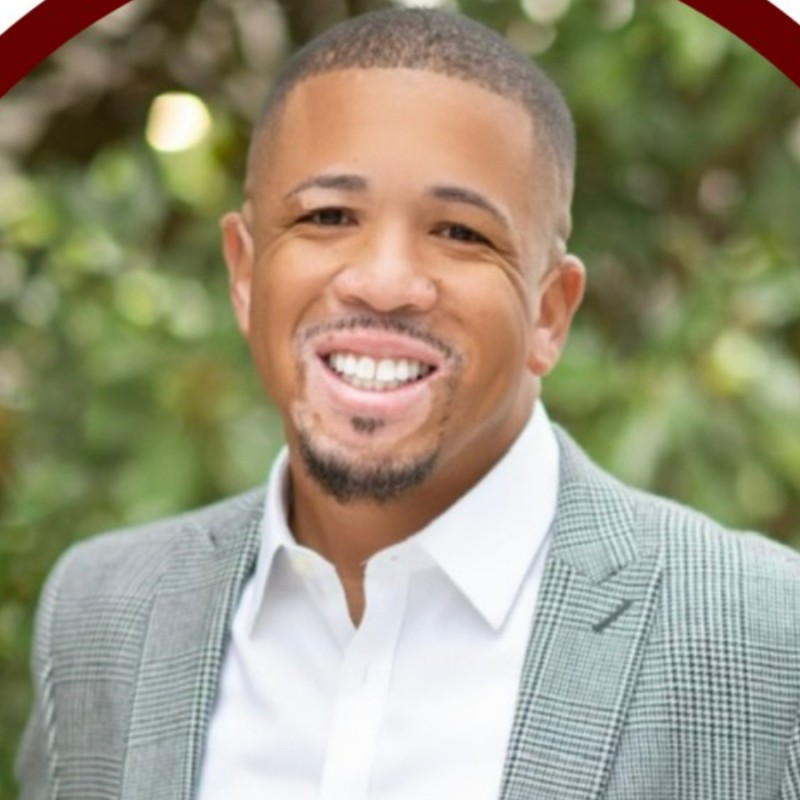
Founder, Jarrett Speaks
Founder, Jarrett Speaks
Jarrett’s OpEd in USAToday: Living with Vitiligo in an Era of Barriers and Breakthroughs
Advocacy Committee Member, Global Vitiligo Foundation
Board Advisor, Beautifully Unblemished
Resources:
Autoimmune Association
Coalition of Skin Diseases
FAVORITE SONG: Be Great, Kevin Ross
Stay in the KNow!
Get our monthly email featuring expert interviews from the healthcare industry with real insights, no fluff. Get the latest information that help you better understand your healthcare options.
Thank you for subscribing! We're excited to have you here.
You’re all set and will receive our monthly email with expert conversations and insights from leaders in healthcare.