
Living With Dementia: A Personal Journey
Facing Dementia With Purpose and Openness
In this conversation with Robin Strongin, Sam Simon shares his experience with early-stage Alzheimer’s, from the first signs that something was wrong to the moment he received his diagnosis. He reflects on how symptoms were initially dismissed, how genetic testing revealed increased risk, and how finding the right neurologist changed his path forward.
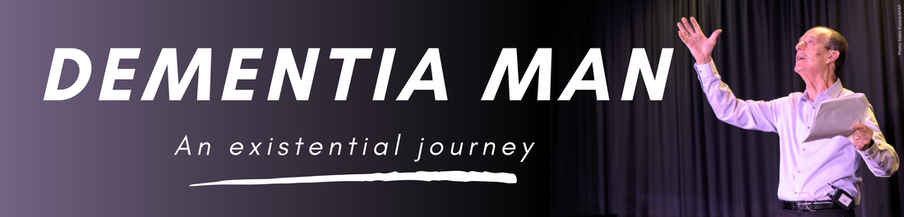
Rather than retreat, Sam chose to speak openly. Through his one-man show, Dementia Man, he uses theater to show that life with dementia can still hold purpose, connection and meaning. He also highlights the emotional toll on care partners, the need for better cognitive support in medicine, and the importance of planning ahead.
His central message is simple: a diagnosis is not the end of a meaningful life.
Takeaways
- Early symptoms are often dismissed as normal aging, which can delay diagnosis.
- Genetic risk does not guarantee disease, but knowing your risk can guide decisions.
- A diagnosis is overwhelming, but clarity matters for treatment and planning.
- Finding the right neurologist makes a major difference.
- Clinical trials can provide both access to care and a sense of purpose.
- There is value in speaking openly about dementia to reduce stigma.
- Care partners carry an enormous emotional and physical burden.
- Planning ahead for housing and support is part of living with the disease.
- Meaningful work, including art and storytelling, can continue after diagnosis.
- You can live a meaningful life with Alzheimer’s, even as it changes you.
Chapters
00:00 – Introduction: Friendship, Advocacy and Alzheimer’s Diagnosis
01:13 – Working with Ralph Nader and a Career in Public Advocacy
03:54 – The “Gadget Guy”: Technology, Telecom and Early Telehealth
07:00 – Early Warning Signs: Memory Concerns Dismissed
09:22 – Driving Incidents and the “Dark Place”
12:43 – 23andMe, APOE4 and Genetic Risk
15:57 – Turning to Theater: Finding Meaning Through the Arts
20:22 – Forgetting Lines: When Symptoms Became Clear
22:12 – A Difficult Diagnosis and a Better Neurology Experience
25:15 – Clinical Trials and Why Testing Matters
29:11 – Assisted Suicide Debate and Choosing to Stay
36:04 – Care Partners, Marriage and Planning for What’s Ahead
42:09 – Creating Dementia Man: Living a Meaningful Life
46:53 – Audience Reactions and Unexpected Impact
48:52 – Favorite Song: “Unchained Melody” and Love That Endures
51:04 – The Need for Cognitive Navigators and the GUIDE Program
Robin Strongin (00:02.612)
Okay, good morning everybody. This is Robin Strongin with Health Dame and today I'm going to talk with my longtime friend and colleague, Sam Simon. And Sam, we've known each other quite a while, many years, and our paths have crossed in a whole bunch of different worlds, right? I
Absolutely. We could go in work work and our religious and synagogue and like we are both past presidents of different things. Yeah.
And we still stay connected. And it's just a real pleasure to be able to have the time to really dive into and learn a little bit more about what you've been up to since your Alzheimer's diagnosis, which you've been very public about sharing, as I was with Brian when he was diagnosed with Lewy body dementia, different type of dementia. But, you know, your life has been a series of
fascinating twists and turns working with, God, now I just.
That's his name, I think we call him Ralph Nader.
Robin Strongin (01:13.831)
Neither, right, right, right. Yes, unsafe at any speed. And so what did you do with him? What were you doing when you worked with Ralph?
Well, you know, I often like to say be careful who your first boss is. You to the rest of your life. I graduated law school in 1970 and I was among the first 13 lawyers, full-time lawyers. He had had students called Nader's Raiders, there's a slight distinction. And he started something called The Public Interest Research Group. They're still today college-based in various public interest research groups, but this was
Yeah, you're saying that.
Sam Simon (01:54.286)
the first and I was one of the first 13 to do it. Then had some side trips and did various other things, was on the hill for a while. And he...
came back and asked me to go take over. I'd been a failing nonprofit. And I did and worked for him and around him up until I started a public affairs firm, you're familiar with. I faced having two kids going to college. And if you would know anything about Ralph Nader, he paid almost nothing. And so,
had to get serious and we did a public affairs company who came in and we're sort of partnering that later on and had a big role there and did that. is still a friend, Ralph is still a friend. People are, I often get, oh Ralph, he's still alive, he's 91, he's about to...
That's that.
Robin Strongin (02:55.726)
Is he nine? my goodness, he's in his nineties. Wow.
The next day, or 292, I forget which day in February. And he's interviewed me about my new role and the new book version of Dementia Man. has a weekly podcast. yeah, that is a big part of my history.
It sure is. technology is also a big part of your history, right? I mean, you really are one of the biggest fans of technology I've ever met. Every time I see you, you have a new gadget of some sort.
Well, Washington Post once called me the gadget guy, but I'd like to do it. It's a little distinction. I was an early, I think, not just a fan, but I had the ability to imagine the value of technology a little bit more than I could make anything. I couldn't make it happen. I can't program well. And maybe we have this in common. We have good people working for us.
Exactly, yes, that's fair.
Robin Strongin (03:54.923)
No, no, no.
Robin Strongin (04:05.1)
Yeah, exactly. Yeah, exactly. No, but it was your vision to see the power of the tools. And that's where you and I crossed because you're in telecommunications and all of the new technology. And I was on the health care side of things. And telehealth was finally starting. It had been around for a long time, but
can't do that!
Robin Strongin (04:30.69)
Finally, the ability to do something and scale it started to become real. And that's where I think we started to really collaborate.
Yeah, and you know the American Telehealth Association was started in our first
I know it was with John Lucas and you and the whole gang. Yeah.
And they saw it wasn't my, what's his last name? Sandra, Sandra, Sandra, anyway. I didn't see it that as clearly as they did, which is an interesting thing. I mean, even Ralph, I love it that, you know, I could see how it enabled people to communicate and to integrate and just change our individual lives.
Well, are you using telehealth now when you have doctor's appointments or do you tend to go more in person to your appointments?
Sam Simon (05:26.88)
I to go more in person. It's interesting.
Because we didn't have it.
It's not that I'm against it at all, other than it's interesting because the neurologist is literally walking distance, not that we walk. He's walking distance.
He is? Because I think I shared with you, Brian and you shared the same neurologist. Brian, of course, has passed now, but he has went to the neurologist. You do. didn't realize you guys were walking distance.
So we're downtown McLean, Virginia, MedStar Health has an office, I don't know what we're.
Robin Strongin (06:08.844)
You're in a different location than we were. We were in McLean also. But anyway, doesn't matter. Yeah, yeah, yeah. But same doctor. He traveled. Yeah. But we also did a lot of telehealth because, of course, some of it was during COVID too. And then that was that. I mean, you had no choice.
You're a little further away.
Sam Simon (06:28.11)
Yeah, right, of course. you know, we do it periodically, but it's, you know, we've been able to meet, he's quite close. So, you know, and we don't have COVID.
Yeah, thank goodness, right? That whole episode is behind us now, let's hope. Yeah, so when did you notice something wasn't quite right? How did this all start?
You know, it's I'm gonna jump for a second. Please do. I probably noticed something along, early, very earlier, well much earlier in the early 2000s. When I had our 19, late 1900s when I was doing issue dynamics and like a company and I can still remember the day I had a
an annual physical with my then internist and as you know, I'll do this as it's over and I'm buttoning my shirt again. go, know, I want to use his name. I've been, I think I have some trouble with my memory. Oh, Sam, I know you. There's nothing wrong with your memory. I've my doctor for 20 years. So now if you couldn't remember what you had for breakfast, then I'd be with
It's just the classic interaction.
Sam Simon (07:55.746)
And though he didn't send me to a neurologist, he sends me to a psychologist who then he did a mini mental, but I guess I did pretty well. And he gave me actually a drug. I remember the drug, I'm talking about that. Wellbutrin, which is a drug for anxiety. And I was part of a group of CEOs that met, you know, a support group and found out half of them were taking Wellbutrin and, oh, I'm just an overanxious guy trying to run a company.
Yep.
Sam Simon (08:25.07)
And I'm not doing it very well. Anyway, then, so was almost 20 years later, you know, sort of, it was really the biggest things was getting lost and why, and driving on the wrong, the most alarming things. I think I noticed stuff, but it didn't seem unnatural. It's quote normal. In fact, when I complained to my interests,
for a number of years, two or three years, about memory. He said, Sam, you're just an overeducated man overreacting to normal aging.
Mm-hmm.
This therein lies part of the problem, but.
Absolutely, absolutely. And then, you know, the fact that, you know, I still remember leaving the meeting.
Sam Simon (09:22.894)
turning the corners, starting driving, then the guys come down, honks like hell, and then other honking, and what's going on here? And then when I noticed the next intersection, people turning into my lane of traffic, I realized where I'm at and why they're honking. Then it happened once again, the biggest thing that happened, know, as these symptoms were manifesting themselves.
Yeah, yeah,
Sam Simon (09:52.878)
I was just having trouble remembering. I can still sit down to remember something, write something or type. And I wanted to remember and I closed my eyes and I would experience, you know, I dramatize it in the play I wrote, but it's, it would just be blackness. There's nothing there. And it says, and I did have this image of me floating in nothings in my head. And it was,
No
Sam Simon (10:20.352)
It bothered me. It was bizarre. I never experienced anything like that. I'd pop back. It felt like forever, but it was probably a second or two. But in my head, was like, yeah, what's it?
Yeah.
Robin Strongin (10:34.048)
Do you think other people noticed some of these changes? Did anyone say anything? Your wife, your kids, colleagues? Because I never noticed.
I, you know, now I will get, Sam, you don't have it. And I said, well, let's see. Let me tell you the number, in the place.
We worked closely together.
Sam Simon (10:57.696)
I have had the MRIs with contrast.
It is early stage, not early onset. It was a different because I am 80 years old.
Right.
That's not early onset. This is early stage. some people get confused. And so there's this other thing. I'm a neuro-adapter tech to the technology. I don't know if you remember, we had a, IDI.
There's a difference for sure.
Robin Strongin (11:24.311)
Yeah.
Sam Simon (11:45.486)
This pre web, had a, what do you call those things? You have a computer, people can log into it. They had a name back then. It was one of the earlier.
yeah, yeah, yeah.
Robin Strongin (11:57.869)
God, I'm the wrong person to ask. I am the last of the technology adopters. I still take notes on paper.
But anyway, people would long be it's all I even had that I was going to that for some reason
Yeah, you were the gadget guy. I the Washington Post wrote, you were very early adopter of all those kinds of things. Yep.
Yeah. so, um, I, people just wouldn't think that I quote had it. And that's us on another caution to everybody. Oh, so we even had that earlier on. I was one of the first people to do 23.
23 and me, okay.
Sam Simon (12:43.278)
That's where I was going. I did 23 and me. And it said I had one instance of something called APOE4. Never heard of it. Did you add slightly higher risk for Alzheimer's? I didn't have any one in my family I was aware of with Alzheimer's. And I had some other genetic risk for Parkinson's. No, never had Parkinson's. And I didn't know anyone in my family that had it. I have since learned, and I think
Also, the science is that one instance is 25 to 30 % over typical, which is about 20%. So there was a 50-50 chance I could get it. I have since learned that my father's mother, the grandfather on my mother's side, my father's side, my grandmother on my father's side, different last names, The names are blonder, but there's just tons of Alzheimer's in that.
Okay.
Robin Strongin (13:42.678)
and.
I assume my instance came from that side of the family. But I didn't understand it as a real meaningful risk to anything. Not until much later in the role and said, so I was, that's why, again, that probability pointed us.
Got it.
Now, there's something relatively recently that says, some study that argued, medical studies said if you have two instances, so you're gonna have an APOE4 gene from either side of the family, so you have up to two, that if you have both, you should be treated as if you have Alzheimer's from the day you're born. That the...
The likelihood is so high.
Sam Simon (14:32.094)
Um, you know, I'm learning more than I ever needed to know about Alzheimer's, but in the risk and you know, I think we can get to this at some point. There is such, I, I'm, you know, I talk about it. say, if you know, uh, of anybody in your family that may have had it be checked. And I get, I don't want to know. get somebody who's, don't want to know. I don't want to know.
can't do anything about it. Why would I want to know that? Please, there is a lot you can do. Not a cure, but we will, you know, I'd love to almost end on this, but we have something to give to science living through this disease the best we can. It can be unpleasant, it can be expensive, and...
going through the disease, we can perhaps hopefully.
and to the side.
Well, that's such a important point and a generous one. And I do think that what you're doing with Dementia Man, which we're going to start talking about, is really the essence of where a lot of my time is, which is using the arts, very broadly defined. So theater, music, poetry, gardening, whatever it is, cooking, visual arts, dance, all of it, is a way of engaging with people
Robin Strongin (15:57.816)
who may not realize they either have an interest in a topic or they should at least understand something about the topics we're all talking about. In this case, it's dementia. There are so many ways to share the important experiences and what to do in a non-threatening way or...
You know, not everyone wants to read research studies. Not everybody wants to get all academic and data, but hearing your experience and seeing it through the theater is such a wonderful way of starting to be exposed to some of these topics and make it personal, right? So there's this story you're sharing. So what was it? How did you come up with this idea to do? This is not your first.
Theater run, is it?
Well, you know, it's a non, you we talked about Ralph Nader advocate and I was a little, you know, my, I like to say, make some call me a minor celebrity. I've been.
I would say a big celebrity actually. Not so minor. Your big personality, that's for sure, Sam.
Sam Simon (17:13.39)
Back in 1971, we were on the front page of the Style section of the New York Times.
Well, there you go. Right, right. With your yeah, yeah, yeah. In front of the Wall Street, right? With a big screw or something you were advocating and I remember.
You this was the New York Times and then, just had a big feature of us in the Washington Post. So, minor celebrity, but more importantly, I have been introduced, you know, I've done a little community theater, right? You know, some things I think are meant to be, but they're accidental as they happen. Yeah. I've done the little play, you know, I had a role in a small...
Maybe that was-
Sam Simon (17:57.838)
community theater here and then in Washington, somebody I was in the cast with said, you know, there's this little improv group forming. I think you might like it. Improv, I've never done improv. And that led me to connect with a group called Artistic New Directions in New York. And I was privileged to do some serious training in theatrical improv with the late Gary Austin, among others.
Gary had been the founder of the groundlings in LA where all the first Saturday night live people. I was so good. He screamed at me all the time for being so bad. But he became a friend. so when I was confronted, in fact, was for Gary, I also found this when my wife Susan, who is just fine, is now known as my cognitive navigator.
Yep.
Sam Simon (18:54.642)
got very sick, advanced breast cancer. They found a post mastectomy lump that they thought was, they pulled me aside. said that she's going to die. It turned out to be a water system.
I was going through this at the same time I was going through a training and workshop with Gary Austin and I started discovering characters. Part of the training, one of the training is talk for 20 minutes. Anybody want to learn how to improvise, just go talk for 20 minutes. Can't stop, can't stop, just keep it. And then there was this doctor, we called him Dr. Happy. You know, I was like, what? Anyway, so I found theater, found that, wrote a play, I was doing that even.
you want to know about symptoms. was doing that even as my symptoms of Alzheimer's began to form. And in fact, during the pandemic, I was able to perform that show called The Actual Dance over
I saw that. I saw that show. Yep.
over Zoom for a lot of the Gilda's clubs in the country. And Susan would occasionally sit on the chair and watch me do it. And I started forgetting my lines. I'd been doing it over and over. mean, and she'd start hitting me. And that was another sign that something was happening. So you had the driving and the traffic and now I'm, know, a show I've done, did hundreds and hundreds of times.
Sam Simon (20:22.68)
Never had a problem. All of a sudden, I'm losing my place.
Let me interrupt you. When you start, when Susan mentioned or teased you or whatever, were you denying that you, like, were you trying to rationalize why you didn't know your lines or did you say, there's something going on that I should be concerned about?
I, itself, was sort of, we're in this different environment. It's getting confused. good to have it. enough times, then you start having some other things. But even with, so I mentioned this, nothing this place in my head. Driving on the wrong side of the road, forgetting my lines. And I go to my doctor and all I get is.
You're over-educated.
guy over there except when I started telling about that dark place, that seemed to have belonged to him and that's when he referred me to a Neural.
Robin Strongin (21:23.704)
So that of all the things you shared with him, that was the one that got his attention. That's interesting. That's interesting.
And then so much of this play and this journey is how bad, how challenging the neurology.
The neurology world? What do you mean by that?
Well, our first neurologist no longer lists memory as an area of practice. We're cognitive. we ran into others, and I've run into this before. You know, there's no cure, but this guy hadn't done it much before. He basically, by and large, he's the one that found out that...
Interesting.
Sam Simon (22:12.27)
I went through with them and out I was mildly cognitively impaired. There's a neuropsychological, sort of the gold standard of just standardize how you do compared to your cohorts. So I was compared to lawyers at 76 years old who were white, who lived in urban areas, but you got this whole thing down. And when I tested out, I did worse than
Yeah.
Sam Simon (22:42.412)
therefore I'm mildly cognitive impaired. And he said, people who know this field, he here's some irisept, you're only gonna get worse, I've gotta go.
I have other patients waiting. Go to the front desk. He's left no instructions. We'll be in touch if he wants to.
my god.
Robin Strongin (23:07.17)
this bombshell on you and then leaves.
That's just mildly cognitively impaired. By the way, if you take Aricep, now I don't take that yet, it's a more advanced drug. I take something called galantamine, but either one of those, you start low dose and work up.
Right, right, right.
whatever that meant, but we didn't know. We were just confused. And thank God for my wife. It's in the play. We get in the car, and this is true, and she says, we need another doctor. We need to talk to somebody else. And she called a friend of hers who's now a late husband, had a cognitive impairment, recommended their doctor, which your husband had, and we've had a much different.
experience with them. And we went to, you know, but it was challenging even today getting all the tests you need can be challenging. What we needed to do the next step was to get a head scan of the brain with contrast to see if we had.
Sam Simon (24:27.69)
out tangos or amyloid plaques. And it was still not typically covered by insurance.
I know, there are thousands and thousands and thousands of dollars.
And luckily through the referrals, we were connected to Georgetown.
memory center and they had gotten back when the federal government used to do good things. They had been given a federal grant. The memories are there to create a cohort of people eligible for drug trials rather than waiting till you had a drug company say we want the trial. So I was part of this group that went through all the
advanced testing including the PET scan with contrast.
Robin Strongin (25:15.426)
Got it, because you were part of the cohort.
So then, and indeed, a trial came up here in the metro area that I met and within that before I, before they started.
So they pre-screened you so when a trial was ready, was efficient, right out the gate, you could take part. Very good. Very good.
But it got me the diagnosis. It was able to determine my exact status with this disease.
Which goes back to your earlier point, Sam, about knowledge is power. And even though you may think you don't want to be tested or know this or know that, this is an example of how it could matter. If you want to go the route of, you know, clinical trials, not everybody does. But if you do,
Sam Simon (26:11.758)
It's not just clinical trials though, but how to be treated and on the lookout for advancements. we should spend a minute there. Fraud and weird treatments in this field are so pro...
Lots of scams.
Lots of scams. There'll be one I'll mention in a minute, but we talked about what's the experience of getting a diagnosis. It's frustrating as being told I'm mildly cognitive impaired. We didn't know what that meant either.
All
Sam Simon (27:05.26)
of getting the diagnosis of, you I was with Susan when they were told it was breast cancer. It's more like when they said, when the doctor found a lump post-mystectomy. But this is, I don't know, it was, you know, it so hard for the doctor. We were taken into his private office and waiting up, you know, typically you go to the doctor, you go into the treatment room, you wait 20 minutes, they show up.
We showed up and followed me down to that. We don't know what's up, we're walking past these treatment rooms.
Into the inner sanctum. Yeah.
into his prime and all.
And it's interesting, he's behind his desk. Clearly he's reserved, he's different in his presentation. And he literally, you know, we're at a new diagnosis. It appears we are at a new diagnosis. But he he mumbled early stage Alzheimer's. We love our doctor right now. And we've been in other circumstances where he came into our office for just a regular meeting. He said, I need to be in
Sam Simon (28:20.492)
just left somebody and delivered bad news. It's hard to deliver bad news. But for us to, we didn't know that much about Alzheimer's. We knew it was terminal. knew, know, doctor Alzheimer's and, know, dementia. hate that word.
I hate that word. I hate so many of the words in health care. Don't get me started. That's a whole nother conversation.
And, but there's just, you know, everything stops. In the place that the universe stops, just absorb. It's it's as if, you know, it's absorb it for a moment. And oddly we don't, you know, we know what it means. And we don't start thrilling him or crying or anything. We just, you know, it's like you're in a new state of existence.
Yeah.
Sam Simon (29:11.47)
new phase of this and you absorb it over some time. There is the experience of, know, the odd experience of write a play. Is that how you're going to deal with this thing? You're not going to go get your affairs in order.
That's right.
Sam Simon (29:34.798)
And the, it was odd, we do exercise every day. So this was a day every morning since I get on the electrical machine, even now, this was quite a while ago. And I was heard an author being interviewed. I was unaware of the idea of a company suicide to switch them on. And this author had written a book. Am I gonna give her a name or the name of the book? People can.
And she talked about the book she had written was about how hard it was for her and her husband had been diagnosed with early stage Alzheimer's, my diagnosis. And they did go to Switzerland and he did drink that cup of poison and commit suicide. And she and the interviewer were bemoaning, how come you can't do that here in the United States?
Okay.
Robin Strongin (30:27.052)
Was she also diagnosed or it was only her spouse? Okay.
It was just response. And, you know, there was, I say nanoseconds, but it made me say, I'm wondering, is that something I should do? It was that reaction that made me angry. I would think of doing that. And that's what sort of put me on a fuck this disease. I'm not going there. I'm not going to be that. I'm not going to give up.
Fascinating, okay.
I, there is, there are distinct camps today. There is a growing movement. You get diagnosed with that, don't kill yourself. It's not worth the journey. There was a well-known, it's funny, I laugh because I have all this contact in my phone. He was a consultant to Bill Clinton. I obviously had interacted with him. He had retired to Santa Fe and there was this obituary one.
for sure.
Sam Simon (31:29.526)
which he was going to say, and I didn't want to continue to be an undue burden to my family.
And
voices. you know, we have so much to give. And you know, everybody's different. We can talk about solo aging, which is harder when
It's so hard. As someone who, yeah.
Yeah, but now that we're, but you had, Brian had you, I have Susan and you know, there's, there is a gap.
Robin Strongin (32:14.03)
It's very different experience. know, even when I earlier this year was in the emergency room with this terrible sciatica in just unbearable pain and you know, I stay away from doctors myself, but this was like nothing. Anyway, the point is I was alone when it happened and I was in agony and I was scared and I couldn't even get to the phone. you know, it's a very different experience than just screaming for someone in the next room to come help you when you're alone.
and then of course I had my kids and I got better and all of that but I started thinking, I am alone now so it's a different experience when you look longer term.
I will also say you've gone through the experience of being the care of, I call them love partner of someone with a cognitive disorder, neurocognitive disorder. And Susan is mine. I've, of course, and then I was Susan's first where she was in the. She was always Susan. And she could express her will and she could boss us around as needed.
Yes.
Robin Strongin (33:16.354)
When she was so sick. Yeah.
Sam Simon (33:24.95)
and we could help it wasn't easy. Look, I held out the, you know, the metal pace, semi-secretive metal plan that Hannah had held it to her, had to throw up. I was in the, I slept in the hospital room. She was always Susan. And caring for somebody who changes so much, I think the care partner role in this disease is magnitude of worse, different and harder than anything I've ever seen. And
won't disagree.
And I know, it's like I'm gonna say all glory. don't, there's no glory to it. I think we need to pay huge attention to that part of it for rest of
I appreciate you raising that issue because I think it's starting to get some of the attention. think people are starting to recognize just the toll it takes in every way. But it also raises a mirror to, well, what happens now if it happens to me? Because, you know, I don't have a care partner.
Well, you know something Susan was always Susan. The person I married, the person I loved. I may one day become a different Sam and no longer that person. yes, we've been together and it's complicated, but there are people who...
Robin Strongin (34:58.926)
I get it.
I appreciate the change and I don't want to minimize that that happens. We were in a room a couple of years ago where in the back room during a funeral somebody we knew and he had had dementia and I overheard the wife. Said he wanted to live so much he was scooting out of the apartment on his bottom to go outside. I'm so glad he's dead.
But that was just the pain of the process. And I think it's a huge issue and nobody wants to feel.
Do you feel yourself as yourself changing? Or not as much? You think about it intellectually or do you actually feel like you're different?
I'm changing. There's no... So, you know, one person with dementia, you know, one person with dementia.
Robin Strongin (36:04.424)
Exactly. That's my point. Yeah.
And our experience, it's in the play, but we've talked about it. I can get really frustrated. can manifest that why people don't necessarily see it. Susan does. And one time I just blew up. Not at her, I just went, poof, but I hit her.
You what? my gosh, okay. I missed that part. Okay.
My hand hit her when I did
Sam Simon (36:33.166)
She was uncomfortable expressing to me that she's afraid I might hurt her. Instead, she insisted we talk to a social worker. We did it over Zoom.
She couldn't turn to me and say it to me anytime alone or with that person. She had to look at the social worker. So, I mean, it's profound, because I would never, never, ever want to hurt Susan. So that in part took us to more thinking about how do we do these next phases. Where, you know, and, you know, we are now at the point where going to move into a singular
in.
Lots of choices. I thought, you know, there's a sunrise, not senior loving, but memory and assisted loving. It's walking distance from us. Maybe she could stay here, and if I move there, she could go visit. Most of it was assuming we couldn't be in the same place. There's a new place nearby. We're getting ready to move there. And it's a new building, and they have a floor for assisted.
Yeah, yeah.
Sam Simon (37:48.974)
and they have a floor for memory and they say that assuming I'm not dangerous or you know too sick we can move into the room and memory together. We were thinking about again having this whole house is we need to
Mm-hmm.
Robin Strongin (38:06.6)
You're in a big house now, yeah.
But maybe we move into apartment near a senior living or memory she can still walk to it. We didn't imagine we could be that close together. So that's what our vision is. be another year before we get there. And then we can have a whole other show on the emotional journey of downside.
God, yeah, been there. That's a dick. It's an interesting process downsizing very interesting process.
Somebody told me, said, we've done it, it's an emotional journey.
Sure it is. You find handwritten things from, I found from my dad who I love, you know, it's yes. And you know, are you supposed to keep it? Of course I have to keep it. But making those decisions, are very, it brings you all the way back.
Sam Simon (38:56.438)
What about all these degrees I got on my wall? about, you know, and look, my work with Nader was...
I remember your wall. yeah, I remember.
Well, beyond that, know, the early days, 70 was the very start of the consumer movement in this country. Real quick, you have heard, people have heard that the Corporation for Public Broadcasting just was defended. The Corporation for Public Broadcasting was created because an organization is in part an organization in New York headed by Thomas Hoving, who was head of the New York Museum of Art.
organized a navigacy group called the National Citizens Committee.
National citizens what now?
Sam Simon (39:44.738)
committee for broadcasting. Walter Crichton Cotter was on it. Every major network was on it and other museum heads were on it and they succeeded. So who was the last executive director of the National Citizens Committee?
Network.
Robin Strongin (40:03.574)
Yours truly.
because that was the group that had moved down to Washington that had been working on sort of the general broadcasting advocacy. Newton Minow was an FCC chairman and a vast wasteland of broadcasting. And this group was working on it, it was failing. I was a GS-15 at the Federal Trade Commission making $80,000 a year at the time. We just bought a new home in McLean, had two kids.
Ralph later calls me up and says, if you'll come over and take over the NCCB, we'll pay you $20,000 a year. It has 10,000 in the bank. And Sam said yes. Anyway, so I know that's sort of how I got into it.
you
Sam Simon (41:00.322)
the advocacy piece.
So with the play, so you were sparked into doing this play. had heard about this woman whose husband decided to go to Switzerland because he didn't want to be on the journey. He wanted to end his life that way. You took a different path and you realized that you had a lot to contribute. And even if you're changing as a person, there's still value. There's still a lot left to live and give.
share and I don't want to put words in your mouth but this is what I was hearing you say.
Yeah, and I end the play and I still believe.
that, and I don't know this to be true, but it might be true. So the two things, this is one. There may be in my passing one little tiny thing that will help bring the cure sooner. Maybe just a nanosecond sooner, but I have that gift. So going through it a natural and in full medical
Sam Simon (42:09.678)
involvement, there may be. And even though we don't know that, I'm willing to give that. I'm willing to offer that to.
Humanity.
You met him out to the world. Then there's the other side of that. I can't imagine the Imecton Susan of sitting in that room. Her next to me is I drink a cup of poison and again, it's a line in the plate.
It's such a deeply personal, and as you say, everyone's, you've seen one person with dementia, you've seen one. So, you know, the range of experiences so vast.
Would the pain in that be even greater than if I hit her? I don't know. I don't.
Sam Simon (43:01.046)
Anyway, it's...
Yeah, yeah, and you know, but as you perform Dementia Man, and I will say to everybody listening, we will have links for how you can view the show, get tickets for upcoming shows, get in touch with Sam if people are interested in speaking with you or
to your communities. Bring it to your community.
Yes, and on that note, I do want to take a minute to do a shout out to Rebecca Wellner in New York, who I interviewed a few months ago back in September, and it's on the Health Game website. And she is a young person in, you know, early on and
And one of the things that's really important to me at Health Dame, as I shared with you, Sam, is the intergenerational connection that people make in terms of their advocacy and their work that they're doing in healthcare. And Rebecca's this incredible dementia advocate is probably the right word. And she's starting up a nonprofit, a dementia cafe called The Sweeter Course.
Robin Strongin (44:13.982)
and I will also share links to that. And I know when I told her you and I were speaking today, she got so excited and was like, Sam Simon, my gosh, dementia man. And it's so great to be able to connect you guys. And I hope people will look at the interview I did with Rebecca because she's taken her love of baking and all things that are sweet and delicious and merging them with dementias of all kinds.
you know, it not only mild, but all the way. And it's an opportunity for people in the community to learn more about meeting people with cognitive issues all along the different spectrums. There are many, you know, dementias, whether we like the word or not, there isn't only Alzheimer's as we know. And, you know, she's creating a place where people with dementia can continue to work and continue to contribute to offer
you know, your shows, your experience and share with audiences, which is where again, the arts come in to understand what it's like for you, for Susan, for your kids and what you hope people will get out of your play. Like what is the one thing or one or two things you hope people who come and see Dementia Man leave? What is something you hope after the experience they can take away with them?
You can live a meaningful life with this diagnosis.
that's fabulous.
Sam Simon (45:43.436)
You can live a meaningful life with this diagnosis. And it's hard stop.
And I would echo that because Brian lived a meaningful life till he took his last breath. And he still lives a meaningful life through the work that we do to keep him with us every day, every minute of every day. So it doesn't even stop then. And how can it? And I think it's just, did you, did anything surprise you, you know, in doing Dementia Man or are you kind of expected?
how it would roll out was there anything shocking that came of it or not really it's not your first rodeo
You know?
No, it all surprises me. I will tell you the one thing that I, I mean, there many things I didn't expect, but this happened early on. it's funny, it's not as often right now, but in most of the first, you know, a dozen or two shows, one of the first people would walk up to me afterwards and say, thank you so much. My husband, my uncle, my dad, my grandfather died. I always wondered what might be going on in this. I think I understand it.
Robin Strongin (46:29.335)
Okay.
Robin Strongin (46:53.718)
Mmm.
Sam Simon (46:57.582)
I always say, look, I have no idea, but I'm glad it was meaningful for you. Because I don't know what goes on. Anybody else has had. Sure. I don't want tell my story. But they took it and said, oh, so maybe that's why they were doing that. Maybe it made them feel better about the experience. That can be fairly negative. And look, there's no question. I said, there is a.
People can feel mean or bad, because I don't want my hand like that, because I don't intentionally, I could... At myself. At myself. Yeah. And then can feel projected. can feel... Susan often gets asked, and she has a group of other partners of people with dementia that she meets with once a month. So that gives her time off, or looking at it.
It's frustrating.
Sam Simon (47:56.13)
daycare possibilities before we move into the apartment, when that may be necessary. And then when we move into this senior living, there'll be ways that maybe I can be, you know, her time off from whatever I'm going to become. And we don't know that either.
No, there's no way to know. It's different all the time. It's always a bit of a mystery, that's for sure. So before I let you go, Sam, I always end every conversation asking people I speak with what their favorite song is, because as you know, music and the brain, music was something Brian absolutely loved. So I have a Health Dame Spotify playlist. And if you don't have an answer now, you can always email me.
But if you have a favorite, okay, what is your song? have my pen.
the answer.
Unchained melody.
Robin Strongin (48:52.942)
that's a beauty. my God. Story behind that you want to share or it's private?
Jane Bellamy. It was.
Sam Simon (49:03.768)
Sure, Ghost. The movie Ghost.
with the pottery. Yeah.
And what, and the love story there. it, get, I was obsessed with that movie, literally. I mean, I've watched dozens and dozens.
my God, I never knew that.
and the music of it. And of course, was interesting. He was dying in that.
Sam Simon (49:27.8)
But you know, there's poetry. I've also been writing poetry. There's poetry on my website. But it prompted me to write poetry because the beliefs, the love inside of you. So the last scene of that movie.
He says to her, the ghost, as it's going back to wherever we go, the love inside of you, you take it with you.
what a great, what a great way to end a conversation. That's so true. my God. Well, thank you, Sam. It was great to spend some time with you this morning. And I really appreciate everything you're doing with dementia, man, and your openness. And I, you know, that's something I talked a lot with Brian about early on was
how do we share this experience? Because if we're gonna break through the stigma and get people to ask for help and talk about it, we have to be open about it and share the good, the bad, and the ugly, because we're not the only ones going through this. it's the only way we can try to make things better is, when you go to a doctor's office, you're in there for what? A few minutes, an hour at the most, but the rest of the time,
The medical profession doesn't see what it's like to then go home and live your life. And you have to be able to somehow capture all of these learnings and
Sam Simon (51:04.846)
I'm going to throw one quick thing at you that maybe you can edit and put it somewhere. And that is when Susan, even in the early 2000s was going through breast cancer, there were already breast navigators. And then in 2024, Medicare said, we will pay for breast navigators. Now, I've just learned, first of all, we need cognitive navigators. need, I don't think anybody should be allowed to practice the neurology of cognitive
huh.
Sam Simon (51:34.668)
disorders without a social working or social support somebody in that office. when we when we had to walk out from its Alzheimer's, we walked home. We. As good as a snoop doctor was, we were awash. Now, I there is news I just discovered there is a trial called Guide.
That's a great idea.
Yep.
Sam Simon (52:04.632)
GUIDE that I guess Medicare is putting out there for the same kind of cognitive support, cognitive mitigation. And it's an eight year trial, you have to get it through your provider. I've Googled it, metro area, Washington area, and there's on it.
into it too Sam because I think there might be.
I'm going to help there. of the providers has, you know, as part of that system. And interestingly, through Susan's healthcare, we got a call one day that the healthcare system said that they had been at a referral to come visit me at our home. But it's not.
Sam Simon (52:56.545)
It's home visit practice. from my, it's not the navigator, not somebody specialized in cognition and work and these diseases and knowing this disease and who can help and that sort of thing. they don't have, you know, they can give you referrals and the like, but the guide program I'm hoping will be very good and it's covered by insurance.
Something else.
Robin Strongin (53:25.932)
Yeah, a lot of the advocacy groups are very high on it. So it holds a lot of promise. They've got a lot of input in how they put it together. So time will tell, but it's a good step in the right direction, I think.
Okay, you're gonna have to break this into two things.
I think so. I think so. All right, my friend, will you take care of you. Give my best to Susan. we'll get all the links up on the site, including your Washington Post recent story where they interviewed you on dementia, man. We'll get all of that so people can follow up. And I'll let Rebecca Wellmer know and we'll get you guys connected because I think that would be amazing. So I will be in touch.
And you'll hear from me soon. Thank you again, Sam. You take care. Bye now.
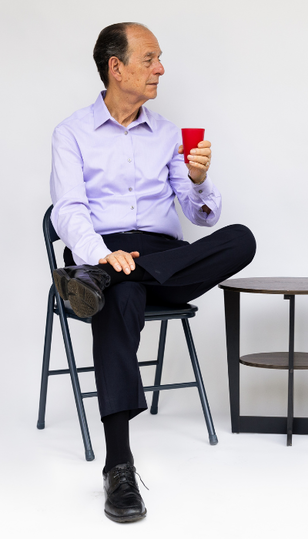
Sam Simon was diagnosed in 2018 with Mild-Cognitive Impairment and in 2021 with Early-Stage Alzheimer’s. He is currently under medical treatment and a participant in a drug trial.
He has brought together his experience with his first play, The Actual Dance, Love’s Ultimate Journey Through Breast Cancer, as a vehicle for reaching those going through the disease, a history as a leader in the American Disability Community, and new life experience engaged with dementia to develop what he hopes will be a dramatic statement on the possibility of productive life after such a diagnosis.
Read “Dementia Man: An Existential Journey: Choosing Life and Finding Meaning with Alzheimer’s”
Washington Post: In a one-man play, an 80-year-old chronicles his own dementia
Dementia Man Sizzle Reel
Dementia Man on YouTube
Favorite Song: Unchained Melody, The Righteous Brothers
Stay in the KNow!
Get our monthly email featuring expert interviews from the healthcare industry with real insights, no fluff. Get the latest information that help you better understand your healthcare options.
Thank you for subscribing! We're excited to have you here.
You’re all set and will receive our monthly email with expert conversations and insights from leaders in healthcare.