
Published on The Guardian on September 30, 2014
People often ask me why, in this age of social enlightenment and theoretical gender equity, I would launch a digital platform devoted almost exclusively to the ways in which women are transforming the world of healthcare. Do women, after all, need this extra boost on the internet?
It’s a legitimate question as to why I launched Disruptive Women in Health Care six years ago in the US and, today, will be introducing Disruptive Women UK. The answer lies in both science and personal observation. And I didn’t like what I saw.
As someone who has spent well over 30 years trying to improve health and healthcare – working for physicians in primary care settings, working for a member of the United States Congress serving on the energy and commerce health sub-committee, serving in the Department of Health and Human Services, and founding my own public affairs firm to communicate policies into action to improve health – I have seen first-hand the remarkable contributions women have made. Sadly, I have also witnessed the asymmetrical recognition and opportunities afforded these women.
It is not right that women don’t reach positions of true power at the same rate as men. I have seen talented, competent women passed over for promotions. And, I don’t see enough women invited to present at major tech conferences and on panels.
It’s not simply a tired stereotype that women are more reluctant than men publicly to discuss their aspirations and achievements, and that we don’t gain access to capital or reach positions of true power at the same rate as men.
I have found in my own career, working with and around healthcare professionals, that there is tremendous awareness of the historic achievements of the Jonas Salks, the Michael DeBakeys, the Alexander Flemings. By contrast, most people could tell you that Florence Nightingale was a nurse of historic significance, but few know she was an acclaimed statistician whose early pioneering work in data analysis, health services research and science, technology, engineering, and mathematics resulted in changes to the accepted healthcare practices of the time and resulted in countless lives saved.
And so Disruptive Women was created in the US as a platform to encourage women in all fields of health, healthcare and beyond (technology, transportation, housing, engineering, literacy) to share their voices, their visions and their accomplishments. Our goal has been far more expansive than simply to create the 21st century internet version of a previous generation’s bra-burning protests. Rather, we set out to improve the way healthcare is delivered by bringing provocative ideas to the forefront that might otherwise have languished in relative obscurity in a laboratory, classroom or clinic.
The venture has been more successful than we could have imagined. What began as a thought-provoking website has expanded into live briefings and forums for key decision-makers and public policy opinion leaders as well as the publishing of popular ebooks on subjects ranging from global health concerns, to innovation, to the environment’s impact on our wellbeing.
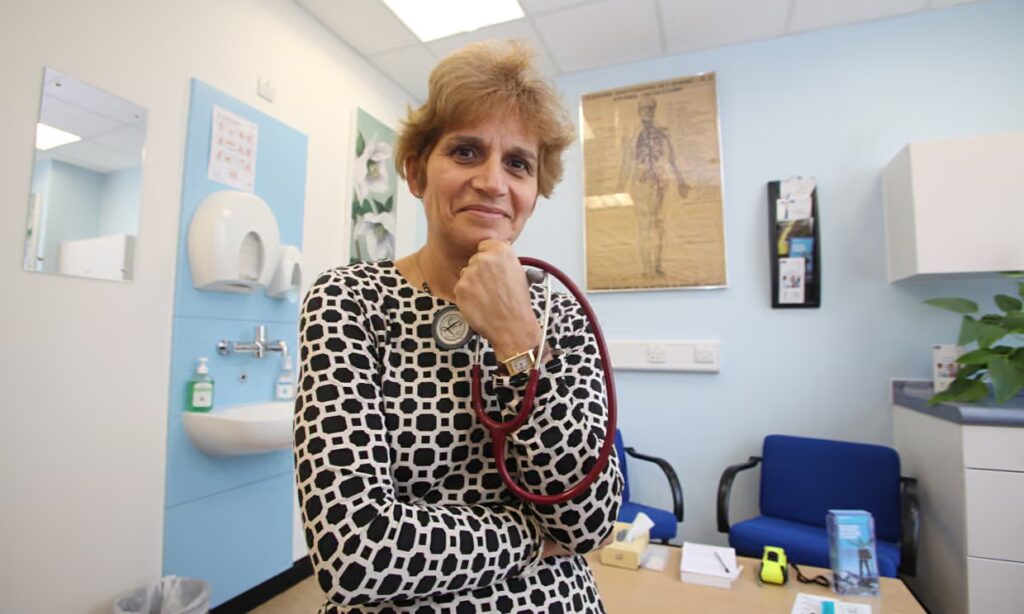
Bringing this concept across the Atlantic is a natural step and one I take with great enthusiasm. Again, it is personal experience that tells me the UK is fertile ground for disruptive women. I am proud to know women in this country who have already won deserved acclaim for their pioneering achievements. This list would include Jen Hyatt, who created the Big White Wall digital service to help people manage their psychological challenges and, in so doing, is fundamentally transforming what we know about mental health. And I’m proud to know Baroness (Martha) Lane Fox, whose successes in bringing the UK to the cutting edge of digital and technological progress will result in healthcare that is more evidence-based and quality-driven. It is extremely gratifying to have a London-based GP, Clare Gerada, former chair of council of the Royal College of General Practitioners, with us to speak at the launch of Disruptive Women UK.
Where these three disruptive women have gained warranted attention for their achievements, there are many others who are developing new approaches to medical care and refining their unique visions of how to bring greater health and wellbeing to their fellow citizens. It is not enough to highlight the extraordinary accomplishments of disruptive women – women fearless in their pursuits, even if it means shaking up the status quo; it is critical that we create opportunities to learn from them, exchange ideas, spark innovation and develop a network that reaches across the continents and around the world.
And so Disruptive Women UK will now be available on computers and smartphones, and in person. (We always recognise a disruptive man of the month as well – no gender exclusivity in our digital neighbourhood.) While I don’t know the extent to which the new ideas we bring forward might shape and change the future, I do know that the women featured on this platform will ensure that it’s an eventful, and disruptive, ride.
Stay in the KNow!
Get our monthly email featuring expert interviews from the healthcare industry with real insights, no fluff. Get the latest information that help you better understand your healthcare options.