
Revolutionizing Patient Safety in Healthcare with Leah Binder
The Importance of Transparency in Patient Care
In this conversation, Leah Binder, president and CEO of LeapFrog Group, discusses the critical importance of patient safety and quality in healthcare. She emphasizes the need for transparency, the role of hospital safety grades, and the impact of data on improving patient outcomes. The discussion also covers challenges in maternity care, medication errors, and the potential of AI in healthcare. Leah highlights the importance of informed decision-making for patients and the need for continuous improvement in healthcare practices.
Takeaways
- Patient safety is fundamental to healthcare.
- The term ‘patient safety’ can be misunderstood by the public.
- One in four patients may experience an adverse event in hospitals.
- Transparency in healthcare has improved significantly over the past decade.
- Hospital safety grades help drive accountability and improvement.
- Medication errors are a leading cause of harm in hospitals.
- C-sections are the most common surgical procedure, often performed unnecessarily.
- Doulas can enhance maternity care and improve outcomes.
- AI has the potential to revolutionize patient safety and care.
- Informed decision-making is crucial for patients navigating healthcare.
Chapters
00:00 Introduction
01:40 What “patient safety” means and common misconceptions
04:30 Adverse-event stats and trends (HHS OIG; preventable share)
09:30 Transparency in health care and ACA/CMS reporting
14:10 Hospital Safety Grades, site walk-through, benchmarking
17:30 Medication errors, CPOE alerting, med reconciliation
26:30 Maternity care: C-sections, episiotomy, hospital reporting
34:40 Doulas and postpartum support
40:00 Outpatient surgery and ASC quality
45:10 ER boarding risk
47:30 AI uses for patient benefit
53:00 Closing and song pick
Leah Binder
Okay, I am Robin Strongin with Health Team and I'm here today with Leah, Leah Binder. And Leah, you are president and CEO of LeapFrog Group, whose mission is all about improved patient safety and quality. And we're gonna talk quite a bit about that. I know that you're a regular contributor to Forbes and Harvard Business Review and you do a lot of writing. And we've been colleagues for
for quite a while now. So I know for a fact that you and I have seen the landscape in this area change over the decades, but one thing really has not changed. And that is, I mean, all of us in this area of work has to have the patient and patient safety be front and center. I mean, if we're not really about that, I'm not really sure what any of us are doing here. And so that is fundamental.
So let's start actually with when you guys at LeapFrog think about patient safety, help us understand what that means exactly.
Well, first, thanks for having me, Robin. This is really a joy to be able to just sit down and talk with you and you're publicly, but either way, it's wonderful. And you've just been such a leader and just such a fresh voice always in healthcare. You're a disruptor. I love that. It's the best possible kind of inspiration for me.
Thank you.
Speaker 2 (01:32.248)
That means a lot. Thank you.
I hope so.
Speaker 1 (01:45.846)
Yeah, so patient safety, you I've always thought that the term patient safety is not a great term. Right. We use it because people understand it or at least people in healthcare understand it. Actually, the public, we've tested it before, the public does not understand it. When you think about patient safety, are you concerned about patient safety? They will say, well, I do think that hospitals should have like sprinklers and they should have fire alarms and they should, they don't see it as, they don't see it as like.
interesting.
Speaker 1 (02:13.448)
accidents, errors, injuries, infections. don't see that. But if you ask them specifically about accidents, errors, injuries, infections, they get very animated. And invariably, I don't think I've ever talked to a person anywhere who doesn't have a story. yeah, that happened to my aunt. She had an infection. She went to the hospital for just one day and blah, blah. They tell stories. Everybody's had an experience once they understand what patient safety is. But in healthcare, it's a term of art, certainly.
people in healthcare understand it. But I don't like the term because we, know, safe, it just sounds too boring. It also just sounds moderate or something. It just doesn't sound like.
You're on.
Speaker 2 (02:59.84)
urgency isn't really there.
Right, it's like patient safety. like, it doesn't, doesn't, you know, doesn't sound like dying of sponges left in after surgery. You know, like we're talking about things that are really pretty dramatic and horrible in some cases, or just really urgent issues that are in some cases, not always, but some cases catastrophic to people's lives. And we don't talk about it that way. you know, we try at LeapFrog to
Thank
Speaker 2 (03:13.185)
All
Speaker 1 (03:30.508)
make sure that our language tries to get at the really, the heart of this issue, which is, this is about respect and dignity and human lives and just treating people the way we all want to be treated and addressing a problem that is truly a tragedy in our country that we can do better with. that's patient safety is about errors and accidents and injuries. are very prevalent.
And there was just a study that was done by the inspector general, which is.
in Health and Human Services.
Yes, in HHS. they pulled hundreds of Medicare records, patient records, and they had physicians in some very carefully thought through process go through these records to find errors, accidents, injuries and infections. And they found lots of them and concluded at the end that one in four patients admitted to a hospital on average will suffer some form of adverse event.
my god.
Speaker 1 (04:39.022)
They said about half the time, like 40 % of the time, those are preventable.
That's what I was going to ask. Yeah.
Now, how you define preventable is tricky. That changes over time. Yeah. But that said, 40 % preventable is still even, let's say one in eight suffer a preventable adverse event. One in eight is, that's an astronomical. It's huge. It's a harm. It's horrible.
It's unacceptable. What are the statistics? How does that compare to say 10 years ago? Because To Air as Human was a big report that came out many years ago. Let me ask it this way. Have we moved the needle so that... I know for a fact based on the work that you and your colleagues are doing and others are doing in this area of harm reduction and systems improvements that...
Efforts have been made over the years, but something is holding us back from getting to goal. So can we take a step back and what are some of the reasons that it's, this is still happening?
Speaker 1 (05:52.184)
So let me back up from that. I'm going to say that I'm like the world's biggest optimist. So we are going to solve this problem, and we are well on our way. We're well on our way. Now, there are some pretty troubling statistics. And I have lots of colleagues who will say, please, look at the statistics. The one I just named is an
Yeah, yeah.
Speaker 2 (06:01.205)
I love that.
Speaker 2 (06:06.381)
Fabulous.
Speaker 2 (06:17.356)
is up at the top.
Yeah, mean, one in eight, to this. Like, look at a automaker, like some of the founders of Lee Prager, we were founded by employers. So some of them were automakers. GM was very, very actively involved in the early days and still is involved. So GM would say one in a million defects in their cars, one in a million defect rate is high. Okay, so we have a one in eight or one in four defect rate basically in healthcare.
is not okay.
Speaker 1 (06:49.486)
Like, and it's more important. I mean, I like my car, but yeah, like my life better. So anyway, I think. Yeah, exactly. Exactly. So I think there's a long way to go. So I don't want to say that I'm just, you know, sugarcoating everything. However, we, when we look at data and leapfrog, we look at data all day and we look at data and we look at some of the studies that have been done.
Yeah. Place your car.
Speaker 1 (07:17.838)
And one that came out in particular from JAMA looked at millions of patient records over the past 10 years, well, from 2009 to 2019. So it was prior to COVID, but really that last decade, that second decade of the 2000s. they looked at millions, literally millions of patient records assembled by AHRQ. And they asked the question, how are we doing on
adverse events associated with different treatments. And the way that they presented the paper was like, this is how we're doing on these treatments or something like that. Like they made it sound like the paper was about the treatments and the surgeries, but actually what it was about was the adverse events associated with people who have those conditions, things like that. And the adverse events they were looking at were the ones that had been publicly reported by CMS and LeapFrog, but in particular, CMS.
Thank you.
Speaker 1 (08:16.238)
but we take them and report them in a different way that's gotten a lot of attention, which is our hospital safety grade. But anyway, so this study looked at a very good process, like just everything on how we're doing on these adverse events. And it was stunning to me. answer is we are seeing serious reductions in the incidents, serious 20, 30 % reductions in some 40 % in some.
Wow.
These are adverse events, are errors, these are things that, surgical site infections, complications from surgery, failure to rescue, things that are very, very important to all of us as patients. Things we fear the most when we go into a hospital for something. We're seeing reductions. Again, we're not where we wanna be now, but that's progress. It says that something's been happening in the past decade that is working.
And so the reason I like to point to that past decade as well is I think we have had a new strategy in patient safety that we've introduced in this decade. And I say not just us at LeapFrog, but everybody collectively, politically, we've seen this introduction. It's bipartisan, but it's political, which is transparency in healthcare. We didn't have that. We didn't have transparency. I, you know, in the 2000s when LeapFrog was formed, there was no transparency. Nobody knew.
anything really about how.
Speaker 2 (09:42.419)
I mean, that's just, it's mind blowing a little bit there.
It is insane.
It is. is. started at LeapFrog in 2009. I started in 2008. In 2009, one of the first things I did was testify before Congress, and they were doing a hearing on health care associated infections. And my argument at what my statement was, was all about we should have transparency. We should publicly report these. And that was like, oh, yeah, right,
Good luck, lady. Right.
And we're doing it. And that really did come out of the Affordable Care Act. OK. We're reporting. And we are doing it. By we, I mean the United States of America. CMS is requiring public reporting of infection rates for the most common and most deadly, in some cases, of hospital-acquired infections. So central line infections, CAUTI, which is not deadly, but very terrible, which is UTI infection. Sure.
Speaker 2 (10:44.43)
catheters and all of that. I guess the connecting the dots is once you report, you can act on because you know where the trouble spots are, right? I mean, in theory, that's a goal.
So as a, yeah, if you're a hospital leader, and that's what I've seen, when you're a hospital leader, you can see it, not only how you're doing, but how you compare.
So there's some competition going on there.
It's critically important to have competition or also just benchmarking. Because how do you know? And this is true for board members, right? If you're on the board of a hospital, often board members are not in health care themselves. They might be local business leaders and things. They're sitting there and somebody will say, well, we had a rate of central line infections. This was the rate. We had four of them in our unit of 300 beds or something.
And now we got it down to two. So we cut it by 50 % and blah, blah, blah. And everybody would go like, yay, that looks great. Look at that beautiful curve going down by 50 % and everything's great. But until we had benchmarking that said, you couldn't do that at a good rate. To other hospitals like yours in the country, you're way up there. I'm not saying, by the way, that the number I just gave is just made up. But the benchmarking issue is critical.
Speaker 2 (11:53.603)
No.
Speaker 1 (12:06.422)
And that's, and actually that is what we found was so useful about the safety grade when we launched it. It's a lot of board members of hospitals would sit and say to their CEOs, you said we were doing really great on, you know, adverse events or.
this data to show you. Yeah.
Yeah, why are we getting a C? Yeah. It's just, what's going on? It doesn't. And it forces the question in a productive way for boards, for CEOs, for C suites, but also for everyone who works at the hospital. Everybody understands it. So we got to do better than this. And, and or we look how great we did, by the way, that's the other message that we think is so important is look, look at this. We got an A. This, that means we're really succeeding in
and add up.
Speaker 1 (12:57.198)
keeping our patients safer doesn't mean we could.
I have two questions related to what you've been saying. Number one is, I can't imagine having this conversation without attorneys being somewhere in the mix, whether it's risk mitigation in the hospitals. And that injects a whole other round of stuff that needs to be dealt with. And what was my second question was, and I'll let you answer them both, but.
Who has access? I'm going to have you. Let's start with the second question, which is you talked about hospital grades. So how does that work and who has access to that? You mentioned employers, the general public, and I know there's a lot of resource material on your website, which why don't you shout out your website now before I forget to ask, which I will ask again at the end. Yeah.
We have two websites. One is the one that's best known probably. Hospitalsafetygrade.org. You can search hospitals anywhere you want in the country, the US, your neighborhood or your grandmother's neighborhood, wherever you want to
Hi.
Speaker 2 (14:15.97)
So anybody can look that up hospitalsafetygrade.org.
Right, can look at a bunch of hospitals, you can look at a map and see how a community's doing. But you can also drill down on one hospital. Our mantra is transparency, so we live that mantra. So it's very transparent how we do our ratings and how we get to that grade. So you can dig in. And we try to display that. We've made a lot of effort to display it in a way that lay people can understand. So you don't have to
Related to that, Leah, if you don't see a hospital, that probably means they opted out of participating in your survey or your work that you're doing. And to me, that would be a red flag in and of itself. Like, why wouldn't you want to share your data in this age of, shouldn't you be proud of where you are? Am I reading that correctly? Okay.
Almost. So the hospital safety grade, we give grades to all general hospitals for which there's adequate data already available. And there often is, because what we talking about earlier, CMS requires now hospitals to a good number of measures of their safety. if a hospital, so we use that data primarily. We also use data from what's called the LeapFrog Hospital Survey, which is our annual survey.
that is voluntary, the very best data we can possibly get on safety, but also on some outcome measures like maternity care, which we can talk about too. Data that's unavailable anywhere else that employers and consumers really want. So we say, okay, let's get it. Let's use, but for that, that's voluntary. And so there are hospitals that decline to provide us that data.
Speaker 2 (15:44.779)
O-N.
Speaker 2 (15:54.53)
Yeah, yeah, definitely.
Speaker 1 (16:12.462)
And I'm sure they don't like that it's publicly reported by hospitals. So that's they don't decline. Although I will say now we have about 80 % of hospital beds. wow. It's really great. mean, hospital. Wow, congrats. Yeah, I congratulate the hospital industry. mean, yeah, for sure. They didn't have to do it. And they've come to the table. I think they're really committed to true transparency and recognizing that galvanizes change. But that's the area.
That is huge!
Speaker 1 (16:41.006)
to your point, Robin, where you should look at it say, well, why did they decline? And you as a consumer or a business leader have really some influence if you just simply write a, you can write a letter to the CEO or write a note to the CEO or put something out on X or just say, why are they declining? I'd like them to participate because I'd like to get that data. It always helps. anyway, what we do is we take some data
I'm gonna go with that.
Speaker 1 (17:09.358)
from the survey because it's better data. So let me give you an example. The LeapFrog Hospital survey has some measures around medication errors. That is the number one most common error made in a hospital by far. That is by far, you can imagine it's complicated. You can have drug interactions, can have dose misreadings. There's so many problems.
Yeah.
Speaker 2 (17:32.462)
so many ways for that to happen, absolutely.
or you can give the wrong med to the right, the wrong patient, the med, and there's all kinds of stuff that happens all the time. And so, and it can be very harmful, of course, to the patients. So, but there's no measure of it. CMS doesn't have any kind of measures around medication. They don't have anything. and the other big problem is medication. I'm sure everyone knows about this one. When you're discharged from the hospital and they give you this bunch of meds and you don't even know
What?
Speaker 1 (18:05.642)
what they are half the time and do they all fit together? Are these meds gonna interact with each other? Because you might've been on different meds when you came in and now you have a whole new set and you don't, there's a lot of confusion around what happens when you're discharged and there's a lot of problems with it. It's a major issue.
that topic, can I just ask as as hospital, there are different types of hospitals other than general hospitals, right? Do any of your surveys survey psychiatric hospitals out of curiosity?
I wish we could. don't have good news.
Yeah, okay, because I did an interview recently with Nora Super and Dr. Len Nichols about Nora's very public experience with depression and inpatient hospitalization. And Len's point for the public to understand is post discharge, discharge from a psychiatric, there is no support with discharge. None. just none. And, you know, to the point you're making,
Thank
Speaker 2 (19:11.598)
It's just there's so much work that needs to be done in that particular area. Okay, good to know.
could not agree more on that. I certainly have had that experience in my own family and I can tell you it is nightmarish and I would love to do it, but right now that would be...
And again, a lot of that is our legal system. It isn't all the medical per se. It's a complex. There's lots of strands that go into it. And we can probably do a separate conversation. Maybe we'll do one with Len and Nora. But not to derail, I just wasn't sure if you guys had that yet. Yet. Because my money is on. You will have it one day, if you keep going the way you're going.
It is something we visit every year to figure it out, right now, well, there's just, we have to rely on science of measurement because that's why we don't make up measures ourselves. We just can't. anyway, so yes, more to come on that. And I welcome anybody who wants to come forward and say, here's $5 million. We'd love it, but we just don't have the resources right now.
That one's a tough one.
Speaker 2 (20:21.506)
You work on this space.
Speaker 1 (20:27.566)
The other piece around medication errors is that problem of discharge. Just handoffs in general with medications, it's extremely common. People come home with two different blood thinners. That's extremely dangerous. But they had the old blood thinner from their other doc and now they get a new one and no one noticed at their discharge that they had the two. That happens all the time. And so we actually have a measure. Okay, so the leapfrog survey has a measure around those handoffs at discharge to help.
people, it's called medication reconciliation and how do you do it? And there's best practices and there's a measure on how to do it. And so we have that. We also have a test for hospitals to take to see if their CPOE system, which is the computerized prescriber order entry system. This is the system that can be used when and is used most of the time when hospitals, when any provider issues a medication order.
it actually checks against the medical record. So is the patient allergic to that or is it, all of the things? Is that the right dose for that patient? Wait, why are you giving a child that dose? You know, things like that. So the question that we ask in this test, way that we, what we're protesting for is does that system work to the benefit of the patient? Is it alerting to these common errors, some of which we test for things that are kind of extreme that would really harm the patient or in some cases would actually kill the patient?
So does your system alert to that? And we also test for frivolous alerts. Does it alert to something it shouldn't alert? Because when there's too many alerts, they ignore it. Yeah. And that's dangerous too. we just developed by David Bates and David Klasson. it's a robust test. It's the only one of its kind. I wish there were more. I love to brag that it's the only one of its kind, but it's actually not great that.
Fatigue.
Speaker 2 (22:14.871)
Yes.
Speaker 1 (22:25.326)
That's the case. It should be everywhere. Very, very rarely does hospital get 100 % on this test. Most of the time it's more like 70 or 80 % for the good ones and some don't even, it's not good that they're not all tested. So it's very important for hospitals to test and they do better the next time they take the test, which is good. They're clearly paying attention to it. Anyway, all right. So that's a long explanation of what we look at. That's a voluntary.
Yeah.
Speaker 1 (22:55.256)
that's part of our voluntary survey, I think it's a resource for hospitals because they can't find out any other way. And then the hospitals that once they do the survey, we'll use that data in the safety grade. So some data in the safety grade comes from the survey. So hospitals do have an opportunity to sort of earn more points. It gives them a little bit of a headstart on getting an A if they're able to.
do well on a few of the measures in the survey that we use in the grade. That said, Mott's hospitals get an A anyway in the hospital safety grade with CMS data only. But that's how we do it. And then you get into the website, you drill down into that grade for any particular hospital, and it will show you how that hospital did on all of the 32 measures that we use. Were they worse than average, better, or
about average. And I think it's laid out in such a way that hopefully people can grasp it. They can also drill down on where we got the data. They can get very much about the numbers and all that stuff, given everything. And we also have the methodology on there and how we calculated the data, et cetera, how we weighted it. So I mean, I think that way you can go on and say, well, you I don't think this hospital deserved an A. I think they should have gotten a B. Or I think they should have gotten a C.
It's up to you. I you're the one who has to make the decision about these hospitals as an informed consumer, but we want to give you the
tools to be able to figure it out what works for you.
Speaker 1 (24:33.408)
Exactly. That's what we need. And I think that's been an effective, I think it's been most effective. There's a lot of consumers who use it.
went on and was playing around. And it is very intuitive. was not frightening. It was very nicely laid out. The navigation made sense. I found it extremely useful. I found some hospitals not on there. That kind of surprised me a little bit. we'll go back to that. But also in one area, only because I'm now
A lot of my friends are becoming grandparents and I am too. And I know you've been doing a lot of work on maternal related measures of safety and quality. And I'd like to learn a little bit more about what you guys are doing in that field area. Because I know the numbers are not good, you know, compared to other countries. And it is really, really shocking.
when you hear some of the statistics and stories that families are going through, it's really, you really can't believe that in 2025, given everything we know, like what in the world is going on here?
No, mean, depending on the statistics you look at, we're certainly not getting better than where our mothers were giving birth, which we're doing a lot better. And hopefully our daughters will have a better experience than we did. there's no evidence of that right now. So it's very dangerous, unfortunately. We look at a suite of maternity care measures that
Speaker 2 (26:03.438)
Brutal.
Speaker 1 (26:27.054)
Again, are not available publicly by hospital anywhere else. It's a voluntary survey. That's the way we get it. By the way, is we the employers are the ones that have stepped up to to make
That's interesting on behalf of their employees. Yeah. I thought.
No, on behalf of themselves, actually. They're scared. actually, know, this is a big time on their balance sheet is a benefits cost. Someone was just telling me that it's like the second highest expense on their in their company. mean, it's going up way too high, but it's nonetheless, they're investing heavily in.
Now I have a million questions, but I'm going to control myself and let you keep talking.
They are, and the HR leadership is what founded LeapFrog, and it's what keeps us going. I mean, they're the ones that asked the hospitals on their behalf, would you please participate in LeapFrog so we get this data? They don't want them to give it to them directly, because they don't know how to deal with this data. mean, that's not what they do all day. They make cars and automobiles and airplanes. That's what they do. They want LeapFrog to do that, and then give them back the data that they can trust.
Speaker 2 (27:37.944)
They can make decisions about what they, yeah.
Okay. So, and it helps, you know, and then of course they make it available to their employees as well as the public at large. So it's, you know, it works for everyone. But basically we ask, wait, I forgot what I was saying actually. What were we talking about with the?
The what you're finding and what kind of research you're doing in the maternity space. Yeah. What specific areas you've been looking at.
Right, sorry. So maternity care is very important to employers in particular because they pay for half the births in this country. Medicaid pays for the other half. So it's very important to health care just serves as well. But most of the data that we have on safety and quality of care that's publicly available comes from CMS, which is the agency that runs Medicare. Medicaid is run mostly by states and they just sign in it. So CMS actually doesn't have as much of a stake in
or theoretically doesn't have as much of a stake in maternity care because Medicare recipients are, you know, babies, maybe someday 60, 70 year olds will, but maybe I don't know what.
Speaker 2 (28:44.822)
are not having babies anymore.
Speaker 2 (28:51.458)
That is a whole different topic for another day and I'm not quite ready for it. you.
But anyway, they don't.
That's not what they're collecting so much. Yeah. It's the states with Medicaid programs are probably collecting.
Well, yeah, but there are
Not a lot.
Speaker 1 (29:13.568)
No, actually, let me give you an example of C-sections. To me, C-sections is the thing that most women want to know. They just want to know what's the C-section rate, and they want to know an adjusted rate. don't want to hear, well, that's because this hospital sees high-risk populations, and that's what you usually hear. So there is a measure of that. It's called the NTSV C-section rate. NTSV basically means it stands for something I'm not even going go into.
Right.
Speaker 1 (29:41.454)
clinical term basically means the baby's in the right position. So low risk pregnancy, basically. And so if you look at just low risk pregnancies for every hospital, you're comparing them apples to apples. Medical center to a rural hospital, for instance. So that data is not publicly available. And I remember, you know, over 20 years ago, when I was first pregnant, wanting to know that myself and
Right, right, sure.
Speaker 1 (30:11.062)
I was shocked, I couldn't find it. said, you're kidding, everybody wants to know that. Couldn't find it. And it's still the case. You can't accept for leapfrog. So we do publicly report C-section rates by hospital, now for 80 % of the hospital beds. So that's a big one. If you see decline to report on that, get on the phone and call them and say, want this data. And anyway, so that's an example of what we report in our maternity care.
Wow!
Speaker 1 (30:39.572)
And it's a very important measure. We're not seeing as much progress as we'd like to on that. In fact, we're not seeing any real progress on non-C-section rates nationally. So, and they're too high and they're higher than other countries.
And this, to be clear, are C-sections for people who really don't need them. It's not an emergency. It's not that there was some particular issue that you know in advance necessitates scheduling because you're high risk or there's some real need other than maybe convenience or something else going on.
Well, yeah, the measure is designed to identify low risk pregnancy generally. That doesn't mean though that some.
Something doesn't happen in the moment and they need to, yeah.
there's definitely a need for C-sections. don't mean, and we don't, our measure says that 23, it's based on World Health Organization, that 23 % or something of those low risk women should be, you it's okay for getting Sure. I'd like to see it lower. And I think we'll work on that because some states have brought it down to as low as like 18 or 15%. But we accept that there's certainly a need for C-sections in some cases. Yeah, of course. But not as many cases.
Speaker 2 (31:53.056)
not at the rate that you were seeing.
And remember, these are lower-risk who are getting major abdominal surgery. This is very significant surgery, like way up there on the list of dangerous surgeries. And they're getting this major abdominal surgery, which impacts their next birth as well, by the way. It's a cumulative effect. that's how we need to start thinking about it. And it's the most common procedure performed.
Right, that's right.
Speaker 2 (32:03.054)
Thank you.
Speaker 1 (32:25.774)
surgical procedure performed in hospitals by far as a C-section for any procedure, even though it's only this group of people that get it. So anyway, we look at that. We also look at episiotomy, is, it's an intervention that had used to be done almost routinely in some hospitals to basically open the birth canal by cutting it. And it's now,
ACOG says to avoid doing that. It is not safe procedure. shouldn't be done. Oh, wow. the standard of care anymore. It used to be more routine. Now it's not the standard of care. And finally, we are seeing significant reduction. We've been publicly reporting rates. Oh, that's
I did not hear that. my God. Okay.
Yeah, for some reason we're the only ones paying attention to episiotomy, which I think is a really important issue. Obviously for women it's huge.
Yes, I would say so.
Speaker 1 (33:24.238)
So that's anyway, so that's gone way down. We're really, really pleased to see those numbers. And that's benchmarked public reporting transparency helped. All we did was galvanize it. But I think the hospital community and physicians have shown really significant leadership and they made a real difference and it's saved a lot of lives. So we give them the credit, but they needed the galvanizing force because otherwise it wasn't moving.
Fantastic.
Speaker 1 (33:52.812)
I think the other, the way, just to touch on that we look at is does the hospital allow doulas to assist women?
We've been talking about that, my daughter and I, about doulas. Yeah, so that's a big question still. And not all hospitals do allow the doula with, right? That's my understanding.
They don't, and you can look it up on Weedfrog by Hospital, take a look. I would allow them, but I think we'd like to see that movement expand. to the credit of employers, some of them have not all, but some of them are covering doulas for their... Interest rates. I mean, really believe in this. And there is some good literature that they can actually certainly make for a much better outcome and experience for...
Well...
Speaker 1 (34:42.126)
for women, but also a better experience postnatal for women. So a lot of doulas basically go home with the woman. They work with them for a period of time, sometimes up to a year, as they accommodate having a new baby. there are just so many ways that we could do so much better. And doulas are a really good example of where we could do better. There's some issues in expanding the workforce and having enough doulas and having kind of one standard of.
certification for them, things like that, that they're still working on. But we are very much in favor of seeing that movement grow. I think, and ultimately it will improve outcomes and cost effectiveness, by the way. It's much better.
important because I know there are workforce issues within the dual community itself numbers and as you said, but you know licensure and training and all of this. But at the same time there's also shortages in the more traditional roles of health care providers particularly since covid and even before and so we are nowhere near whether it's with maternity care whether it's with you know on the aging side of.
of the spectrum on the younger side and the disability. And we just do not have enough help. And if there are ways to train people who can be there, I just think it makes, it's sort of a no brainer, but there are, there are a lot of reasons why it's hard to start activating these kinds of solutions. But pretty soon, if we don't, we're going to see a cratering because
We just have too many people with too many needs and not enough people who are trained to be helpful. In almost every conversation I've been having with Health Dame, there's some element of this. But what you're doing is helping people, consumers who can go themselves or through their employers, of course, if that's something that's relevant to them.
Speaker 2 (36:49.528)
to be able to be better informed. Not everything is an emergency situation where you have to go to a hospital immediately. We have a lot of people with chronic conditions and part of helping to plan what's gonna be best for you and your family is having this kind of information available. And so this is just so helpful. when I...
get this up on HealthStream. We'll also have all of the links to all of the resources and the websites so people can more easily find some of what you've been talking about because how helpful is that? It's incredibly helpful. And if your hospital isn't part of it, then you can make some noise and ask them to please step up a little bit here because it could be life and death.
or at least make for a very unpleasant experience when it doesn't have to be. Who the heck wants an infection on top of everything else? Exactly. That's pretty miserable. And the issue of medication error has been, boy, that one has been a tough one for a very, very, very long time. And I remember when CPOE first came out and that was something of a breakthrough and it has helped.
for sure, but you know, it's made a big difference. you know, I remember when Senator Frist, who was a surgeon and a pilot, started with the quality checklists and made the comparisons. I think he wrote something in Health Affairs back in the day, right?
By the way, checklist is in a LeapRock standard. Use the checklist.
Speaker 2 (38:31.054)
there you go. Yeah, so there are some really accessible tools, both for the hospitals and you guys are branching out beyond inpatient hospitals as well, right? So maybe as we wrap up, you just mentioned some of what you're doing outside the inpatient space.
So we're now rating outpatient surgery. outpatient, sometimes it looks like a separate center, but it's actually affiliated with a hospital. CMS does not actually provide as much data, not very little data actually on the quality and outcomes and safety of outpatient procedures. So we're asking about its safety. So we have over a thousand hospitals reporting on outpatient.
procedures and safety and complications, things like that. We're also, we have a separate survey now, but it's aligned with that outpatient survey, which is the Ambulatory Surgery Center survey. So ASCs are really a booming movement that's out there. There's a lot of them now and they're growing. And I think they have enormous potential and some of them are showing just incredible.
in a good
In very good way, yeah. mean, these are, they're settings where typically not, I guess I don't know the typical, but I will say the ones that I have seen that are excellent, they are, they're providing, you know, a limited number of, or a limited set of procedures. They're very, very, very good at it. When surgeons and teams, OR teams, are practiced in a particular procedure, when they do a good number of them,
Speaker 1 (40:23.01)
They're better, it's like any...
It was like when I had my cataracts done in a ASC. mean, was like everybody knew who was where. There were checks and triple checks and quadruple checks. I mean, it was, I wouldn't say an assembly line per se, but it was not unlike that. everybody knew it was a routine. really functioned very, I was the wild card, because of course,
I'm always a pain in the neck. Nobody wants me as a patient. can promise you you know, it was really something. You got the feeling like everyone knew what was going on, what they were going to do, what if there was a problem, beside me trying to get up in the middle and saying, okay, I've had enough. want to go home. And they weren't quite finished. It started sitting up and they're like,
but
Speaker 2 (41:22.274)
roll me back down, but was very, yeah, well, you know, I had had enough. I was like, how hard can this be? I'll do it myself. But surgery never hurt anyone. Just kidding. But in any event, yeah, well, that's very promising. And of course, the more you do something over and over and over, we know from other
was very naughty.
Speaker 2 (41:47.778)
research that you only get better with it and more experienced. And new technologies come along, so you have to make room for getting up to speed on that. You want the years of wisdom for the person who's been there a long time, and you want the new person who really understands the technology. Somewhere in the middle is really a great spot to be in. Exactly.
Practice makes perfect. I mean, can be a maestro musician. If you don't practice, you can't get in front of an audience. You're not ready. Even if you're the best of the best.
what they say. How do you get to Carnegie Hall? Practice, practice, practice.
And you have to keep doing it. You my sister-in-law, she's a concert musician and she practices all the time.
It's not for one hour either. It's hours and hours and hours. I didn't realize how much physical therapy musicians have to undergo because they're using over and over whatever instrument, that body part is taking a beating. But when we're sitting in the audience listening, it's a beautiful thing. But it's hard work, what you don't see. And yes, very true.
Speaker 1 (42:38.112)
No, hours and hours.
Speaker 1 (43:04.814)
I will say on the inpatient side too, just, and ASCs, we actually do look at volume for a number of years. So that we're sort of known for that. We've been doing it since the beginning where we, because that's a big issue. And by the way, hospitals that are not doing a sufficient volume to be safe for certain procedures. it is really, I think it's an important part of the survey to look up. So if you've got particularly, you know, like some cancer surgeries like pancreatic,
Great.
Speaker 2 (43:19.917)
Yeah.
Speaker 1 (43:34.648)
pancreatic surgery, that is an extraordinarily difficult and complex surgery. You do not want to go to a hospital that only does one a year or a doctor who only does one a year. my God, do not. And there's a lot. So, you know, watch, watch out.
Run away, yeah.
Speaker 2 (43:53.334)
to look out for. Yeah. Is there one thing that's sort of new on the horizon that you guys are paying close attention to? what would that be? Because you look at trends too. So you really kind of are on that pulse. What are you looking at, you guys?
Well, there's couple of things I would point to. One is we're looking at ER boarding, which is a problem that's been growing where you go to the ER and this is not about wait times, by the way, that's another issue, but you wait and you see the physician and they admit you to the hospital. So you have a serious, something serious, they're gonna admit you, but they don't have a bed or they wanna transfer you to another hospital and they can't get a bed. That happens all the time with psychiatric admissions.
They put you on a gurney and they put you in the hallway, in the ER, or somewhere in the ER. And let's say you've been admitted to that hospital. You are literally considered, let's say, a med-surg admission, and you're on a gurney in the ER. Your nurse is probably on the med-surg floor. Maybe it's on the 10th floor. They're not there with you. They will...
theoretically come and check on you and figure out what's going on. But nobody in the ER is anymore your doctor or nurse. Now your doctor nurse.
You're like in a no man's land.
Speaker 1 (45:16.184)
Right. And for a long time. So this is happening like this is happening for hours, but sometimes days where people get stuck in this on a gurney. And you can imagine it is incredibly unsafe because you know, who's going to watch to make sure you're getting everything you need. It is terrible. And it's
way.
Speaker 1 (45:41.038)
an increasing problem. Hospitals themselves are alarmed by it. don't, you know, they're not sure what to do. There are some solutions that could be doing, but it is hard. It is a hard problem. We get it.
Yeah, that's horrifying. It's not only a staffing shortage, it's a bed shortage. It's probably a lot of reasons why it's happening. It's never an easy.
Well, it's a bed shortage, but you know, there's a great researcher named Eugene Litvak, who you should interview for your. Litvak, L-I-T-V-A-K, I think it's spelled. Okay. He's fascinating. He's come up with a whole method that hospitals can use for their scheduling of their ORs and their scheduling just in general of the services. And if they, when they do that, it smooths out everything.
What's his last name? Eugene?
Speaker 2 (46:17.166)
I'm looking.
Speaker 1 (46:31.851)
And it reduces costs at the same time and it prevents the...
good solution that will make it better. To get to the house. my God.
There are some. They have to. There's a whole bunch of. Or motivated financially and otherwise to, you know, to think through options and there are some really built in things that they can't do anything about. So I understand this is a very complicated problem. Nonetheless, it is terrible for patients and so we're asking hospitals to report on how extent to which this is happening.
I guess.
Speaker 1 (47:06.438)
And that's a big one and we're going to monitor that and we're going to that's that's a big priority for us because it's so dangerous and it's. It's just not not. Okay, so and then the other and by the way that was brought to us by hospitals, so I will say that again.
That's alarming.
Speaker 2 (47:23.387)
They know this is they need to get their arms around this. Patients and families are probably screaming bloody murder too.
They know.
Speaker 1 (47:31.974)
yeah, it's terrible. So then the other thing, the broader trend issue is AI and how we're going to integrate that into healthcare. But for us, for LeapFrog, our focus is how do we make sure and how do we encourage hospitals and others and ASCs and everybody to use AI to the benefit of the patient? And what we are seeing right now is
it's that's not necessarily the first first road that a hospital for instance will go down. They might use it to improve their billing practices or something but they're not necessarily immediately implementing it in some of the cutting edge ways we think it can be implemented to the benefit of the patient. So for instance detecting when someone's at risk of a fall or or at risk of some kind of adverse event.
subtle signs that can show up in the medical record or show up in other kinds of monitored systems within a hospital. And AI is very good at synthesizing a huge amount of data quickly and then coming up with some analysis of that data. That's what's amazing about AI. It doesn't just say, well, here's the numbers. It says, it appears that this blah, blah, is happening. Like it actually analyzes it.
So, it could be used for those medication errors where there's so many different variables, but it can breeze through it so fast and flag or say this is yeah. Yeah.
That's a great example. it can, it could also look through a of Sentinel events or being, let's say a lot of infections have been reported and it will look at all the details of all those infections and maybe say, well, the pathogen seems to be sourced from this room. all seem to be going through this room before they get this. You know, those are things that. Yeah, there's lots of really cool applications. We're very excited about AI.
Speaker 2 (49:22.241)
interesting.
Speaker 2 (49:27.682)
That's pretty cool.
Speaker 1 (49:34.434)
but it's going to get used. so I think healthcare tends to be slower at adopting technology, much slower than other industries.
You know, I love the lawyers. My son is one, but you know, they sometimes.
It's not just the words though, my god.
To be fair, on the one hand, you have the cowboys and the tech people who want to get the stuff out without any guardrails. And then you have the legal people that are pulling them back in somewhere in the middle again is where we need to find ourselves. So it's always that push pull. And meanwhile, it's it's the patient who's being yo-yoed around and, you know, not benefiting from what they could be, but trying to protect them from, you know, the other stuff, let's call it. But
my gosh, so patient safety equality. Thank goodness for leapfrog, Leah. You're like, wow, it's just, you know, when you're sick, you want to know you're doing everything possible and you are, but then there are these systems issues that you're dependent upon and yet you can make some noise. You can ask some questions. You can make informed decisions.
Speaker 2 (50:48.308)
Obviously in an emergency situation, you have less ability to do that. But if you know ahead of time, what are the hospitals where, God forbid, you needed a loved one or yourself needed to go, it's good to do some of that work when you are feeling not stressed and sick and all of that. So you have a plan. You literally need a plan. Keep yourself out of harm's way as much
faculty.
Speaker 1 (51:14.776)
That's true. And if you can get a loved one or a friend that can stay with you as long as possible, that's also very important. And they should be a little bit pushy. They should ask, what is that medication you're giving?
Keep it better.
Speaker 2 (51:29.326)
Brooklyn, I do get very New York when I'm advocating for someone because I mean, it can be life and death. you know, you can still respect how harried and busy and overworked a lot of the staff is. But if there's a situation that is just unacceptable, then you better be jumping up and down and helping to get the right people there because I'm here to tell you really bad things can happen if you don't.
You
Speaker 2 (51:58.806)
and if you're not really vigilant and that's just not okay. yeah, one needs to be very Brooklyn when it comes to. I really do have to be Brooklyn is what I would say.
You're actually Brooklyn.
But I have to give it to one thing when you say that too. I just think of nurses as they're really heroes of healthcare. I'm telling you, when anyone who goes to a hospital will see that right away. is most of what hospital does is deliver nursing care. And so when there's not enough nurses or they're stressed for whatever reason or doing workarounds and things are just not functioning right, they're the first to know. And they are the ones that you do need to have a relationship with that hopefully is good, but you've got to be able to.
to say, what is that? Let's just check that medication. I just want to make sure it's on the medication.
They really are the backbone of the whole operation there. And I've been very lucky to, in fact, I'm gonna be interviewing several nurses in the near future, because it's so critical. And I know we're pretty much at time, but I have to ask my last question, Leah, which is, what song can we add to the health team playlist with your name on it? What you got for me?
Speaker 1 (53:17.206)
History has its eyes on you.
tell me more.
from Hamilton.
course.
Hamilton and it is it's perfect Washington sings it to Hamilton. I think it gets sung back I think it's another scene as well it's sung back but it is very moving to see that's that song on on the stage because it's George Washington singing history has its eyes on you to us in the audience and there's something real mystical like that's true we are
Speaker 1 (53:56.224)
where the, you know, where the eyes that are looking, the next creation that is looking at what's such a perfect.
song for today's time, for the work that you're doing, and what a great selection. I think you're my first Broadway selection of music, so congratulations. done. That's fantastic, and thank you so much for taking the time, Leigh. I really appreciate it, and all that you've shared with us today, and
I will circle back soon, but again, sincere thanks. This is really important work that you're doing and I'm glad we'll be able to share it with as many people as possible. So thank you. that's very nice. Thank you. Have a great day. I'll see you soon. Bye now.
for your work too.
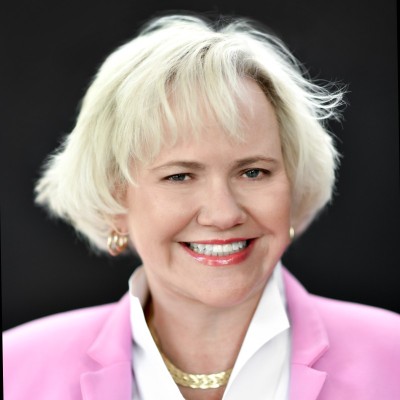
Businesses worried about health care quality and costs founded the employer-driven movement I lead, The Leapfrog Group, which brings the voices of purchasers together to push for transparency in the health care market. My organization, The Leapfrog Group, gives hospitals an A, B, C, D, or F for patient safety, and collects and publicly reports information on important quality information about health systems, and this has made a significant difference.
Leah Binder on LinkedIn
Favorite Song: History Has Its Eyes on You from Hamilton
Stay in the KNow!
Get our monthly email featuring expert interviews from the healthcare industry with real insights, no fluff. Get the latest information that help you better understand your healthcare options.
Thank you for subscribing! We're excited to have you here.
You’re all set and will receive our monthly email with expert conversations and insights from leaders in healthcare.