Rebuilding the Nursing Workforce and Restoring Trust in Healthcare with Dr. Diana Mason
The Future of Nursing
In this episode, Robin Strongin talks with nurse leader Dr. Diana Mason about the future of nursing and the urgent need to invest in the healthcare workforce. They discuss the impact of COVID-19, the strain of burnout, and the growing corporatization of care. Mason shares insights from the Future of Nursing reports on advancing health equity, rebuilding trust, and supporting nurses through better work environments and education. She also highlights nurse innovators tackling gaps in care—from rural health to trauma recovery—and calls for renewed respect and investment in those who keep our communities healthy.
Takeaways
- The nursing workforce is in crisis. COVID-19 deepened burnout and staffing shortages, revealing how fragile work environments have become.
- Workplace culture must change. Nurses need safe, supportive settings where their well-being is valued alongside patient care.
- Corporate consolidation hurts communities. Hospital mergers and private equity ownership often prioritize profit over people.
- Equity must guide the future of care. The Future of Nursing reports call for nurses to lead efforts on health equity and social determinants like housing and food.
- Investing in nursing pays off. Supporting nurses strengthens families, communities, and the overall economy.
- Nurses are driving innovation. From telehealth trauma care to rural health solutions, nurses are creating scalable models to fill care gaps.
- Human connection matters most. Honoring patients and caregivers—through practices like “the pause”—helps restore meaning in healthcare.
Chapters
00:00 — Introduction
01:25 — Tribute to Linda Burns Bolton and overview of the American Academy of Nursing
03:40 — Nursing workforce challenges and leadership lessons
04:40 — COVID’s impact on nurses and public perception
07:55 — Burnout, work environments, and the need for systemic change
10:00 — Corporatization and private equity in healthcare
12:30 — “Future of Nursing” reports and health equity
16:30 — Investing in the nursing workforce and global shortages
18:10 — Midwifery and rural healthcare access
20:20 — Nurse-led innovations and solutions
24:55 — Honoring patients and supporting healthcare teams
27:05 — Advice for future nurses and career paths
29:15 — Education pathways and lifelong learning
30:10 — Diana’s research and shift to policy
32:20 — Music picks and meaning behind them
33:50 — Lessons from history and the role of AI in care
35:15 — Closing thoughts and wrap-up
Diana Mason
Okay, Diana, I am so excited. We're finally having a chance to reconnect. It's sort of in person, not exactly in person, but I'll take it. I'm Robin Strong, and I am just so excited to be introducing and speaking today with Diana Mason, who has a PhD, RN, FAA, which is a designation and FACN honorary degree.
And I'd like to just share because I'm going to read because I want to get all of these in because it's really important. It shows the depth and breadth of your expertise. so Senior Policy Service Professor Center for Health Policy and Media Engagement at GW George Washington University School of Nursing Program Director International Council of Nurses Global Nursing Leadership Institute.
Professor Emerita at Hunter College at City University, New York, and producer and moderator, Health Cetera, in the Catskills, which is W-I-O-X radio. And I will add a cherished colleague whom I had the great fortune to meet when I was working with Pat Ford Regner, the executive director at the American Academy of Nursing.
American nurses this she was a teacher
Speaker 2 (01:24.982)
She was the Academy and so for people who may not know the American Academy of Nursing different than the American Nurses Association, AAN's mission, I looked it up to make sure I have the most up to date because people change their core mission, but their state's true. It's to improve health and achieve health equity by impacting policy. So heavy duty policy and research work
throughout the entirety of the profession. And while we were all working together, we were so fortunate. I do want to take a moment, sort of pay tribute to Dr. Burns Bolton because she was president of AAN when we were all involved in working together and she passed away this year. And really she was...
Talk about a health dame, my goodness. She renowned nursing leader. She literally inspired generations of nursing professionals throughout her career. And she really exemplifies a lot of what we'll be speaking about today with the nurse innovators and nursing professionals who just really pushed everything forward when it came to the humanity of care.
and the professionalism and the ethics involved. And it was really an honor to be able to work closely with her. So she really will be this. And she really comes from this line of, you know, there was Florence Nightingale, there was Clara Barton, people know. And this legacy continues. And that's really what we're going to dive into. despite all of the...
things that we know about nursing, we also know that there are workforce challenges. It is not an easy calling or profession. So I think if we could start, and it is broad, but I do think we have to tackle and hear a bit about workforce. So I know there's a lot of directions we can go, but when you hear nursing workforce, what comes to your mind first?
Speaker 1 (03:41.518)
Well, Robin, first, thank you for having me on Health Dame. I was very proud to be one of your disruptive women in health care. And I actually served under Linda Burns Bolton when she was president of the Academy. I was secretary of the board and I learned from her. later became president and I learned so much from her about being a good president and trying to
mention that too, yeah.
Speaker 1 (04:11.182)
trying to lead by facilitation of a group to make the right decisions. And she left a really strong legacy and was a friend and a colleague. So it was a huge loss for us. Yeah. So the workforce issues are very challenging today. And part of that is because of COVID. Everybody was out, if you remember, before we...
really well.
Speaker 1 (04:37.686)
lost our minds. People were out in the streets really banging pots.
Yes, in plastic trash bags.
Yes, and nurses during the COVID as well as other healthcare workers, I'll speak to nurses, but other healthcare workers as well, were putting their own lives on the line to save people. They truly were the heroes of that period and they deserve to be cheered. And then when we had a vaccine and when people got tired of wearing the masks, even though they were saving lives, people started to turn their angst
there.
Speaker 1 (05:16.608)
against healthcare workers. And it was suddenly the nurses and other healthcare workers were no longer the heroes. They were the people who suddenly were on the bad side. They were the bad guys. And so it was very dismaying to a lot of nurses that people forgot how essential they were to saving lives. And we lost over a million lives. And so do not underestimate
Yep.
Speaker 1 (05:45.794)
the healthcare workers in your community and the extent to which they really put their lives on the line for you during that period. And don't forget what 2020 and 2021 were like, because for many healthcare workers, it was absolute hell. And the stories they can tell you about being afraid to go home and take...
That's what I was going to say. wasn't just about them as an individual. They had children at home. They had loved ones at home. mean, it
They're who stayed in hotels so they wouldn't have to go home and expose their families.
and I bet they ended up paying for it.
They may have. I know another nurse who was brought in to actually save a hospital that was going. mean, their CEO was out with COVID. CEO, chief executive officer, chief operating officer, their chief nursing officer were all out with COVID. She came in the place was just- Falling apart. Totally contaminated. It was awful. She had to bring the trailers in to take the bodies out. And this, was horrific.
Speaker 2 (06:25.334)
Yeah, like that.
Speaker 1 (06:53.058)
horrific and she had two daughters at home and her greatest fear was that she was going to bring something home. So she was very careful with them. So it was a very difficult time. And so, you know, to then have, as we've gotten better with COVID, it's not gone and it's not as deadly. Sure. think people got burned out and unfortunately too many workplaces don't pay attention
To what is the work environment? How are we taking care of our employees? It's like, just get the job done. And when you don't take, and it was Don Berwick, who was at the time under Obama, head of CMS under Obama.
Right, right. Medicare and Medicare. Yeah.
Yes, thank you. And he started the Institute for Healthcare Improvement. And Don, I forget why I was bringing Don Berwick up.
When the haas people forget about the workplace and the employees, yeah, profession.
Speaker 1 (07:58.094)
Cut that piece out. So John Berwick, who was head of the Institute for Healthcare Improvement, talked about the triple aim of how do we improve health in the country, but then added a quadruple aim. You have to take care of the workforce. If you're going to provide people with the best experience possible, improve the quality of healthcare and improve the outcomes for the population. So in too many places, if you're a nurse and you have a family,
and you're being told you have mandatory overtime. You have to stay and work because we don't have somebody to cover for you afterwards. You're asking that person to choose between a job and their family. And if you have small kids, what are you going to do? So it's a no-win situation. When patients die, what are we doing to help health care workers to debrief on that, to think about, hold the moment, if only a moment.
of we did what we could and we're grateful that we had the opportunity to try to serve this person. So work environments really have to change. But there's one other thing about all of this that I have to bring out. That is the corporatization of healthcare. During the last decade and more, we've had all these mergers and acquisitions with the idea that if we put all these hospitals and healthcare practices under one health system,
We're going to improve efficiency. We're going to be able to lower costs, including through purchasing, how we purchase things. And we're going to be able to improve the quality of care. And none of that has come forth. But we have these mega systems and we've lost the community feel to hospitals, the idea that healthcare workers know the people they're serving.
And private equity is also part of that in terms of buying up hospitals and then just taking out the money and leaving a community with nothing. And all of that just wreaks havoc on the workforce.
Speaker 2 (10:02.754)
patients they serve. Data that I've been seeing are alarming, to say the least alarming. mean, these companies are coming in and they're buying up practices, hospitals, systems, they're stripping out the assets, as you said, and then they leave. And you know, there might be a short term, term, financial revenue uptick and gain.
Thanks for coming.
Speaker 2 (10:30.83)
not for the people in the community they're serving and not for the everyday workforce, maybe for the C-suite, some of the folks at the top, but it is not getting to the communities that are supposed to be served or the people that are working. You know, it's interesting, somebody shared with me just this morning a report from Europe that Medtronic, a big heart device maker, and it was a survey of
Let's see, 50 hospital CEOs on the state of healthcare. Now this is Europe's leaders, but I think there's a lot of lessons learned. The number one finding had to do with workforce and shortages and pretty much echoed what you were sharing, but the one quote from one of the CEO hospitals in the Netherlands said, we can't solve the workforce crisis with more people. We have to reinvent how work is done.
And I think the corollary to that is how the people we are working with are treated and valued. And that's really the second part of that. I do think that there is a shift in how we provide care. There's always innovations. But until we get at what Don Berwick was putting forward, I think we really haven't learned anything.
Actually, Don also said, he wrote a piece for the New England Journal of Medicine, I believe it was, on that this is about greed. It's plain old greed. And the boards of trustees have an ethical responsibility to really deeply question these mergers and acquisitions. In the most part, it's that the CEO is gonna make more money, but how is anybody else going to benefit from this?
And he said that the boards need to have some really tough discussions and ask some really hard questions. So I'm hoping that we'll wake up before we've totally ruined it all, but it's a real challenge.
Speaker 2 (12:30.184)
of I know that in the past there have been these reports called the future of nursing do they offer any insights in terms of these kinds of questions what what are some of the newer reports pointing to that we should be aware of
So there have been two future of nursing reports, one that was released in 2011, the first report, and that called for nurses to work for us to improve the education of nurses to have a higher proportion of nurses prepared at the baccalaureate level and have a higher proportion of nurses with doctoral degrees. And those could be PhDs or what's called a DNP, a Doctorate of Nursing Practice. I also called for nurses to sit on boards.
and commissions and task forces because our voices are underrepresented in decision-making tables. So it called for that. And it called for some other things. And there was real progress that has been made on that. And then the future of nursing report 2020 to 2030 came out, actually it was supposed to come out in 2020, but because of COVID it was delayed. And it focused on health equity and the fact that nurses have to prioritize
diversity, equity, inclusion in terms of the profession, but really looking at where are the health disparities in our communities. And we have to pay attention to things like the social determinants of health, the social care needs of patients, like adequate housing. We know, Robin, that if we would just invest a fraction of the money we invest in healthcare in improving...
these social determinants of health and communities like housing, access to affordable, good nutrition, nutritious foods, access to education and to high quality jobs, that we could actually improve health more so than we're improving through healthcare. And so the report really called upon nurses to get into this space more. There's a long history of some nurses being in that space, like Lillian Wald.
Speaker 1 (14:38.624)
and the Henry Street Settlement House, but others. But that report really said, get on the housing task force in your community, get on commissions and on task forces and raise the issue of health disparities and work in partnership with communities to build health equity in your communities.
So that it's a really important report. And even with the backlash against DEI these days, I think nurses are totally committed to the fact that we are not going to improve health in this country unless we reduce the disparities that exist. And not just among with people of color, but also in poor communities. I'm now living in a rural area and the health disparities arrive from poverty.
So what are we doing to look at how to improve the lives of people from a variety of perspectives and the health of people? So those reports, I think, are very important and have been really landmark reports for the profession and for society. These committees, I want to point out, were not dominated by nurses. They included people who are chief financial officers or high tech people.
non-nurses across the spectrum as well as nurses on the committees.
If it hasn't been done already, perhaps they should be mailed to every big bank and every private equity firm and underscore and underline and perhaps suggest that some of these banks invest in the housing in the communities in which they're building and call them to task. I mean, if they're coming in with equity, you know?
Speaker 1 (16:31.822)
That's right. That's right. I totally agree with you. You know, I also, you mentioned I'm program director for the International Council of Nurses Global Nursing Leadership Institute, which is a policy institute. It's taking nurse leaders around the country and helping to develop their policy skills and capacity. The International Council of Nurses for the last four to five years has really worked on trying to get to
nations across the world, the message that you must invest in nursing. If you invest in nursing, you're investing in families and you are investing in communities and you are investing in your economy. And they've been able to show how much of a return on investment you will get if you invest in the nursing workforce. So we do some investment in the nursing workforce, but not enough. And that we need a more deliberate plan. So the shortage that we were talking about
We're estimating that we need almost 200,000 new nurses a year.
In the US that number? Wow.
Yes. And part of that is because some of us are retiring. It's estimated that over the next 10 years, a third of the nursing workforce will retire. A third. So who's going to replace those nurses? And we have younger nurses who are leaving. So that's why the work environment becomes so important. But I want to point out that it's also about other health professions. And I think of midwifery.
Speaker 1 (18:08.202)
In most of the other countries in the world, you have a large number of midwives and a few obstetricians. The opposite is what is true here. And so whether you're a certified nurse midwife or a midwife who's not a nurse, we need to invest in that workforce because we have maternity deserts all over the country. In my community, in my county in upstate New York, you cannot deliver in the county. What?
There is no way to deliver a baby unless you go to an emergency room, which somebody suggested and I said, that'd be my worst nightmare. So we need to be looking at where to what kind of healthcare workers do we need and really doing some deliberate planning to ensure that rural areas as well as urban areas have the workforce that they need.
Well, it's interesting that you mentioned rural areas because that has historically been quite a challenge, certainly in nursing, really throughout healthcare delivery and access to care and all of that. And as we're talking about the shortages, one of the things that you and I have talked about and the AAN that I mentioned earlier, really
shines a spotlight on some of the innovations in the field of nursing to be able to address some of these gaps and the shortages that despite all of the challenges, be it COVID, you name it, the nurses are coming up with a vision of how to fill a need and they range. I was looking up today, I know you have some examples. There was one.
that I highlighted that I think it was Penn State. I just was so impressed. Dr. Sheridan Miyamoto, a nurse from the College of Nursing. Well, first of all, it blew my mind. know sexual violence is off the charts and it's been growing and in COVID we really saw a spike, but according to these data,
Speaker 2 (20:22.574)
One in two women in her lifetime, one in three men will experience some form of sexual violence. And in particular, what this edge runner was able to come up with was a way, there are specially trained nurses who, if they work with victims of sexual trauma, their care and their recovery,
are much improved, but of course in rural areas, there just isn't enough. Again, it's not just a shortage of nurses writ large, but particular experts within the profession. And she came up with a whole plan using technology, using training, and can fill a need. So what really excites me is with all of these challenges,
all of these nurse innovators are coming up with real scalable solutions that communities across the country, frankly overseas can be doing. And I know you have a couple of examples of nurses that you can share what some of their work is showing us.
know Sheridan Miyamoto because she's in the Bedding War Nurse Leaders and Nurse Innovators program that the University of California at Davis has had. They're amazing. They only take 12 to 16 people, fellows a year, and it's actually ending in about a year or two. And it's not only her work, it's...
It's amazing work that these fellows are doing. And one is a fellow by the name of Skola Matovu. She is from Uganda, but she's at the University of Utah. And she was raised by her grandmother. And she is totally committed to working with grandparents. And in Utah, has a whole initiative around supporting grandparents
Speaker 1 (22:26.04)
who are raising their grandchildren. Because they get, there's a lot of stress sometimes, there's financial burden, et cetera, and nobody pays attention to this. And it's like, we have to make sure that these grandparents who already served are able to be supportive. And she's now by country. So she's doing this work in Utah and she's doing it in Uganda. And it's really.
I'm trying to wrap my head around those two places. A lot of disconnect, but not really grandma's grandma, right?
I know!
Speaker 1 (23:00.876)
right. That's right. And she says it's really the needs are so similar. And so she's really an innovative and an innovator and amazing, amazing scholar. And then there's a Michelle Lichtman who's a child of two people who are deaf. Parents are deaf and she has deafness in her family. And she watched her aunt die because she could not in the hospital.
because nobody could communicate with her and she should not have died. And Michelle took this on and she has developed an initiative around really helping with translating and communicating with people who are not hearing people or who are very hard of hearing and certainly with deaf people. And that's translatable for people with other languages as well. sure. wow.
The list goes on and on. During COVID, there is a nurse who developed what was called the pause, that when somebody dies, you pause. Everybody who can gathers, and we pause. We acknowledge who this person was. We acknowledge that we did the best we could for this person, even if it's only for 30 seconds or one minute. And it's the pause that honors not just the person, but also
the work of the people who tried to save that person.
it. my god, it's yeah, and I saw it firsthand when Brian passed because I was with him and the team that was helping me. They all came in, they all were surrounding me and him and each other because you you it's it's such a privilege to be with someone when they pass. But it's a loss for everybody. And it's so deeply
Speaker 2 (24:57.41)
meaningful, it's the humanity of the work that's done, but it just sometimes gets glossed over. And you're expected to just keep going on. But there was this moment that's sacred. And you can't just not that's just remarkable that they finally like made it a thing because
Yes. And you know, Robin, particularly in hospitals, it's not okay for people to die. this is particularly true for physicians, that they feel they have failed, but even nurses may feel they have failed. And so it's really part of that honoring that we did everything we could in acknowledging that we didn't fail. We gave all that we could give to.
is really so critical to keep in mind. And in fact, I recently for Health Dame interviewed a death doula who spent a lot of time studying death, dying, the whole process and how, if I may say so, we pretty much suck in this country as to how we were getting better at acknowledging exactly what you're talking about, but it isn't a failure. It's a part of our life.
is how we come to that part of the next part of whatever it is, however you believe. But we've got to these things on. But in the moment, to your point, and again, it gets at, I remember some of the data early on with nursing shortages. Typically, it's not a shortage of getting people interested in the profession and into the pipeline. It's once the grind
of how you are doing the care of others and the systems that are just crushing. And it's also physically demanding work. It's not only emotional and you have to mentally be on your toes nonstop, but it's physically demanding too. They were counting steps and how many people are, I mean, it is insane.
Speaker 1 (27:06.433)
Yes.
And there's violence in the workplace. It's not an easy profession. It's a rewarding profession, but it can be very burnout work. So let me ask you, what advice would you give to those who are considering this? For many, it's a calling.
So I think it's first of all, examining why you want to become a nurse. so salaries are decent, know? mean, everybody wants to make more money, but salaries are decent. In New York City, you know, as a new graduate, you can be making 70,000 plus. Which means you're working in a hospital setting, not as much in primary care.
Speaker 1 (27:55.534)
So why do you want to be a nurse and what do you see yourself doing? And for some people, all they can think of is the hospital, but the options are endless. That's why whenever I'm talking to a nurse who's working in a hospital and says, I'm leaving. Well, don't leave nursing. The options are so vast.
What's another example then beyond the hospital wall?
We have nurse attorneys. have long term care. We have primary care. We have school nursing. We have community health nursing and home care nursing. Yeah, legal nurse consultants. Yeah, the list goes on. Got it. And there's academia, if that's your thing. There's administration policy. It's just endless. It's a really good foundational education, I believe. So that and then think about very carefully.
list goes on.
Speaker 1 (28:49.688)
the kind of school you go to. You want a school that is good, that the faculty know what they're doing, they have clinical experience, et cetera, and you wanna think about what other demands you have on your life. People don't, they totally underestimate the rigors of nursing education. They don't have a clue until they get in it. And it's hugely demanding. so you have to be prepared. And I advise people,
Imagine!
Speaker 1 (29:19.438)
You know, if you're if you've got a family and you've got limited time, think about starting with an associate degree. We have a great educational ladder. Start with an associate degree. You can go back and get a baccalaureate degree and often through online programs. And then think about maybe you want a master's degree or a doctorate in nursing practice. That's what nurse practitioners, nurse anesthetists are tending to do is get a doctorate in nursing practice.
Interesting. Okay. All right. What was your dissertation done on? don't think.
Mine was in nursing and it was on circadian rhythms and women. was into circadian rhythms at the time. that's fast. I shouldn't have done that. I should have just gone straight to a more policy-driven.
Fascinating.
Speaker 2 (30:10.766)
I actually think that's still a very untapped, really important set of insights that, you know, life sciences have not caught up with the importance of that and hormones. I think they're still too very overlooked. And I don't mean just women hormones only. think, you know, we have been slow to appreciate nutrition. We've been slow to appreciate stress.
You know, it's all, that's, you know, just stressed or, you know, just eat whatever. We don't, I think we're starting to get it now, but I think hormones and the circadian rhythm, like we have so much that we are not, we know, but we're not connecting dots. And I think there's some hidden treasures there. So I think you're onto something.
like, we revisit that. That and anything, anything around the immune system is, yeah, I will tell you though, what I found myself doing, I did a postdoc in research. And what I found, I had this really strong policy interest. And if I had two papers, and one dealt with policy and the other one dealt with circadian rhythms, I'd read the policy. that's when I woke up and said, you can't do both. Pick one.
So you know what you're.
Speaker 1 (31:31.488)
Yeah. So I switched. I left this Kdenrhythm work behind.
Well, someone else can pick it up, that's for sure.
I know how to deal with jet lag now.
There's a science there for sure. And I have my final question for you, which as you know is the one I ask everybody I speak with so that I can put together my health game playlist, which I'll be excited to share at the end of the year. But what song real, and I know this is super hard because I know we both love jazz in particular and...
probably a million other types of music, but is there one song that speaks to you that's a favorite that maybe represents the work you're doing? Lay it on me.
Speaker 1 (32:20.046)
Well, so my husband was a musician and I remember. And so on my own radio program, play for the intro and the outro, it's his music. It's called, ah, what's it, reminiscing. But I have to share with you that there is a, hang on a minute, there's a composition by Country Joe McDonald.
Call thank the nurse. Thank the nurse. And it's
You get two then. What is it? Country Joe McDonough?
the nurse. Yeah, yeah. And, and he did that, I think, because of his experience and experience of friends in Vietnam. And, just what nurses brought to that care and to those, those veterans, the soldiers as they were. And he just, and it's really apropos today. I mean, it's country Joe.
And I will say just to bring us full circle, I was brushing up on, I went down the rabbit hole of Florence Nightingale and Clara Barton again, both of whom really got their nursing chops in wars, Crimea War, Florence, and then the Civil War with Clara Barton. And really their histories as some of the first. Talk about AI. These ladies did AI before it was AI.
Speaker 2 (33:51.938)
frankly, their statistical wizardry and their algorithms and there's all the mathematical ways of improving outcomes way back before it was a thing that we made all kinds of buzzwords for. So lots of lessons going way back in history that's just fascinating and no surprise, relevant as ever today.
Yeah.
You know, we have this just tremendous legacy of powerhouse people trying to keep us all healthy and we've got to do a better job at honoring them and valuing them and not, we better learn the lessons of COVID and throughout history because I'm here to tell you, I do think AI has a role in healthcare.
but it isn't the roles nurses are playing at the bedside when you're scared and when you're dying and when you're uncertain and you just need somebody to help make you better. I know who I want. So, you know, so thank you for all that you do and you're continuing to do this amazing work really around the world. It's just...
What a time, we're really needing it.
Speaker 1 (35:14.88)
Well, thank you, Robin.
This has been really, really interesting. And I hope we can do a lot more of these because the conversations are not ending. That's for sure. Yes. Good. I do want to thank you for your time. And for sure, I'll be back in touch. Have a great day. All right. Thanks so much.
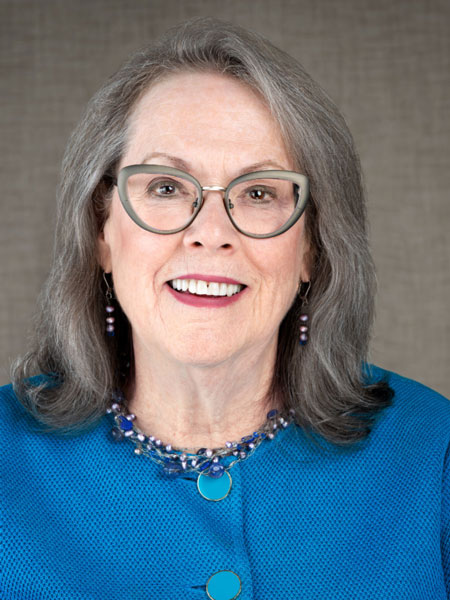
Diana J. Mason, PhD, RN, FAAN, FACN(Hon.)
Senior Policy Service Professor, Center for Health Policy and Media Engagement, George Washington University School of Nursing Programme Director, International Council of Nurses, Global Nursing Leadership Institute, Professor Emerita, Hunter College, City University of New York, Producer and Moderator, HealthCetera in the Catskills, WIOX Radio at wioxradio.org
www.healthmediapolicy.com
Diana J. Mason on LinkedIn
Favorite Song: Country Joe McDonald, Thank the Nurse
Stay in the KNow!
Get our monthly email featuring expert interviews from the healthcare industry with real insights, no fluff. Get the latest information that help you better understand your healthcare options.
Thank you for subscribing! We're excited to have you here.
You’re all set and will receive our monthly email with expert conversations and insights from leaders in healthcare.